Thursday, July 14, 2016

Editorial: Summer Break

So I know I haven't been posting as often or as frequently as I used to... if there ever was a time I managed to post regularly, that is. I started this blog almost a year ago now, and I've had a lot of great responses, provoking discussion among friends and denizens of the internet.

However, with work, jobs, family, and a multitude of other projects I'm working on, including my Fallout Fanfic, the old NaNoWriMo story I was working on, commissions for a few very, very patient people and other writing here and there, I've taken on way too much, and haven't been able to do anything at a decent time.

So, I've decided to put this blog on hold until early-mid September. Hopefully by that time I will have some time to work on other projects and wrap them up, and even get a few articles here written up and ready to post weeks in advance. When I do come back, I will pick a day of the week, and make that an "upload" day, so your alternate history will be on a more predictable schedule.

But also I'm curious as to what you guys think: do you like what you've seen so far? What do you want to see more of? Less of? Any suggestions for an alternate history scenario for me to research and write? Please feel free to tell me, either in the comments, on Facebook, or on Twitter.

Otherwise, have a good summer, and see you in the fall!

I'm gonna go take a nap now. It's too hot and muggy!

Thursday, July 7, 2016

Fictional AltHistory #7: Kasierreich Part 1

One of the greatest things about video games, computer games especially, may not be the games themselves, though they may be pretty good. No, one of the best things about computer video games can be the user modifications, or mods.

For years I was on the fence about mods. For one thing, you have the ones for Minecraft that just makes everything ten times more stupidly complicated, but also has things like nuclear reactors. Then there are the ones for, say Fallout: New Vegas that focuses solely on trying to make sure rocks are not hovering a few inches above the ground and you won't see things like old ladies flying through the air.

Okay... so that bullet to the head did a lot more damage than I thought...
But then there is the Paradox Interactive games. Those games are a modders dream: complex yet deep mechanics, easy file manipulation, and, despite the lack of fancy graphics or things, a deep storytelling ability.

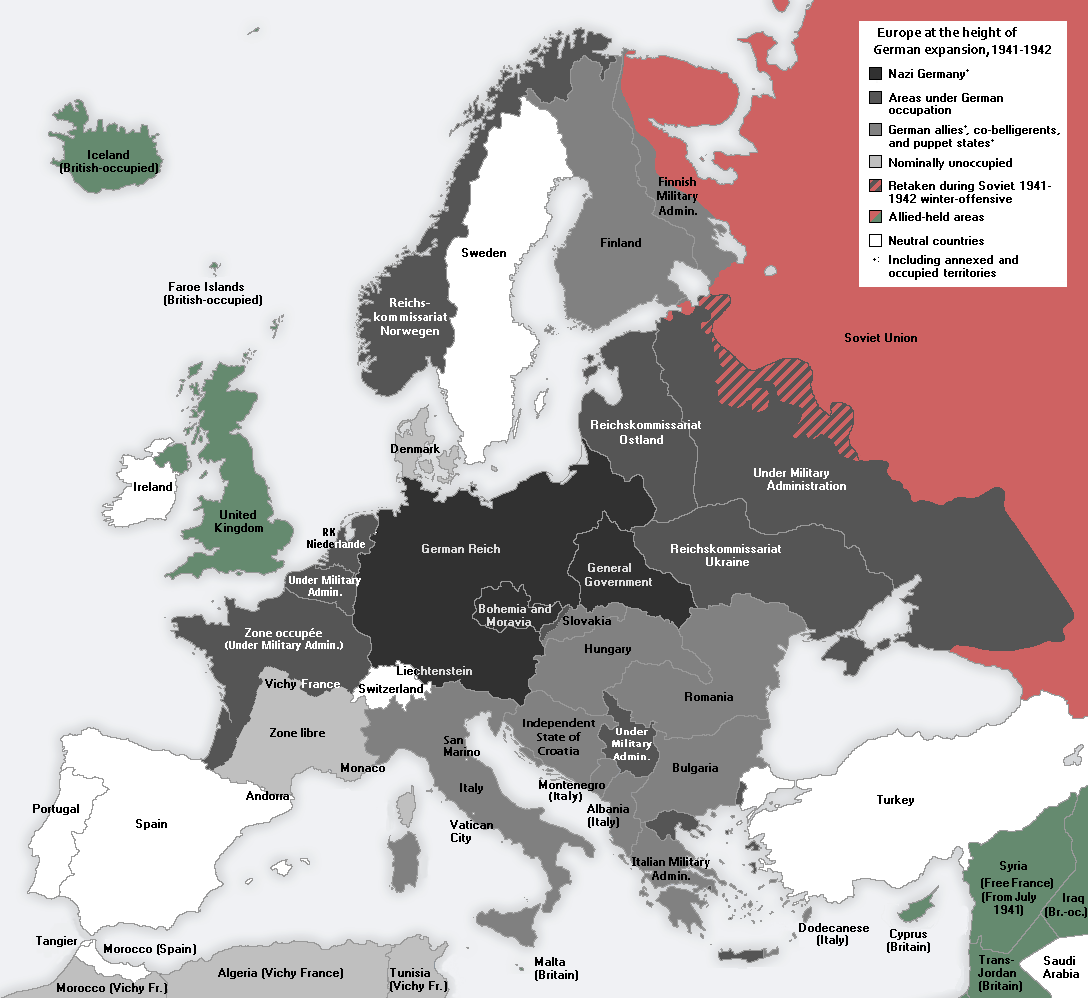
For today,  I'm going to take a look at one of those mods (which in itself is played on a modded version of Hearts of Iron 2 called Darkest Hour), the immensely popular Kasierreich. But unlike my usual "What ifs?" when it comes to fictional media, Kasierreich itself is a massive Alternate History, where Germany won World War One (the Weltkrieg ATL), so instead I'm going to look at a few of the bits of AH in the lore, and explain if they are plausible, with a ranking of 1 (totally implausible) to 10 (very implausible) just to make things easier.

 Urge to hum "Die Wacht am Rhein" rising...

POD: No Submarines, No USA

The major point of divergence in the Kaiserreich TL is that German military leaders like General Ludendorff decide not to resume unrestricted submarine warfare in February 1917, not wanting to bring the US and it's massive industrial potential and manpower reserves into the fight on the side of it's enemies. This, along with Russia dropping out of the war, gives Germany a huge advantage through 1917 and 1918.

Plausibility: 5/10. German leaders had long considered the sorry state of the US military in the years leading up to the Weltkrieg to mean that the US was virtually defenceless. While the US Navy was getting some new and powerful Dreadnought battleships, the army was tiny, ill-trained and not prepared for the new kind of war taking place in Europe with trenches, poison gas and machine guns. Even though the US was the birthplace of the airplane, the US military didn't even use airplanes until 1907. In OTL, the US had to use French airplanes when they served in France.

So serving alcohol en-route to the Western Front may have been a bad idea.

But Germany knew very well the power of Industry, and the Americans were serving as a major supplier of arms and money of the Allied powers long before FDR called the US the "Arsenal of Democracy." The potential power of the US would be enough to give more level headed leaders of Germany cause to pause. But the men that lead Germany by 1917, like Ludendorff and Hindenburg in a de-facto military dictatorship, were not exactly the kind of men to make such far-reaching decisions. They thought in the present, not the future: they saw the weakness of the US Army now, considered the Americans weak and degenerate, and assumed that it couldn't get stronger, or it would take so long that Germany could still attack Britain and France and smash them before the US could arrive. Germany made the same mistake in 1914 considering the British Army, a small, but professional force that became the basis of the massive British Expeditionary Force that earned the begrudging respect of the Germans, despite the massive casualties. So maybe that lesson would convince the Germans to not do anything to drag the US into the war.

So in the end, I'm going to make this one a coin flip. In hindsight, we know it was a bad idea to have the US enter either WWI or WWII, in both cases because of the actions of dictatorial powers that considered the US military weak at the time, so it will always be weak. But, maybe the three years between 1914 and 1917 would have been enough time to allow the Germans to learn not to mess with enemies that could bring huge resources and manpower to bear on them.

As Josef Stalin would like to tell you from 1943...

POD: No German Offensives in 1918

The second major POD of the Kaiserreich TL, on top of the one I mentioned before, was that Germany decided not to launch attacks in 1918 like OTL's Spring Offensive, instead allowing the occupied territories of the Ukraine and Russia to supply food and raw materials to Germany that the British blockade had cut off since 1914. Without the imminent arrival of millions of Americans to shore up the Allies, the Germans could dig their trenches deeper and prepare for 1919, and let the Allies smash their heads on the vaunted Hindenburg Line time and time again in 1918, like they had been attacking Germany since Day One of the war. Only minor attacks in Greece and Italy were prepared to take pressure off the struggling Ottoman Empire and Austria-Hungary were planned for 1918, with a grand offensive in 1919 managing to overwhelm the western Entente, forcing France to surrender and Britain to retreat across the English Channel.

Plausibility: 8/10. Where before the Germans may have underestimated the power of the US and the UK, by 1918 they knew the power of the machine gun and artillery for defensive war. In fact, after the failure of the Schlieffen Plan in 1914 on the Battle of the Marne and the inability to get around the Entente in the "Race to the Sea," as early as 1915, except for a few attacks on Ypres (that used poison gas for the first time) or Verdun in 1916, Germany was more willing to stand on the defensive in the West, and trying to defeat Russia in the east, which by 1917 was done.

Welcome to your new home away from home in Northern France!

Germany in 1917-18 was a wounded giant. While it possessed one of the largest armies in the world of the time, the Allied blockade had strangled both it's food imports and it's exports, leaving the Germany economy in a dangerous situation. It's manpower was running low, and while propaganda proclaimed victory was near, the privations of the blockade was doing little to boost morale on the home front. So, allowing a breather in 1918, let the vast resources of Ukraine help alleviate the shortages on the home front, and organize some puppet governments in the East to supply troops and keep the people happy would go a long way to helping Germany in 1919.

As for the actual attacks, the way the Kaiserreich Wiki describes it, I'd say the Germans would have had a great chance at success. The Entente attacks, focused on no less than five points of the line (it didn't say where) were a categorical failure. Only the British attacks on Lille were anywhere close to a success, and even then it was costly. Over 800,000 Entente troops were killed or wounded. The Germans however used the tactics, like infiltration, artillery support and mobile reserves stationed close to the front lines that they first used in Riga in 1917 and perfected in Greece in 1918, that were vastly superior to the massed front attacks such as at the Somme and Verdun earlier in the war. The Germans smashed the French, already on the brink of a second mutiny, and forced the British to retreat toward the the Channel Ports, where the British and French Navy helped hundreds of thousands of British troops to retreat back home, though in a very organized manner and not at all like the Dunkirk evacuation of OTL. Simultaneous attacks on the Italian lines forced the Italians into a route, and the Austro-German troops besieged Venice. By May Paris was surrounded, and in August Rome was captured. Italy capitulated, and France gave up in October as Germans invaded from the South as well. Only the UK and Germany now stood facing each other.

Kinda like this. Just with more artillery and fewer pints of beer.

POD: War at Sea

For the next two years, the only land battles occurred in the Middle East. The British, in comparison to the Western Front, had enormous success in the Middle East: Capturing Jerusalem, Palestine and Mesopotamia. But with German reinforcements, the Ottomans pushed the British back, who eventually stood their ground at the Suez Canal, and dug in. German and Ottoman attacks came to nothing, turning the area into a new, brutal trench warfare. German troops were sent to Russia to crush the Bolsheviks (even though Lenin was allowed back to Russia thanks to Germany), and prop up Alexander Kerensky's Provisional Government so long as they agreed to the Treaty of Brest-Litovsk, which they did.

But the big news was at sea. The German High Seas Fleet became more assertive as the British Royal Navy had to suddenly cover a huge amount of water to keep the blockade functional, and began to attack targets of opportunity, and began to attack convoy's in the Atlantic. As Attrition began to take it's toll on the Royal Navy, they stripped escorts from the convoy's that was Britain's only life-line to the outside world, allowing the submarines to once again sink ships at will. The British, desperate for any form of success, sent a small force to bombard the Baltic coast, and the HSF returned to the North Sea, where the British were waiting nearing the Faroe Islands. On March 15, 1920, a huge naval battle that dwarfed Jutland four years before took place near Rockwell. The battle was a marginal British victory, but the cost in ships and lives was high, and eventually both sides retreated, and only small skirmishes between small ships occurred for the rest of the war.

It was as big of a let down as this!

Plausibility: 4/10. The biggest problem I have with this is how the Germans would even be able to get past the blockade in 1919 to inflict the damages that would make the British panic enough to try to attack the Baltic. If anything, there would be a big battle in 1919 as the Germans tried to break out... and it would have been, like Jutland, an inconclusive Battle. The Germans may sink more ships, but they still wouldn't be able to get out of the North Sea, so British strategic superiority would not be challenged. This would be the point when an un-restricted submarine warfare campaign would have broken England: Even if the US entered the war, would they try to invade Europe, even with the UK as a spring board? I'd say no: when the Allies did it in World War II, it was only because the Germans had nearly bleed themselves white facing the Soviets, the Strategic Bombing campaigns, along with the ever present Italian campaign and a lot of misdirection that kept Nazi's away from the right beachheads. In this TL, Germany has no Soviets, no strategic bombing, no Italian campaign, and a pretty good idea of what the Entente would want to do. So Germany could have unleashed the U-Boats, and there would be nothing the UK could do but try to stop them, and nothing the US could do but an ineffectual declaration of war.

POD: The Peace With Honour

By 1921, tired of war, both sides eventually negotiated the "Peace With Honour" between Germany, Austria-Hungary and the Ottoman Empire on one side and Britain, her Dominions, Portugal and Japan on the other. Britain would recognize the gains made by Germany and return all German colonies along with Cyprus, and Germany would respect the rest of the British and Japanese Empires.

Because we all know how well German guarantees of borders work...

Plausibility: 9/10: More often than not in history, when a nation that's a great land power fights a nation that has superiority of the seas, you'll see the naval power winning, as they can reinforce their troops that they land to take on the land power, and maintain their supply lines better than a land power who doesn't have as strong a maritime tradition tries to go to sea. In this case, Britain is the sea power, and Germany is the land power. And, as always, the biggest problem when you fight England in a war is the fact that the only way to fully knock them out is to be able to invade them. However, in almost every case since the defeat of the Spanish Armada, England/Britain/United Kingdom had the larger navy. And you can't cross the English Channel or the North Sea without a strong navy to counter the Royal Navy. As one Admiral told the House of Commons during the Napoleonic Wars: "I do not say, my Lords, that the French will not come. I say only they will not come by sea." That statement will still hold true in 1921, even after the Battle of Rockwell in ATL.

But after seven years of war, the death of millions, the gutting of an entire generation of Britons, it's hard to see how the government of the UK could continue the war. If they didn't end it, they would be forced from office by a government that would end it. Germany, while also suffering from the same societal and population pressures, was a more authoritarian society that had, in 1919, won a great victory and drove not only Russia, Italy and France from the war, but forced all British soldiers back to their little island. In 1918, the war only ended because the German generals basically said that they couldn't fight anymore, and that the Kaiser should abdicate, and the navy was in mutiny. None of those points are feasible here. The Germans knew they were in no shape to invade England, so it would be best to try to sign what is basically a draw. If the British people supported it, the war could have lasted indefinitely, but I just don't see them wanting to do so. So this "Peace With Honour" is about the best either side would get.

And it sets the stage for this! Go Canada go!


You can see Part Two here!

But what do you think? Could Germany have really gone "Deutschland, Deutschland über alles?" Or if you have a topic or idea you would like me to talk about, please leave comments below, email me at tbguy1992@gmail.com, or tell me on Twitter @tbguy1992.

Thursday, June 30, 2016

Fictional AltHistory #6: Fallout, Part Four

... Why haven't I done something with New Vegas yet?

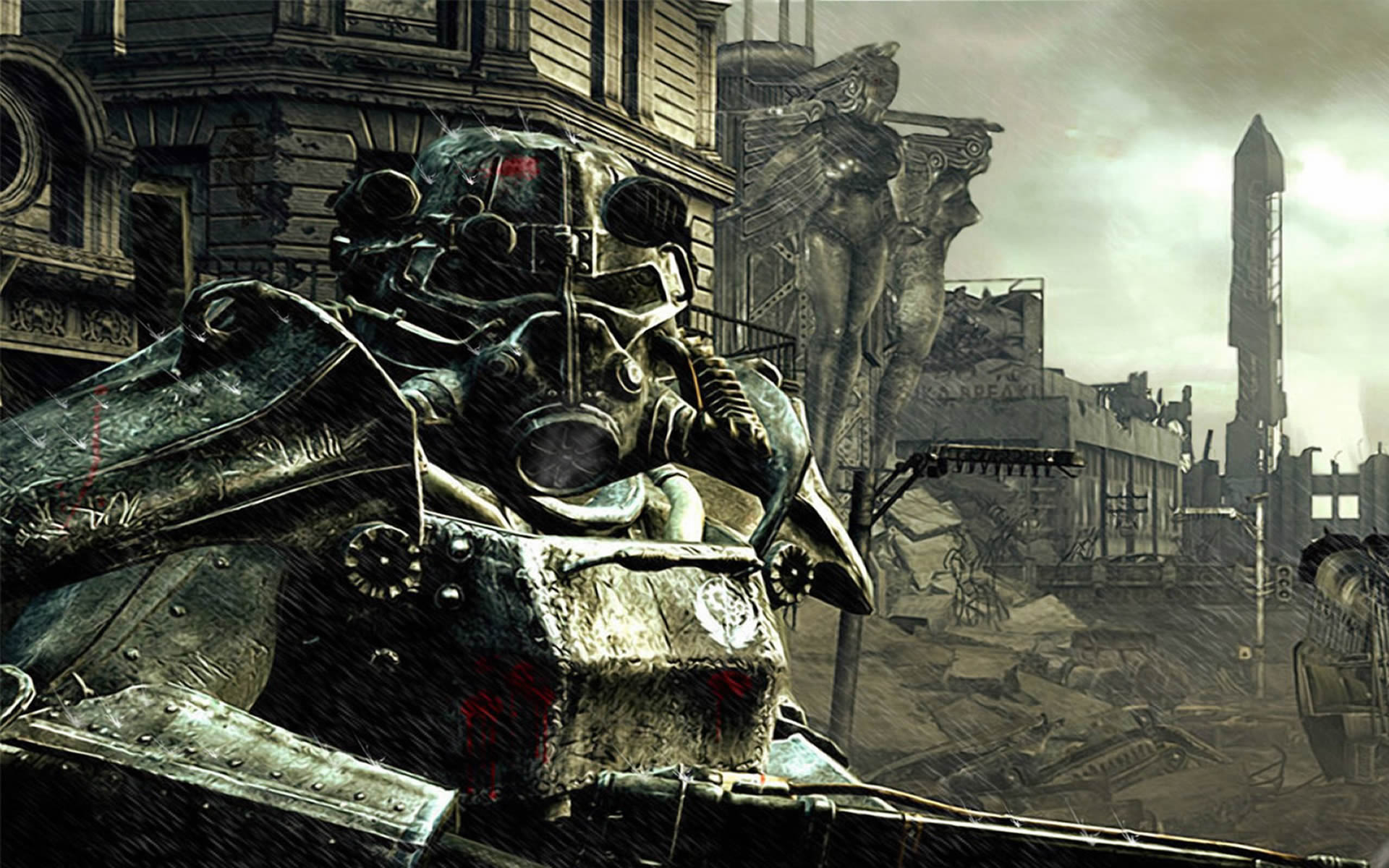
Fallout New Vegas is still my favorite Fallout game, with a myriad of reasons: great story, interesting characters, a believable, lived in world, a clash of ideology and civilization...

What? There isn't even a Blue Moon here. 1/10 IGN.

Maybe that's part of the reason I haven't done New Vegas yet, because there were so many options and possible outcomes in game that I, as a person who likes to throw out random ideas and make hypotheticals for video games and history, was undercut. When you have at least four major endings (12 if you factor in Karma, and then dozens of variables based on every single thing you did in game, then, yeah...)

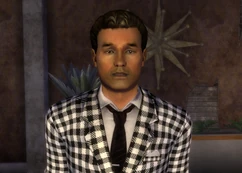
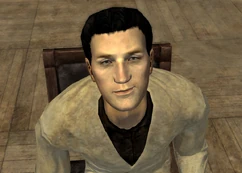
But then I thought: who's the most important character in the game?

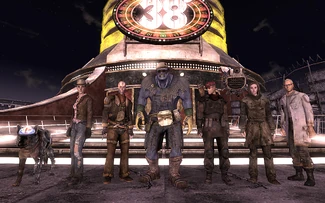
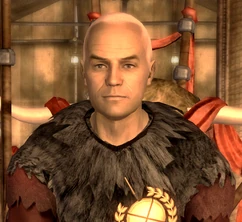
He did save your life, but no.
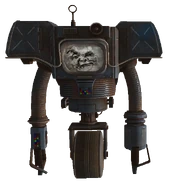
Dawwwnope, snarky no, snarky no, super mutant no, snarky no, beep beep (translation: no), snarky no, and snarky no. 

No. Watch out for knives.
Nope. And EMOTION DAMNIT!
Uh-uh. But thank you, thank you very much.
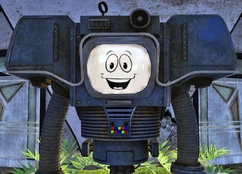
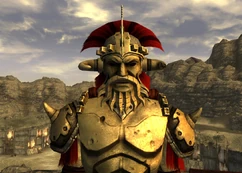
Yes Man! No, wait... no. Not him.
HOLY CRAP, GET ME MY MINI NUKE LAUNCHER! WHAT?!?! HE JUST STOOD THERE AND TOOK A NUKE TO THE FACE?!?!
*Sighs* YES. HIM. GOD.
Almost the entire plot revolves around Mr. Robert House, the pre-war billionaire who was founder and owner of RobCo, the company that made robots, Pipboys and a lot of the other bits of tech in the Fallout universe. After building and putting himself in cryostasis before the bombs dropped, with a massive army of securitrons and lasers to shoot down the nukes targets on his hometown of Las Vegas, he was prepared to ride out the nuclear storm to follow. While he was able to stop most of the destruction of Vegas, the software wasn't quite up to the task (that's where the Platinum Chip the Courier is shot in the head over at the start of the game comes in), and he went into a coma. After a hundred some years, he finally comes to, gets three tribes nearby to clean up their act, take over old casinos and modernize them, activates securitrons, builds a wall around New Vegas, then waits for the NCR to come from the West. The NCR begins to fight with Caesar's Legion over Hoover Dam, which NCR controls and has to give power to Vegas in return, while Mr. House continues to plot to keep the Legion on the other side of the Colorado, kick NCR out of the Mojave, and turn New Vegas into a major power.

So, what happens if Mr. House somehow did not survive the Great War?

Point of Divergence

On October 23, 2077, as the bombs fall around the world, Mr. House activates his laser defense on top of the Lucky 38 casino to try to shoot down the 87 missiles targeted on Vegas. Unfortunately, he wasn't able to stop all the bombs, and one of them lands right on top of the Lucky 38 as his lasers where destroying the other bombs. The blast destroyed the hotel, collapsed the building on the bunker Mr. House had built, severely compromising the longevity device he built. The EMP blast from the explosion also destroyed huge parts of the computer mainframe, wiping the digital storage on the miles of magnetic tapes he had. The shock from the system overload, collapsing building and failure of the software network resulted in a massive stroke and heart attack, and Mr. House died a couple of hours after the last bombs fell. Only a few securitrons survived, but without orders and degrading circuitry, they eventually became just like any other robot in the wasteland: directionless, dangerous and unstable.

Uhhh, you okay there buddy?

The few bombs that did go off in the Vegas and Mojave area was enough to result in massive depopulation, and the few survivors fled the arid desert to find safer locations to get food. Water, thanks to the intact Hoover Dam and Lake Mead, wasn't the issue, but without much arable land, all the water in the world would be little use. It would be decades after the nuclear winter and early years of death and destruction before people would return, forming tribes on the outskirts of the city that over the years would try to get in closer to the center of the city, to the ruins of the casinos on Freemont Street and the Strip despite the lingering radiation from the bomb that destroyed the Lucky 38.

Those tribes, ranging from opportunistic raiders to cannibals to small farming groups would fight amongst each other for decades, with none able to get a leg up on the other. Small trading towns would be created though as settlers trying to flee the oppressive burden of taxes and civilization out west tried to find more open spaces to settle. When the survivors of Vault 34 took over Nellis Air Force Base, very little changed as their xenophobic Vault Dwellers had little incentive to ally with any of the tribes around Vegas, and jealously guarded their independence. Another group that would make their way to the Mojave was the Great Khans, broken by the New California Republic after Bitter Springs and other battles. Reduced in numbers, they left California to Nevada, hoping to find a new place to live. They began to make ties with the other tribes in the region, fighting wars, signing peace, trading and scavenging like any other tribe in the area. When the Brotherhood-NCR war ended in the later's favour, the Brotherhood also encamped to the Mojave, forming another isolated, but powerful, group that became more closed minded and brutal in their goal of tech hoarding.

The Brotherhood of Steel: Keeping advanced tech out of dirty wastelander hands and sometimes helping the good guys since 2077.

However, to the East and West, new threats to the quiet Mojave were encroaching: the NCR to the west, and the Casear's Legion from the East. The NCR first moved into the area with their army and hundreds of settlers around 2265 or so. The first group in the Mojave to realize the threat the NCR posed was the Great Khans. They arranged a ceasefire with the other tribes, trying to convince them that the NCR meant nothing but death and slaughter. But if they were to work together, they might not only be able to blunt the NCR, but force them out. While some tribes were hesitant to work with the Great Khans, the stories of NCR atrocities, and then as the Casear's Legion showed the horrors what Caesar and his Legions in Arizona had done (some embellished by the Great Khans) gradually convinced them that maybe the Khans were the lesser of three evils. The New Vegas Alliance, formed in 2270, became a major power in the region, one that could, theoretically at least, resist the NCR and stand up to the Legion. Caesar, however, tried to win the tribes to his side, and he believed the best way to do that was a dual pronged campaign of force and diplomacy: try to convince them to break apart and join his Legions, and attacking NCR outposts to show that they could drive back the Californians.

The NCR, having colonized different towns along the southern end of the NCR like Goodsprings, Nipton and Searchlight Airport, realized that Caesar's Legion was the bigger threat, especially as the Legion kept attacking them. Furious at the high death tolls, and wanting both the area of New Vegas and the Hoover Dam, the NCR began to mobilize, while also trying to bring the New Vegas Alliance to at least support them for now. But the NVA would not be swayed, and instead sat on the sidelines. It was more to ensure the unity of the alliance, where different people and different tribes were thinking of joining one side or the other. The best thing to do was to do nothing, so the thought was.

So... basically like the US Congress?

In 2276, after years of low-level warfare, Caesar's Legion at last attacked the NCR at Nipton. The NCR, using their tech advantage, was able to hold the line and even push north toward Hoover Dam. The cost, however, was high: hundreds of NCR soldiers died in the brutal fighting, Legion assaults and commando-style attacks. The NCR Rangers and Desert Rangers of Nevada unified around the same time, seeing the Legion as the biggest threat as well, not to mention the Ranger's mutual hatred of slavery, which was about the only thing the Legion ran on.

The 2278 Battle of Hoover Dam saw the Legion, suffering from shortage of manpower as brutal mass wave attacks that worked so well against smaller tribes in Arizona and New Mexico failed against the superior firepower of the NCR soldiers with assault rifles, machine guns, artillery, Mini Nukes and men wearing scavenged suits of power armour that they got from the Brotherhood and Enclave. The Legate Malpais was punished for his failures: covered in pitch, set on fire, and thrown down the Grand Canyon. But the rumors of the Burned Man continued to filter out...

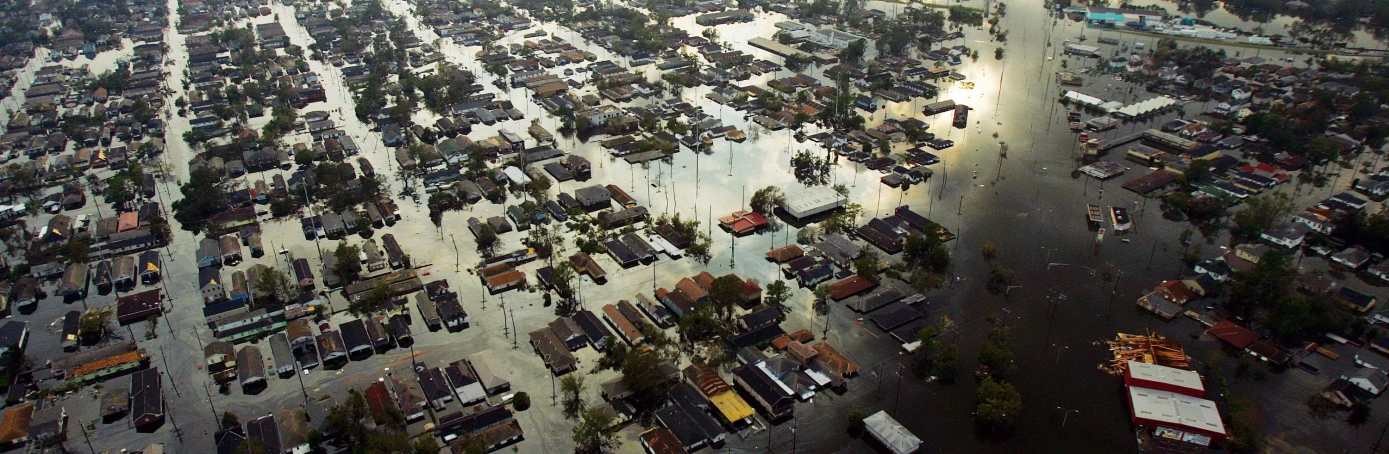
But the Legion was desperate. To prevent the NCR from crossing the Colorado River, Caesar gave the order to demolish Hoover Dam. Explosives placed throughout the dam were set off when a large portion of the NCR Army was on the structure, resulting in thousands of casualties as the concrete crumbled, the water flooded turbine rooms and offices, and made the entire structure collapse. Lake Mead was no more, a tidal wave destroyed dozens of communities and homesteads down the river, and thousands more died.

Still wouldn't be as bad as Hurricane Katrina...

But the NCR had been stopped. President Aaron Kimball, the biggest promoter of the Mojave expedition, is impeached from office. The NCR retreated back West. But the Legion was battered after two long years of war, bloodied, but triumphant. The death of Caesar from a brain tumour in 2281 as he was trying to rebuild the Legion was the death kneel of the Army of the East. Within ten years, Caesar's Legion collapsed, with Legate Lanius, only know brutality and violence to solve any issue, was unable to hold the Legion together, and soon it splinted back into the ancient tribes that the Legion had been formed from. The only winners of the NCR-Legion war was those that didn't fight, the New Vegas Alliance. Although they no longer had access to the clean water of Lake Mead or the power from Hoover Dam, the New Vegas Alliance no longer had to deal with either the NCR or the Legion. While fighting with words between the members of the alliance would continue, they continued to remain allies, welcoming the NCR settlers that didn't return back to California and the runaway slaves from the Legion. The New Vegas Alliance, while not a unified government or even all that peaceful, still provide some protection and safety to those that live and travel in the Mojave.

Oh, and Mojave Express is eventually taken over by a man that most people only knew as the Courier, who eventually would become a major leader in the New Vegas Alliance as well.


Conclusion

So this is perhaps the least depressing Fallout alternate history I've written! 

Mr. House, if you agree with him or not, was one of the most important parts of the mythos and in-game story of New Vegas, so removing him from the equation is tantamount to completely rewriting the entire game. The NCR and the Legion would still be threats, and they both would clash in the Mojave. In the long run, the NCR would win, with or without Mr. House in charge of Vegas. The resources, the manpower, the technology and the strategic situation favours them. However, it's a democracy, and as democratic societies have shown: when the bodies pile up and the war is on the verge of being lost, either perceived or for real, then the people will demand an end to it. That's what would happen in the Mojave to the NCR. The locals, allied together to at least keep outsiders out if not to work together within, would be enough of a hassle and trouble for the NCR or Legion, if they regroup, to knock them out.


But what do you think? What would would have happened had Mr. House had a very rough Kick In The Head? Or if you have a topic or idea you would like me to talk about, please leave comments below, email me at tbguy1992@gmail.com, or tell me on Twitter @tbguy1992.

Sunday, June 19, 2016

AltHistory Scenario #22: What if Julius Caesar Wasn't Assassinated?

On March 15, 44 BC, Dictator for Life Julius Caesar would face immediate death, but also immortality when he was stabbed 23 times by a conspiracy of oligarchic senators afraid that Caesar was trying to become the King of Rome. The assassination of Caesar lead, not to the rebirth of the Roman Republic, but brutal civil wars, first between Caesar's supporters and those that lead the conspiracy to kill him, and later between Caesar's lieutenant Mark Antony and his adopted son, Octavian, who went on to become the first Emperor of the Roman Empire.

But what if Caesar wasn't killed on the Ides of March? What if Mark Antony, who heard of the plot the night before, was able to warn Caesar? (In our history, Antony was intercepted and prevented from warning Caesar.)
Hey Caesar! I brought you that salad... oh, uh... you're busy. I'll come back.
Antony, sending a servant to Caesar's house early that morning, is able to warn him of the plot on his life. Learning that his friend Marcus Brutus was part of the plot from the servant, Caesar, in grief, was reported to have said "Et tu, Brute?" He then summoned Brutus to his home, to ask of this. Brutus, realizing the plot had been foiled, but resigned to become a martyr to the cause of freedom, goes to Casear's home, and explains why he joined the plot (to rid Rome of a tyrant, to restore the Republic, and due to the historical background of his family who had disposed the last King of Rome), and that he was prepared to accept the punishment Caesar was to give.

But Caesar, stunned into silence of the huge plot against him at first, eventually embraced Brutus, praising him for his courage to do what he believed right, even going so far as to kill him. "No matter the gifts and honors I have bestowed on you," Caesar was reported to have said, "you still are your own man, one that believes in all else freedom for all." They then talked into the early morning hours of philosophy, war, and the Republic.

On the Ides of March, despite the knowledge of the plot against him, traveled to the Senate, with Mark Antony, Marcus Brutus, and other supporters. But instead of proceeding to business as was originally planned, Caesar gave a short, impromptu speech. Announcing that he had learned of a plot on his life, in part raised due to the vast powers he had acquired and the hostility it had generated, Caesar announced that he would be stepping down from his position of Dictator for Life, renouncing the titles that the Senate had given him, and would subject himself to the will of the Senate to try him for whatever crimes he may have committed, and that he would respect whatever decision they made. He was also prepared to allow free elections of any eligible citizen to the posts, even those that he had already determined.

The senators sat stunned at the speech. Some of the conspirators, namely Gaius Cassius Longinus, wanted Caesar to be killed or at least exiled, but many of the senators, appointed by Caesar, instead praised him for his humility, and after a series of votes, pronounced him innocent of any crimes that he may have committed, agreed to allow Caesar the chance to continue his military operations against the Parthian Empire, and to allow the next year's offices to be taken by those Caesar had appointed, but then allowing free votes for 42 BC. These actions were announced to the people of Rome, who overwhelmingly approved. However, despite the renunciation of his offices, Caesar was still massively wealthy and influentially powerful, and he still held great sway among the crowds.

The 43 BC Consular elections had Brutus and Mark Antony elected, and, while they continued to clash (as Antony saw Brutus as a threat to both Caesar and himself, as the now aborted conspiracy had shown), Caesar did his best to soothe tensions on both sides, and they worked fairly well together. And while Cassius continued to speak and rail against Caesar, he was soon driven into obscurity.

It also did nothing for the reviled senator Septus Marcus Flatuls.
Caesar left at the end of March 44 BC for his campaign against the Parthian Empire. While Parthia was strong, Caesar's command abilities were superior, and he defeated the Parthians in battle time and again. King Pacorus I of Parthia, however, continued to pester and annoy the Romans, withdrawing his troops and not engaging in battles with the Romans. After three years of war in the Mesopotamian region, and with little to show for it, Caesar eventually decided to end the war. He negotiated a peace where some land was traded and Armenia was made a neutral buffer state between the two nations. The Roman troops under Caesar then marched north, through Anatolia and into Eastern Europe, over the Danube River, to tackle the tribes of Germania.

Unlike in Parthia, Caesar was more successful in Germania, defeating tribe after tribe. While the land wasn't as rich or developed as in Gaul that Caesar earlier conquered, Caesar believed that the land, with Roman citizens settling in colonies through the area, could make it "richer than Italy, Egypt and Hispania combined." Every tribe between the Rhine and the Elbe River's were conquered and made subservient, and Caesar began the process of reorganizing them into new provinces of Rome.

Julius Caesar, basking in the glory of this conquest, began to march south back to Rome. However, before he reached the frontier of Gaul, Caesar had a massive heart attack while riding his horse, and died before he fell to the ground. It was 39 BC, and Caesar was 61.

His troops brought Caesar's body back to Rome, which was in a period of mourning. Mark Antony, Brutus and Octavian, all of whom were publicly arguing and trying out maneuver the other, all united in sadness of Caesar's death. Octavian, who was named Casear's adopted son in his will and given a large percentage of Caesar's fortune, made public orations of the man called "The Greatest of the Great." His reforms, including a police and fire fighting service for Rome, the unification of the provinces to an equal status, and his generosity and charisma all endured him to the people of Rome for a long time to come, with statues, poems, plays, and even a religious cult all based on Caesar springing up all over.
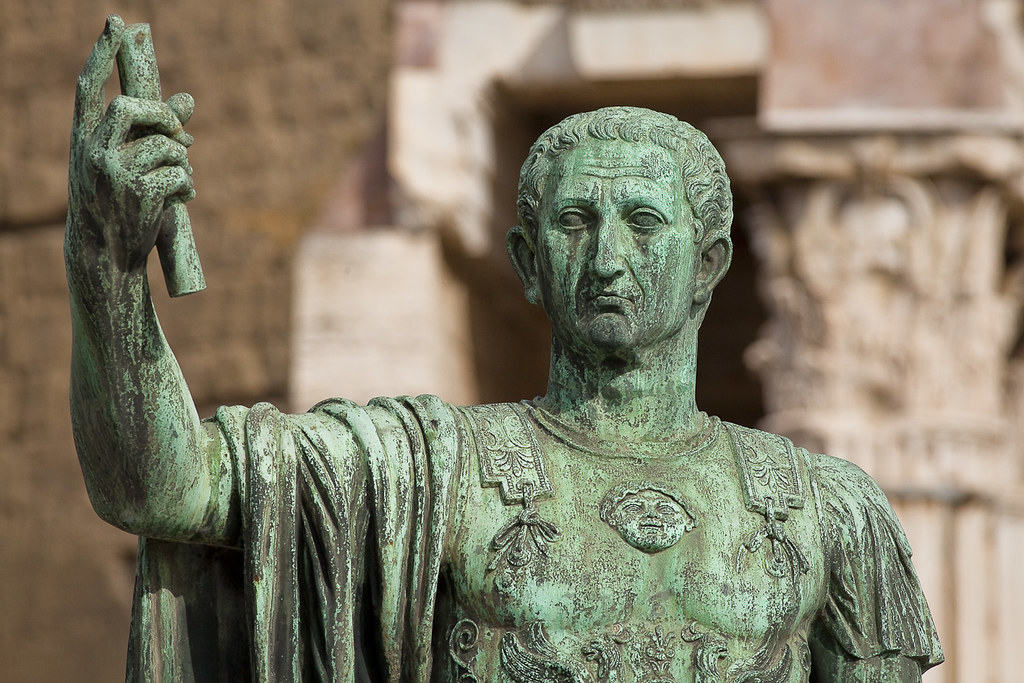
Birds all over Europe liked Caesar as well: they got a thousand new resting places.
After the funeral, what to do with Germania, Parthia, and the ever persistent Sextus Pompey, the son of Caesar's old foe Pompey the Great, became the major political issue of the time, not to mention the simmering feud between Brutus, who had allies in the Senate and the higher classes, Mark Antony with his support in the East (and with Queen Cleopatra of Egypt) and Octavian who assumed the fortune and name of his Great Uncle Julius Caesar and the adoration of the masses in Rome, were on the verge of a massive civil war within months of Caesar's death. However, an illness (some say poison or an assassination as well, but no evidence was found) that took Octavian in 38 BC, at the young age of 25, finally brought the Civil War that had been long brewing to a roaring inferno. As Octavian had died without a will, what to do with the enormous fortune left behind, and the name of Caesar, became a brutal, bitter battle between Brutus and Mark Antony. Brutus, in control of the West, and Antony with his support in the East, engaged in a long series of battles between 37 BC and 29 BC, destroying huge stretches of Italy, Greece, Sicily, Egypt and Gaul. Father turned against son, and entire towns were leveled by troops.

By 29 BC, with the people rioting for peace as war, inflation and poverty spread and both Antony and Brutus having exhausted their supplies of men and money, eventually the Peace of Rome was signed. In this, the Republic was to be divided in two: Brutus claimed the West, Antony retained the East, while Italy would remain a buffer state between the two. The Peace was marked with great celebrations, but little did people know that this was the end of the Roman Republic as people knew. The Senate in Rome was left in charge of Italia, but without a strong leader like Brutus or Mark Antony, they were unable to raise large numbers of legions or try to unify the republic, so both sides began to drift apart. By 24 BC, with the death of Cleopatra in childbirth (another son to Mark Antony), Mark Antony was crowned Pharaoh of Egypt, and he claimed the title of Consul of the East, and the new Eastern Roman Republic based in Alexandria.

"Remind me again why I have to wear this blue and gold thing?"
"I thought it was black and white!"
From his new capital in Massilia, Brutus, the Consul of the West, began to reform his territory which was increasingly called the Western Republic, which included Germania, Hispania, and a large portion of Africa, into a new oligarchic Republic with the basis on the older Roman body. But Brutus would not allow power to be as consolidated under one person, as it was under Caesar or increasingly under Mark Antony, so he and the Senate he established formed a delicate series of checks and balances that served the new Republic well long after Brutus died in 16 BC at age 69. Antony himself would continue to rule the East until 4 BC, at the old age of 79.

The two nations, increasingly distant but calling themselves Rome, would fight for the decades and centuries to come. The East would grow more Greek and Persian as Parthia was finally defeated time and again, while the West more Gaulish and German, until by 200 AD, few could tell that they had even been one single nation. Christianity, which started in Palestine, found a more welcoming home in the West than the East, where it was brutally repressed for threatening the stability of the Empire. Both halves had to deal with Barbarians, which the west handled with diplomacy and wealth, the East through brutal repression, until 259, when the last "Caesar of Rome," Marcus VII, was assassinated and his empire fell apart into several competing kingdoms, and the next several centuries featured wannabe dictators and kings trying to rebuild the Eastern Empire while facing each other, Persia and various barbarian assaults.

Italy, long a declining has-been center of the world, was easily reclaimed The Western Republic in 186 AD, and the Republic also claimed Britannia, Caledonia and Hibernia and began to travel across of the Atlantic Ocean. However, the problems of the old Roman Republic: the concentration of wealth in too few hands, the political machinations, the unchecked destruction of multiple families competing for power and prestige, lead to a declining and moribund state by 300 AD. The barbarians, pushed west by the Huns, took over the vast provinces of Germania, while northern seafarers raided Britannia and northern Gaul. Desert tribes in Africa also began to push north. While several great politicians and generals held the line and even managed temporary restorations and growth, more ineffectual and self-aggrandizing leaders continued to let the Western Republic crumble, until the occupation of Massilia in 404 AD lead to the final break of the Republic. While some of the nations that were born of the Western Republic, like the Republic of Britannia and the Kingdom of Hispania all claimed to be Roman afterwards, the true end of Rome came when the long depopulated and crumbling great city was destroyed by Barbarians in 439, and the city was never rebuilt to it's former glory and stature.

And not a single mad Emperor with a fiddle nearby.
But what do you think? What would have happened had Caesar not met the blades of his assassians? Or if you have a topic or idea you would like me to talk about, please leave comments below, email me at tbguy1992@gmail.com, or tell me on Twitter @tbguy1992.