Showing posts with label USSR. Show all posts

Sunday, November 12, 2017

Fictional AltHistory #9: Command & Conquer Red Alert Timeline Headcanon

So lately I've been on a Command & Conquer kick, partly thanks to the excellent work done by the OpenRA Team, who have taken the freeware files of the original Command & Conquer (1995), Red Alert (1996) and Dune 2000 (1998) and turned them into a fully functional, modern RTS for modern computers. If you want to relive an RTS classic, then go check them out!

Since I'm absolutely positive that EA will never make a good C&C again.

That said, I once did a fictional AltHistory scenario on the first C&C here, well over a year and a half ago, and I think it's time to revisit the grandfather of all RTS games, this time with it's slightly loopy and campy B-movie quality of it's brother, Red Alert 1.

So, Point of Divergence. Hmmm... This is actually harder than I thought, mostly because RA1 is an alternate history already, asking "what if Albert Einstein built a time machine and erased Hitler from history?" And, considering all the talk about Nazi's today, I'd rather not get into that right now...

Well, the games themselves feature the heroic Allies fighting the brutal Soviets for control of Europe, introducing new technologies and desperate tactics to try to change the tide of battle: attack dogs, flamethrowers, Tesla coils, double barreled Mammoth Tanks, nuclear weapons, invulnerability and teleportation devices... the list goes on. Oh, and Tanya.

But, there is one thing about Red Alert 1 that popped up, but then never came up again...

Who is that handsome guy in the back there? Zoom in!
... damn low resolutions. Find a better picture for this joke!

Ahah! You magnificent bald, goateed bastard Kane, you!

An aborted attempt to tie the Red Alert series to the original Command & Conquer, the Tiberium series.

Now, over the years, a myth, persay, has developed on how this tie together would work. But this scenario never struck me as likely, because it was that a Soviet Victory in the "Second World War" of this timeline was what would lead to the establishment of the Global Defense Initiative and the emergence of the Brotherhood of Nod. But it just doesn't feel right to me, that, the Soviet Union manages to conquer all of Europe but then allows a United Nations organization (which should never have been established in this alternate timeline) to then build a global military force. It just always struck me as wrong that the Soviet's would allow something like that to happen, or that the United Nations would be formed, and then in turn form GDI, after a collapse of the USSR.

No, my headcanon for tying RA1 and C&C1 together involves an Allied Victory.

"But wait!" the C&C fans would begin to bellow. "The Allied Victory is what leads to Red Alert 2, and then to Red Alert 3! So it can't be used for C&C1. How can that work?"

Ah, well here is where it gets weird: I say that Red Alert 1 and 2 are both in the timeline.

Not sure what he's confused about. Most likely why watermarks are hovering all over him.

Okay, let me explain.

So, we start with Einstein going back in time in the late 1940s, killing Hitler, and returning to his time, just to see the Soviets rise up, and try to take over Europe. With the United States still isolationist, it's all up to Europe (including a non-Nazi Germany) to unite and hold back the Soviets, forming the Allies, or, rather, the United Nations. It was only after the USSR tried to develop atomic bombs that the US joined the United Nations, sending men, weapons and supplies to help the beleaguered Allies, and invade Russia itself, and topple Stalin, and the USSR.

After this, the US and her European Allies begin to rebuild, and Michael Romanov is placed in charge of the much smaller Soviet Union. But in the 1970s, with the USSR rebuilt and gearing up for revenge, they launch a multi-pronged attack on the United States, which wasn't the great military power it was in OTL because it only helped at the very end of the previous World War, and then went back to a semi-isolationist stance, content that the damn Commies are contained. But now with the US the prime target of the USSR (with their mind control agents, attack squids, missile launching battleships and flying airships of death), and the Allies (which have dolphins, tanks that turn into trees, weather control superweapons and, of course, Tanya), perhaps because the US didn't come to their immediate aid or because they were afraid of the Soviet Union, wouldn't join until later, at which point the Allies manage to overcome the destruction, and bring down the USSR.

Up until now, this is based on the lore of the first two Red Alert games. Now is where the Wibbly Wobbly, Timey Wimey stuff comes into play.
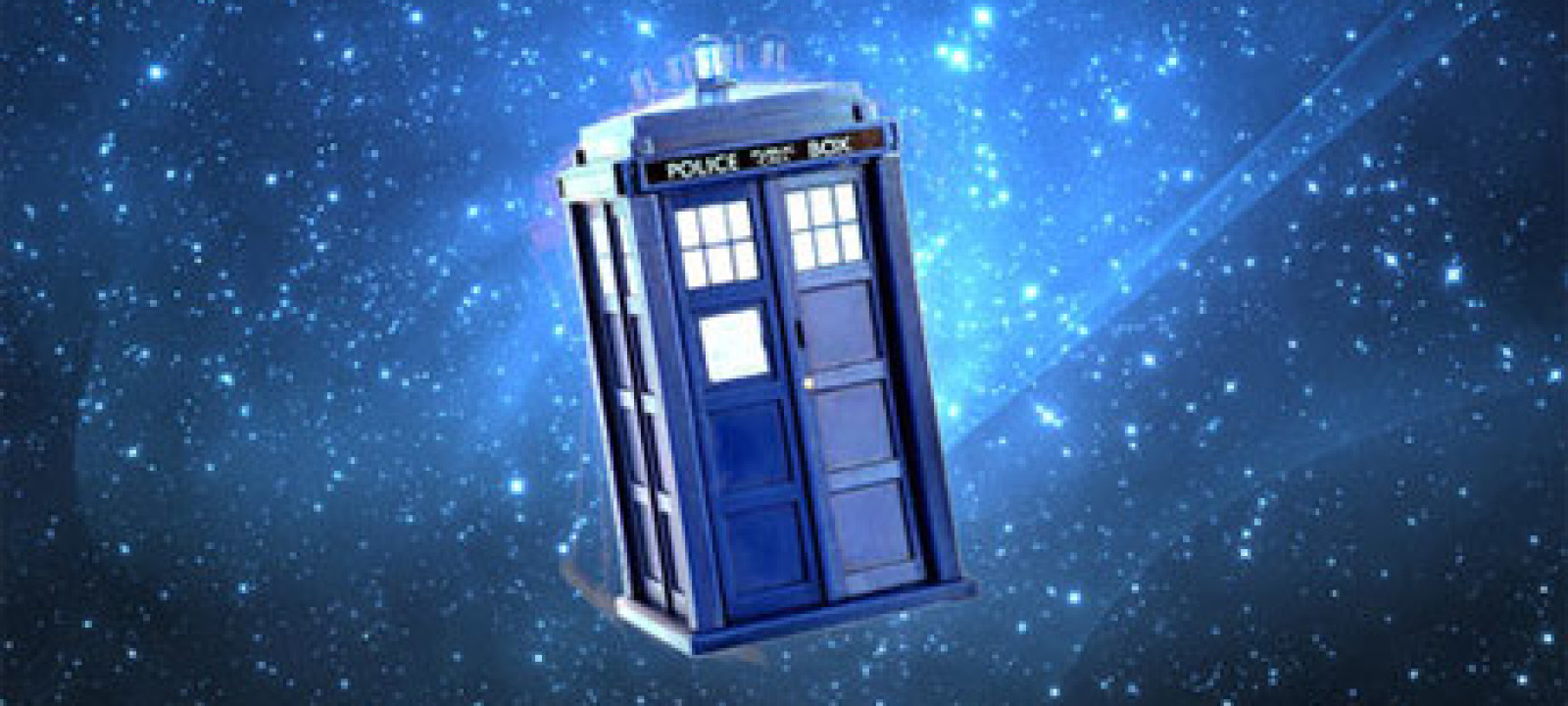
That noise you hear is Daleks allying with the Brotherhood of Nod and the Soviets.

The expansion for Red Alert 2 featured a campaign by the psychic Yuri trying to take over the world. Now, in the Allied Campaign, at the last mission, there is a... thing that happens, where the screen gets all wobbly, and the "timelines merge" with the ending of Red Alert 2. And with the world now at peace, and the United Nations dominate, all the major powers agree to dismantle, or at least decommission their most advanced weapons, with many of the blueprints being destroyed or locked away. And, with all of Europe, North America and Russia now a war torn ruin, and with no "superpower" to easily fill in the slot, the United Nations forms several unified military commands. One of which, after some name changes (including the catchy Operations Group Echo: Black Ops Nine) becomes the Global Defense Initiative.

"But wait! What about Red Alert 3?"

Simple: it's a branching timeline from the end of Red Alert 2, but it's not the "main" timeline of our history, perhaps  branching after Cherdenko (SPACE!) activates his time machine before Yuri's mind control starts? It's an alternate scenario of the events of Red Alert 2, and therefore not associated with the Tiberium Timeline.

"And Kane? And the Brotherhood of Nod?"

Ahh, well here is where they finally come in: they have always been an enigmatic, mysterious organization, and mentioned all the way back in the 1950s. If I remember correctly, there is even something at the end of the RA1 campaign where someone mentions they didn't find all of Stalin's advisors. It's quite simple to assume that Kane and the Brotherhood went into hiding for the events of RA2, and only emerged afterwards when Tiberium finally arrived on Earth.

This was really the Scrin's way of welcoming Humanity to the spacefaring community. A planet warming gift.

"Then why didn't the Allies/GDI just take the weapons from the previous war and use them?"

Well, what says they didn't? Well, some of the technology, at least. For example, Nod's Stealth tank? What if it's a refinement on the Mirage Tanks of Red Alert 2, just they don't turn into trees now. And the Apocalypse tank could have been used to build the first Mammoth Tanks for GDI. But other technology, like the Iron Curtain, Chronosphere, Weather Control Device, Prism Tanks and others would have degraded, or purposefully/accidently destroyed over the forty some years between the war in Red Alert 2, and the late 1990s/early 2000s that Tiberium Dawn takes place. Even if they had the blueprints, it would take time to rebuild it all, if it wasn't seen as not useful: after all, GDI isn't exactly running on a big budget, and even has its budget cut halfway through the campaign after Nod media manipulation. So I don't see GDI investing in trying to rebuild old technology, most of which may only have limited use on the modern battlefield, after years of rusting in bunkers and warehouses around the world.

So, this does take some leaps of faith and assumptions, but this is how I would tie the two branches of Command & Conquer together. Is it perfect? No: after all, why would the allies give up on, say, Prism tanks after showing their usefulness? Though, there have been efforts to restrict and eliminate certain types of weapon over time, so I could see that happening here as well. But, I think it provides a somewhat satisfactory explanation for the two timelines intersecting.

But what do you think? How do you think the timelines of Command and Conquer being tied together, or if they should at all? If you have a comment or a suggestion, leave a comment below, email me at tbguy1992@gmail.com or look for me on Twitter, @tbguy1992.

Thursday, June 1, 2017

Alternate History Scenario #28: What if Hitler Doesn't Declare War on America?

I'm really sorry for the long delay since I last posted. Life issues have gotten in the way and I really haven't been in the best mindset to work on these things. But, I'm here now, so let's get back to it!

Today's idea comes from someone on Twitter, who asked what if Hitler hadn't declared war on the United States after Pearl Harbor, and how the war would go: would the US focus only on Japan? And would the Soviet's still win in the East?

The answer to both questions is, undoubtedly, yes. This is a fairly popular topic on Alternate history websites, and discussed to death before, but here's my two cents anyway.

And because I'm Canadian and we don't use penny's anymore, it's really zero cents since we would round down.

Franklin Roosevelt basically only had the political capital to go to war with Japan in the aftermath of Pearl Harbor. The Japanese had attacked America, and to many people, the fighting in Europe was still not their concern. When Hitler brashly declared war on the US a few days after Pearl Harbor, only then was America and Britain really able to coordinate to go on the offensive against both Nazism and Japanese imperialism.

So, if Hitler doesn't attack, and despite Roosevelt's concerns that Hitler may be the bigger long term threat to America, he will have to content himself with supplying Lend-Lease to the British and Soviet's until either he can find a way to bring America with him to take on Hitler, or Germany does something stupid, like, say, sink an American ship and kill American citizens. But in this scenario, that never happens, so the US basically has to just sit by and hope the British and Soviet's can fight Nazi Germany itself (and which I will get to in a moment)

However, unlike many suggestions that with the full might of America focused on Japan, that Japan would be defeated sooner, say in 1944, I disagree. I think the Pacific Campaign as we know it might be the basis for this alternate timeline as well. You have to remember that the majority of the fighting was with naval and air forces, and only a few major landing operations. It still takes time to build ships, train air crews, and eventually go on the offensive. While the American's won't be sending B-17 Flying Fortress's to Europe, it's not like they would be perfectly suited for the fighting in the Pacific, as they don't have the long range that the B-29 Superfortress had (and which only started to be built in 1942). Even then, it took until the Battle of Saipan in 1944 before even the B-29s were in range of the majority of Japanese cities. Just because the US would have more manpower, and wouldn't be focusing on Europe or North Africa, you can only send so many more Marine's and battleships to the Pacific: You still need a fleet in the Atlantic, just in case the Germans did do something. And maybe there are a few more landing craft, a few more divisions landing on beaches or squadrons of Mustangs and bombers over the skies, but it wouldn't be enough to shorten the war by a year or more. Maybe there would be a difference of a few months here and there, but in general, it wouldn't majorly change the war as we know it from OTL. By August 1945, the Japanese would be pretty much only defending their home islands and the little bits of Empire that the American's haven't yet liberated.

Liberated with excessive firepower and a belief that America is always right.

That leads me to another point: the Manhattan Project. What would it look like in this TL? My guess: more or less the same. Just because the US is not involved in fighting the Nazi's, which the British and Americans were sure where racing for an atomic bomb, doesn't meant that the US would just ignore this potentially powerful weapon. My guess is that the Americans take over the project (with help from British, Canadian and other scientists), and would complete a weapon in time to drop on Japan as in OTL.

Why Japan? Because the Americans are in charge, and Operation Downfall, the proposed invasion of Japan, would still be a horrifying proposition to undertake. And in this TL, only the Americans would be in Operation Downfall, as the British are still dealing with the Nazi's. So, in order to prevent the upwards estimates of a million American casualties, President Truman (I'm sure that Roosevelt would still pass away in early 1945) would authorize using nuclear weapons. Plus, it would serve multiple purposes: make the Soviet's think twice about going to war with the west, and if the Nazi's are still around, convince them to give up before American joined and dropped an Atomic bomb on Germany. And, like in OTL, it would convince the Emperor of Japan to surrender and end the Pacific War.

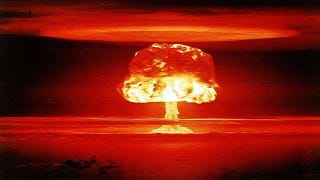
Just a few mushroom clouds to get a point across.

Now, for what happened in Europe? From 1942 onward, it would be a story of the Nazi's wearing themselves out fighting the Soviet's (Stalingrad and Kursk are still in the future here). During this time, Strategic bombing and fighting in North Africa is basically all the British can do. They do not have the manpower to even begin contemplating an invasion of Europe, so the war in Europe is stretched out a bit longer. But by 1943, the Nazi's will be in brutal, ignominious retreat in the East, fighting for every foot of ground as the Soviet industrial and manpower advantage comes to bear. By 1943, the British and Commonwealth powers will have driven the Axis out of Africa, and then proceeded to the invasion of Sicily and then Italy itself (which was Churchill's brainchild, being the Mediterranean strategist he was). When the Germans finally prevent the British from reaching Rome, in 1944, the British would then land in Greece or Yugoslavia, part of Churchill's plan to attack the "soft underbelly of Europe," and without the US to basically demand a Normandy landing, the attack would go on. Maybe in 1945, the British would finally land in northern Europe: maybe Normandy, but I'd be more confident in Norway. Strategic bombing, which never lived up to the promises of it's biggest supporters, really wouldn't have changed much in my opinion: morale never broke, industrial production never really slowed down. Just civilians killed, cities leveled, and hardening hatred of the enemies of the Third Reich for causing all this damage (though some unspoken questions of why the Nazi's couldn't stop it).

But by this point it wouldn't matter, because the Soviet Juggernaut would be steamrolling west, smashing all the Nazi armies in the way. Berlin would be captured by mid 1945 as in OTL, and Hitler and the leadership would retreat to the west of Germany, then maybe into France (as there would be no second front). Stalin would stop at nothing to end Hitler and the Nazi's once and for all, and "liberate" all of Europe. The dropping of the Atomic bomb doesn't convince the Nazi's to give up, so the Russians begin pushing east over the Rhine and into France itself.

At this point, the American's may finally enter the war, but with most of their troops still in the Pacific, it's an empty gesture more than anything. By the time that the first B-17s or B-29s could get to Europe in late 1945, Brussels, Amsterdam and Paris would all have the Hammer and Sickle flying over them. By the beginning of 1946, Russian troops would have reached the Pyrenees, and here is where things may get complicated: would Franco allow the Nazi's to flee to Spain, or would he prevent them from dragging him into war with the Russians? My guess is that Hitler would try to flee to South America, but be apprehended before he could. The war would be over, Hitler and the Nazi leaders executed after a trial in Moscow, and all of Europe (minus Spain, Sweden, Greece, half of Italy and Norway) would all be Communist puppet states.

Die Waffen Legt An!

What happens after this? Well, America would be the strongest nation in the world, but with few friends. China, in this TL, would have kicked out Mao with help from the US, and the majority of the Pacific would be capitalist. But Britain would be basically under siege with the Soviet's just a few miles away across the Channel, and resentful that the US never really helped fight the Nazi's except for some boats of equipment. The Soviet's would use the diversionary tactics of Churchill, and the lack of support from America, to make Communism look better to the people of Europe, Asia and Africa, undermining the belief that democracy and capitalism was the way to go.

The Cold War of this Timeline would be between the wounded Soviet Union, the Nuclear Armed and relatively unscathed and somewhat isolationist America, and a Britain that, unlike OTL, would have to cling to the Royal Navy and a strong military to protect itself instead of letting the US protect them, turning it, basically, into Oceania from 1984.

But what do you think? What if Hitler had never declared war on the US? If you have a comment or a suggestion, either email me at tbguy1992@gmail.com or look for me on Twitter, @tbguy1992.

Monday, October 10, 2016

AltHistory Scenario #25: What if Israel Lost the 1948 Arab-Israeli War?

Oooooh boy, flame war time!

He will never be able to recover if I call him Hitler!

As anyone that has looked at a newspaper in the past seventy years can tell you, the Middle East is a mess. The legacies of colonialism, the wealth of oil (and in some places, the lack of it), and the ever present tension of religion, ideology, oppression and great power politics have turned the region into a powder keg, which has gone up into flame time and time again.

At the centre of it all is Israel. For decades, the goal of many Arab strongmen and Islamist ideologue was to drive the Jews into the sea, and liberate the land for the hundreds of thousands of Palestinian refugees, many of whom fled to refugee camps in surrounding nations but have never been able to integrate with the nation they found themselves in.

I'm not going to get into who's right or wrong here, but I'm going to pose a simple question: What if the modern nation of Israel just didn't exist? What if Israel lost the 1948 Arab-Israeli War?

Background

In the aftermath of the Second World War, the Jews that survived the Holocaust desperately wanted one thing: to get as far away from the horrors and the trauma that the past years had taken on them. Many immigrated to the United States and other countries, but as many traveled to Palestine, to full fill the long promised Zionist dream of returning to the homeland of Judaism, Israel.

Borders subject to change without notice.

Palestine was a former Ottoman territory, which, along with areas like Iraq and Transjordan, was held by the British as a League of Nations mandate. Syria and Lebanon was held by the French under similar conditions. While the British as early as 1917 had promised a new homeland for Jews in Palestine, the Arab population that lived in the region were nervous and resented the immigrants. Violence and civil war between the two groups broke out, which gave the British Empire headaches for decades, as they supported first one group, then the other. By 1947, Britain wanted to get out of Palestine and wash themselves of the whole mess.

The new United Nations proposed a partition: half the land to Jews, half to Arabs, and Jerusalem would be divided along similar lines. While the Jews supported this, the Arabs despised the dictate from the world organization. Fighting between the two groups reached a fever pitch, until eventually war broke out. Eventually the US withdrew its support for the split, which encouraged the Arabs to push on.

Point of Divergence

The supporters of Israel were many: the US, British and French all wished to give a homeland to the long suffering Jewish population, as well as providing a beacon of Western democracy (and interests) in a region where the locals were less than hospitable to the colonizing powers. However, except for diplomatic recognition, almost no support was given. In OTL, a major supporter of the new state of Israel was Joseph Stalin, leader of the USSR, who as early as 1947 allowed Czechoslovakia, soon to become another satellite state of the Soviet Union in Eastern Europe, to send arms and train flight crews for Israel that proved decisive to allow them to fight for their independence. However, by 1949, Stalin had lost interest and began to see Israel as a stooge to the west, and began to denounce it.

However, what if Stalin came out against Israel at the beginning? What if those arms and support from Czechoslovakia didn't happen?

Joseph Stalin: ruining history (and alternate history!) since 1878.

In 1947, Stalin sent a memorandum to the government of Czechoslovakia, demanding that they do not support Israel. Faced with possible invasion and the destruction of the last democratic government in the region, Czechoslovakia acquiesced. No weapons or planes arrived in Palestine to help the Jews.

Outcome

The Jewish Agency, the nominal government of Israel, felt it would be able to purchase weapons if they declared themselves an independent country, and they did so the day before the British Mandate was to end on May 14, 1948. However, the nations of the Arab League: Transjordan (soon to be known simply as Jordan), Iraq, Syria and Egypt declared war the next day, and with support from nations like Saudi Arabia, Pakistan and irregular forces like the Muslim Brotherhood and the Arab Liberation Army all invaded the upstart nation. Egypt, with the largest army, and Jordan, with the British trained and led Arab Legion, made quick strides, occupying the Negev Desert, Gaza Bank and West Bank within a few weeks, cutting off Israeli settlements, and pushing the Jewish fighters out of much of Palestine.

With only the few supplies left by the British behind and whatever could be smuggled in past the British Blockade that remained up until the British surrendered the mandate. Some airplanes, like B-17's, and trucks were purchased in the US, but they were lacking rifles, artillery, machine guns and tanks. Attempts to purchase weapons in the US, France and other nations was hampered by the difficulty in getting them into Israel. The little bit that did arrive showed up infrequently, and some was captured by the invading Arab armies. United Nations attempts at a cease fire failed dramatically, severely crippling the world organization only a few years after it was created.

You would think if you could get almost every nation in the world to sit in a room together would actually help solve issues....
However, this was far from enough to supply the thousands of Israeli fighters, and soon brigades established had to be disbanded or merged with others. While hidden factories managed to produce some of what was needed, it wasn't enough. By the start of 1949, the outgunned and outnumbered Jewish fighters were surrounded at the port of Tel Aviv, having been forced out of the rest of the territory. On March 3, 1949, the Siege of Tel Aviv ended as the last members of the Jewish Agency surrendered.

Aftermath

Within weeks, the Jewish settlers of the region were being driven out, on top of the massacres that the Arab armies and Palestinian fighters had already engaged in. Ships full of Jewish refugees sailed away from Palestine, the hope of the Zionist movement crushed. Many fled to the US and Canada, helped by Jewish populations that already existed in both nations. Those that weren't able to evacuate by sea instead were able to go to the territory held by the Arab Legion and Jordan, namely the West Bank. King Abdullah I of Jordan was a moderate, compared to most of the rest of the Arab League, and he favoured the division of Palestine, if just so areas like the West Bank could be annexed by Jordan, and that a Jewish state would be easier to deal with than one run by Arabs who opposed him. Of course, Syria and Egypt had their own land claims on Palestine as well, to the point that any possible Palestinian state would be non-viable.

King Abdullah, however, was patient. He decided not to annex the land he held immediately, instead allowing the Palestinian Authority to set up it's government in occupied Jerusalem, only so long as they promised to end their attacks on the Israeli refugees. Reluctantly, Amin al-Husseini, who had been loosely allied with Nazi Germany during World War Two accepted. While Abdullah's goal was for a Middle East spanning kingdom, he was also a realist, and knew it would take a lot more than the 10,000 soldiers of the Arab Legion to make it a reality. He instead began a press campaign to encourage Palestinians that they would be better off in Jordan, with seats in the Jordan parliament (along with the Jewish refugees that resigned to live in Jordan), and announced that a referendum would be held in 1950 to determine the fate of the West Bank.

And then he scored a slam dunk, winning the NBA Championship... wait, not that Jordan? Oops.

King Farok of Egypt, however, was not to be denied, and he annexed the entire Gaza strip and other territories he held, earning him enmity among the Palestinian's who wanted their own territory. Attacks on occupying Egyptian troops soon began. Jordan used it as an excuse to attack Egypt, which was then supported by Syria and in June 1950 the Palestinian War flared up again. Jordan quickly gained the advantage, splitting Egypt and Syria on land, and using the British trained air force to rain bombs on Cairo and Damascus. By September, the Palestinian War was over, this time occupied by Jordan.

Now, with all of Palestine under Jordan's control, the entire territory was annexed. This sparked anger in much of Palestine, but after two decades of war, most of the people in the region wanted peace. The assassination of King Abdullah in 1951 over his failure to allow a free Palestinian state hung over the expanded Jordan for years, but after years of fighting, and the Six Day War of 1964 that saw Egypt, Syria and Iraq, all under influence from the Soviet Union attack the overstretched American and British allied Jordan and forced them out of Palestine finally allowed Palestine to become an independent nation. Jordan retreated, but would became a bellicose and aggressive nation, seeking to avenge the humiliation, which they did when they managed to overthrow Saddam Hussein's Iraq in 1985 after his successful war that toppled the Shah of Iran.

Brutal Middle Eastern dictator or Prohibition-era gangster wannabe? You decide!
The rest of the Middle East continued to fight, first supported by one of the superpower blocs, then another, all in a quest to get a source of stable oil supplies. However, because of the wealth in oil, and long simmering nationalist and religious tensions in the area, peace in the region was fleeting, and by the collapse of the USSR in 1991, the US wanted little to do in the area, especially after the effort to occupy and stabilize Iraq in the 1990s proved expensive and costly. The valuable oil of the area was just not worth the price in lives, and soon efforts in the US and Europe turned more to trying to end oil dependence on the Middle East, which was still ongoing as of 2016.

Conclusion

Plausibility wise, I give it a 6/10. The possibility that Israel would survive was a 50/50 chance in 1948, and would be less without the supplies it got from Czechoslovakia. Had the Arab states worked together, had the leaders of the nations sought to establish an independent Palestine instead of tearing off pieces for themselves, then Israel wouldn't have stood a chance. Even with the disunity, Egypt, Syria and Jordan were able to claim territory of the Palestinian Mandate that Israel would have to fight multiple wars in the next few decades to reclaim.

But the thing about the Middle East, something that has bedeviled the rest of the world for decades, is that there just doesn't seem to be a solution that anyone will find satisfactory. Land, religion, oil, ideology, the wishes of the great powers; everyone has a hand and a say in the area, and no one can agree to anything. In an attempt at Middle East peace, someone will lose. And in geopolitics, no one likes to lose.


Let's face it: we already lost.
But what do you think? What would have happened had the nation of Israel never came to be? Or if you have a topic or idea you would like me to talk about, please leave comments below, email me at tbguy1992@gmail.com, or tell me on Twitter @tbguy1992.

Sunday, September 18, 2016

AltHistory Scenario #23: What if the Berlin Wall Never Fell?

I'm baaaaaaack!

Sorry for the long delay. On the bright side: the rough draft of the Fallout story is done! Forty chapters, close to 200,000 words... should be pretty big and epic, especially when I get around to editing it. However, I'm also starting to get ready for my NaNoWriMo project in November, so things may be a bit slow then again.

But anyway, on to the Alternate History!

Today I got this from a group chat I was on that asked: What if the Berlin Wall never came down? And since it's just on the border of my 25-30 rule, what the hell, I'll do it.

Also, no pictures today, mostly because of laziness.

Point of Divergence

This is a tricky one, because the Berlin Wall came down because Communism in Europe was crumbling, and opened in November 1989. So, the way to prevent the wall from falling is to not have Communism fall, because unless East Germany, the German Democratic Republic, remains, then there is no rational for the wall.

So, if anything, the Alternate History should be "What if Communism never falls in Europe?" But we started with the Wall, so we'll just stick with that.

So, for this POD, I'm going to say that in this timeline, Soviet Premier Mikhail Gorbachev, instead of pursuing Glasnost and Perestroika, only went for Perestroika, and only for the economy. Few political or social reforms were allowed (voted down by the Poltiburo, and Gorbachev was unable to overcome their opposition). Instead the economy was overhauled. Limited free enterprise in the model of Lenin's New Economic Policy of the 1920s, is introduced, and central planning was reduced, along the lines of future reforms that the People's Republic of China would undertake. A hybrid centralized and capitalist economy is created, and living conditions in the USSR, though still behind the West, begins to increase. Other states in the Warsaw Pact, like East Germany, Poland, Romania and Czechoslovakia, under pressure from Gorbachev to reform and not become such a huge drain on the economy, also sees economic growth.

Outcomes

The modified Perestroika reforms give a new lease on life for Communism, which had been increasingly stagnating since the mid 1970s. State owned businesses, with the aid of workers brought in to help make production goals, begins to retool for more consumer goods. Agriculture, which theoretically would be a huge sector of the economy of the USSR, had been struggling for years, and grain from America had to be imported to feed the people. But with new incentives and new equipment, soon Ukraine and southern Russia becomes the new breadbasket of Europe. By 1990, imports of American grain has been reduced to zero, and the USSR and Warsaw Pact was not only self sufficient, but importing food to Europe and Asia. The withdrawal of Soviet troops from Afghanistan in 1987 helped the economy as well, as new equipment for the military was required. But instead of leaving the nation in a vacuum, Gorbachev promised foreign aid to help rebuild Afghanistan, as an "apology" for a misguided effort to maintain communism. However, this fact wasn't reported at home, with press censorship still in force.

With the Soviet economy booming, the USSR is able to begin flexing it's muscles on the world stage. When Saddam Hussein invaded Kuwait in 1991, the USSR launched a second front from the north as the US and it's western and Arabian allies invaded from Saudi Arabia. Since no formal plan of what to do with Saddam had been agreed upon in the UN, Soviet troops were ordered to go straight for Baghdad, capturing Hussein,  and raising the hammer and sickle over the city. With the aid of the flatfooted US, both superpowers monitored elections to determine a neutral, non-alligned leader for Iraq, and the Soviet troops left. The USSR was back, and stronger than ever.

In the US, President Ronald Reagan, instead of bankrupting the Soviet Union with massive arms increases and scientific projects like the Space Defence Initiative, is now suffering from huge budget deficits himself. Who knew that expensive military programs, along with massive tax cuts and increases to Social Security and other programs would never balance out? By the mid 1990s, with President George H. W. Bush's second term winding down, the US is facing a budget shortfall at a trillion dollars, as Republican dominated Congresses continued to cut taxes to try to spur the economy, which was already running at a good level. With Democratic Al Gore winning in 1996, on the promise to restore "fiscal sanity" to the government, spending on the military was reduced and taxes raised to 1980 levels. While unpopular, and a huge shock that saw the New York Stock Exchange crash in 1997, it was considered necessary. Gore didn't win a second term though, instead Republican George W. Bush, the son of the former Bush, won the presidency in a landslide, who then began to cut taxes once again. But the struggling economy soon leads, in 2004, to proclaimed Socialist Bernie Sanders to run for President, and start pulling the US to a more leftward socialism, with universal healthcare and new investment in infrastructure and schools, as well as nationalizing failing businesses in railroads, banking, telecommunications and others, in what has been called the Second New Deal. But conservative and Republican backlash means that many of Sander's policies were fiercely resented, and it wouldn't be until his re-election in 2008 that many of them would finally go through.

With the Middle East somewhat stable (if still tense), Islamic fundamentalist groups like Al Qaeda doesn't have as secure a base as insecure Afghanistan, is unable to launch the large attacks on the US or the USSR as they hoped, and soon the many smaller groups splinter away. Likewise in Europe, divided by the Iron Curtain, tensions between communists and capitalists continue. When the US began to withdraw troops due to budget cuts, other NATO nations were forced to pony up, making most of Europe a heavily armed tinderbox. China, with their economic reforms, also begins to modernize and expand it's military, presenting the world with three superpowers

But where Islamic fundamentalism is gone, the Cold War is still here, as the USSR and US settle into a stalemate. Weekly tests of the Emergency Broadcast System, nuclear drills, and close calls are still the order of the day, but armed confrontation seems increasingly unlikely, as the major nations of the world begin to shift into similar, if not identical, economic and political models. But by the 2010s, the USSR, with it's reformed economy, is clearly the leading superpower.

As for the Berlin Wall? The machine guns are still there, but no longer pointed inwards. They are pointing out, to prevent an attack by the West German garrison in West Berlin from breaking out.

Conclusion

It's tough to talk of events that happened less than 30 years ago, as I've mentioned before, like in my 9/11 didn't happen article. But, like I said earlier, the only way that the Berlin Wall stays up is if Communism isn't crumbling and falling apart, and the way I see it is with more capitalistic reforms a la China OTL.

And I'm sure that if I get some comments, it's going to be about how I treat America in this ATL. But, let's face it: America is, perhaps, the luckiest nation on this planet: they basically control an entire continent (Canada and Mexico aren't exactly in any position to challenge the US), and unlike Australia, have a large population, lots of resources, and borders on the world's two largest oceans. They haven't been invaded since 1812, and have only faced one, although brutal, civil war. No violent revolutions, no threats from across the oceans, but the ability to step in anywhere and influence matters to their own design, all the while claiming American Exceptionalism. Only in the Cold War did America finally face a major threat, with atomic annihilation, but once again America lucked out, and the USSR collapsed before the world ended. But if the USSR began to reform, I don't see how America, with a political establishment that is so different from the rest of the world in ideology and beliefs, could withstand the pressure.

And really, does "trickle-down" economics really work?

But what do you think? Could the Berlin Wall have stayed standing if Communism reformed? Or if you have a topic or idea you would like me to talk about, please leave comments below, email me at tbguy1992@gmail.com, or tell me on Twitter @tbguy1992.