Showing posts with label United Kingdom. Show all posts

Thursday, June 1, 2017

Alternate History Scenario #28: What if Hitler Doesn't Declare War on America?

I'm really sorry for the long delay since I last posted. Life issues have gotten in the way and I really haven't been in the best mindset to work on these things. But, I'm here now, so let's get back to it!

Today's idea comes from someone on Twitter, who asked what if Hitler hadn't declared war on the United States after Pearl Harbor, and how the war would go: would the US focus only on Japan? And would the Soviet's still win in the East?

The answer to both questions is, undoubtedly, yes. This is a fairly popular topic on Alternate history websites, and discussed to death before, but here's my two cents anyway.

And because I'm Canadian and we don't use penny's anymore, it's really zero cents since we would round down.

Franklin Roosevelt basically only had the political capital to go to war with Japan in the aftermath of Pearl Harbor. The Japanese had attacked America, and to many people, the fighting in Europe was still not their concern. When Hitler brashly declared war on the US a few days after Pearl Harbor, only then was America and Britain really able to coordinate to go on the offensive against both Nazism and Japanese imperialism.

So, if Hitler doesn't attack, and despite Roosevelt's concerns that Hitler may be the bigger long term threat to America, he will have to content himself with supplying Lend-Lease to the British and Soviet's until either he can find a way to bring America with him to take on Hitler, or Germany does something stupid, like, say, sink an American ship and kill American citizens. But in this scenario, that never happens, so the US basically has to just sit by and hope the British and Soviet's can fight Nazi Germany itself (and which I will get to in a moment)

However, unlike many suggestions that with the full might of America focused on Japan, that Japan would be defeated sooner, say in 1944, I disagree. I think the Pacific Campaign as we know it might be the basis for this alternate timeline as well. You have to remember that the majority of the fighting was with naval and air forces, and only a few major landing operations. It still takes time to build ships, train air crews, and eventually go on the offensive. While the American's won't be sending B-17 Flying Fortress's to Europe, it's not like they would be perfectly suited for the fighting in the Pacific, as they don't have the long range that the B-29 Superfortress had (and which only started to be built in 1942). Even then, it took until the Battle of Saipan in 1944 before even the B-29s were in range of the majority of Japanese cities. Just because the US would have more manpower, and wouldn't be focusing on Europe or North Africa, you can only send so many more Marine's and battleships to the Pacific: You still need a fleet in the Atlantic, just in case the Germans did do something. And maybe there are a few more landing craft, a few more divisions landing on beaches or squadrons of Mustangs and bombers over the skies, but it wouldn't be enough to shorten the war by a year or more. Maybe there would be a difference of a few months here and there, but in general, it wouldn't majorly change the war as we know it from OTL. By August 1945, the Japanese would be pretty much only defending their home islands and the little bits of Empire that the American's haven't yet liberated.
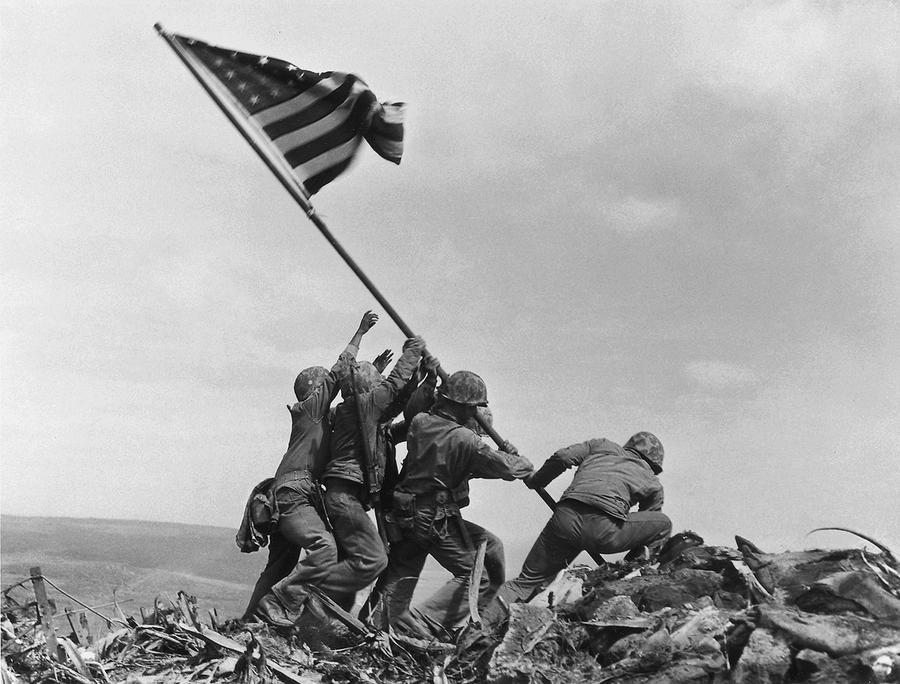
Liberated with excessive firepower and a belief that America is always right.

That leads me to another point: the Manhattan Project. What would it look like in this TL? My guess: more or less the same. Just because the US is not involved in fighting the Nazi's, which the British and Americans were sure where racing for an atomic bomb, doesn't meant that the US would just ignore this potentially powerful weapon. My guess is that the Americans take over the project (with help from British, Canadian and other scientists), and would complete a weapon in time to drop on Japan as in OTL.

Why Japan? Because the Americans are in charge, and Operation Downfall, the proposed invasion of Japan, would still be a horrifying proposition to undertake. And in this TL, only the Americans would be in Operation Downfall, as the British are still dealing with the Nazi's. So, in order to prevent the upwards estimates of a million American casualties, President Truman (I'm sure that Roosevelt would still pass away in early 1945) would authorize using nuclear weapons. Plus, it would serve multiple purposes: make the Soviet's think twice about going to war with the west, and if the Nazi's are still around, convince them to give up before American joined and dropped an Atomic bomb on Germany. And, like in OTL, it would convince the Emperor of Japan to surrender and end the Pacific War.
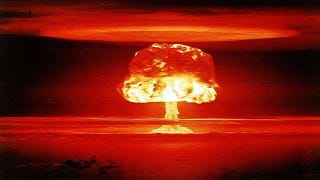
Just a few mushroom clouds to get a point across.

Now, for what happened in Europe? From 1942 onward, it would be a story of the Nazi's wearing themselves out fighting the Soviet's (Stalingrad and Kursk are still in the future here). During this time, Strategic bombing and fighting in North Africa is basically all the British can do. They do not have the manpower to even begin contemplating an invasion of Europe, so the war in Europe is stretched out a bit longer. But by 1943, the Nazi's will be in brutal, ignominious retreat in the East, fighting for every foot of ground as the Soviet industrial and manpower advantage comes to bear. By 1943, the British and Commonwealth powers will have driven the Axis out of Africa, and then proceeded to the invasion of Sicily and then Italy itself (which was Churchill's brainchild, being the Mediterranean strategist he was). When the Germans finally prevent the British from reaching Rome, in 1944, the British would then land in Greece or Yugoslavia, part of Churchill's plan to attack the "soft underbelly of Europe," and without the US to basically demand a Normandy landing, the attack would go on. Maybe in 1945, the British would finally land in northern Europe: maybe Normandy, but I'd be more confident in Norway. Strategic bombing, which never lived up to the promises of it's biggest supporters, really wouldn't have changed much in my opinion: morale never broke, industrial production never really slowed down. Just civilians killed, cities leveled, and hardening hatred of the enemies of the Third Reich for causing all this damage (though some unspoken questions of why the Nazi's couldn't stop it).

But by this point it wouldn't matter, because the Soviet Juggernaut would be steamrolling west, smashing all the Nazi armies in the way. Berlin would be captured by mid 1945 as in OTL, and Hitler and the leadership would retreat to the west of Germany, then maybe into France (as there would be no second front). Stalin would stop at nothing to end Hitler and the Nazi's once and for all, and "liberate" all of Europe. The dropping of the Atomic bomb doesn't convince the Nazi's to give up, so the Russians begin pushing east over the Rhine and into France itself.

At this point, the American's may finally enter the war, but with most of their troops still in the Pacific, it's an empty gesture more than anything. By the time that the first B-17s or B-29s could get to Europe in late 1945, Brussels, Amsterdam and Paris would all have the Hammer and Sickle flying over them. By the beginning of 1946, Russian troops would have reached the Pyrenees, and here is where things may get complicated: would Franco allow the Nazi's to flee to Spain, or would he prevent them from dragging him into war with the Russians? My guess is that Hitler would try to flee to South America, but be apprehended before he could. The war would be over, Hitler and the Nazi leaders executed after a trial in Moscow, and all of Europe (minus Spain, Sweden, Greece, half of Italy and Norway) would all be Communist puppet states.

Die Waffen Legt An!

What happens after this? Well, America would be the strongest nation in the world, but with few friends. China, in this TL, would have kicked out Mao with help from the US, and the majority of the Pacific would be capitalist. But Britain would be basically under siege with the Soviet's just a few miles away across the Channel, and resentful that the US never really helped fight the Nazi's except for some boats of equipment. The Soviet's would use the diversionary tactics of Churchill, and the lack of support from America, to make Communism look better to the people of Europe, Asia and Africa, undermining the belief that democracy and capitalism was the way to go.

The Cold War of this Timeline would be between the wounded Soviet Union, the Nuclear Armed and relatively unscathed and somewhat isolationist America, and a Britain that, unlike OTL, would have to cling to the Royal Navy and a strong military to protect itself instead of letting the US protect them, turning it, basically, into Oceania from 1984.

But what do you think? What if Hitler had never declared war on the US? If you have a comment or a suggestion, either email me at tbguy1992@gmail.com or look for me on Twitter, @tbguy1992.

Monday, January 23, 2017

Fictional AltHistory #8: Kaiserreich, Part 2

A few months ago I talked about the Kaiserreich: Legacy of the Weltkrieg mod for Darkest Hour, the improved version of Paradox Interactive's Hearts of Iron 2. But soon after I wrote that, other things came up, new games to play, and a dozen other things that prevented me from revisiting this alternate history scenario.

But now that I finally figured out how to get the game to work on my computer again, let's take a look at a few other events in the Kaiserreich backstory that has a major Alternate History twist to it!

POD: Yet Another French Revolution

When you start a game of Kaiserreich, you are presented with a surprise: two France's! No, there wasn't some weird multiverse crisis that somehow resulted in two nations that call themselves the same but are totally different and hate each other. Nope: a left wing revolution resulted in  two nations that call themselves the same but are totally different and hate each other. It's always the commies.

Maybe McCarthy was onto something...

In 1920, after a brief civil war between the establishment and a socialist-syndicalist alliance, the Commune of France was declared in Paris. The leaders of the old Third Republic that didn't join the Commune retreated to Algeria, claiming the French colonies as the true nation of France, and that they were a government in exile. That's something you are going to hear a lot of in this mod...

Plausibility: 8/10. In a very simple overgeneralization: since 1789, the French have a habit of overthrowing ineffectual, corrupt or defeated governments and setting up a new one. Since King Louis XVI lost his head in OTL, there has been five republics, two empires, two monarchies, and a communist commune, not to mention the puppet state set up by the Nazis.

So I can see the French tossing out the Third Republic and starting the Second Commune, or whatever it's called. And at the same time, I can see those that wouldn't agree with the new order hightailing out, even if that means sitting in Algiers fuming at all that you lost and vowing to someday comeback and restore the nation.

And maybe turn the Eiffel Tower into a huge middle finger pointed at Germany.

But, this is the big question: can this syndicalist nation survive as long as it did? That is the bigger, iffier question to me. I'm personally surprised that Germany would allow a proto-communist, left leaning extremists to set up shop that soon become really resentful and angry at losing to Germany, again. But at the same time, the Germany of the post-Weltkreig is just sick and tired of fighting, and desires peace. So maybe the leadership of the new Commune, seeing what happened when the Germans intervened in the Russian Revolution, decided to play nice, at first, and Germany was willing to let them. The lore doesn't go into detail about early Commune-Germany relationships, but I'm sure it's not all sunshine and roses.

POD: And... Britain Too?

In 1925, a coal strike in Britain quickly spiralled into violence, and when the army was sent in to restore order, the army instead revolted. A general strike shut down the nation, and in six weeks, the Royal Family, most of the Royal Navy, some of the Royal Air Force, loyalist military units and whoever did not like the idea of "equality for all" rabble-rousers redistributing their wealth all hightailed it to Canada and the other colonies, waiting for the moment to return. The Trades Union Congress then declared the Union of Britain, another socialist-syndicalists inspired by the French across the channel. The nation isolated itself from the world, content to build socialism in Britain with no one to interfere.

So... alternate history Brexit then?

Plausibility: 5/10. This is, to a degree, odd. The way the lore goes, the Dominions and Colonies of the Empire were mostly okay with the Peace of Honour (what ended the long, drawn out war between Germany and Britain after France fell), but the Home Isles took it really badly, and all it needed was a spark, similar to the miners strike of OTL that Winston Churchill proposed solving with machine guns.

The way the game made it sound, the Peace with Honour wasn't that bad. If anything, it basically restored the status quo, with a few minor changes, like some islands being transferred around. I could see maybe there being some issues with a populace that just fought and starved and struggled for seven years, with millions of casualties and nothing to show for it: not even Ireland was given it's independence in the treaty, so it would seem that Britain at least lost, and would have something to strive to regain in the future (basically like how the Nazi's rose to influence and power in Germany OTL). But without the anger and hate, I don't see it coming to pass.

Or whatever passes as anger over in the UK. Something something football.

The Britain from 1921-25 would be directionless: all the sacrifice, all the fighting, and everything just went back to what it was, just with a lot of men dead. So a minor crisis that a somewhat indifferent government and upper class tried to crush away boiling over, but I don't know if it would be a socialist revolution, or even if it couldn't be suppressed or with some reforms to molify the masses. Maybe a socialism with some nationalism thrown in, but I don't see much of that in the lore of the game. So I'm on the fence of this one.

POD: The Sun Never Sets on the German Empire

Germany managed to win a few colonies in the aftermath of the Weltkrieg. But they gained a lot more with the British Empire collapsed and went socialist. It wouldn't do to have these prime areas of real estate to just become independent, or, worse, becomes part of another empire. Nope: They had to be taken. The colony of Mittelafrika, composed of the old Belgian Congo and former German territories, along with British possessions like Kenya, Tanzania and others, is just one of these new colonies: southern China is the personal fiefdom of the Allgemeine Ostasiatische Gesellschaft, the German East Asian Company, while many other territories like the Suez Canal, Singapore, Sri Lanka, and many other islands and cities are now all part of the great and glorious Kaiserreich.

Plausibility: 1/10. This is perhaps the least plausible part of the entire mod. According to the backstory, even after 1921 Germany was still fighting, sending troops to make sure that Russia's Civil War didn't turn into a Bolshevik victory. But then in 1925, four years later, suddenly Germany is able to basically occupy and bring areas from Africa to South East Asia to a third of China into puppet states and colonies and corporate fiefdoms with, as far as I can tell, little issue and bloodshed?

And a hint of domineering paternalism and subjugation for good effect

The Germany they described in 1921 has just won a Pyrrhic Victory, and was on the verge of economic and social collapse after seven years of the British blockade, total war, and failed harvests. Apparently Admiral von Tripitz, as the new Chancellor, was able to turn it all around starting in 1924, occupy most of Africa and Britain's Asian possessions by 1925, and set up a Chinese empire with the permission of the teetering Qing Dynasty in 1926.

Yes, there would be a vacuum of power if the British Empire collapses, but my guess is that Germany wouldn't be able to simply march in, place their flag where the Union Jack was, and all would be good. I'd see revolutions, strikes, bloody uprisings, syndicalist/socialist/nationalist upheaval that, should the German Empire get involved in, would cause the already war weary people to rise up in their own revolt at sending even more soldiers to die in places far away from home.

Most of the map of Kaiserreich should be a lot of small states in Africa and Asia, former colonies suddenly cast adrift with no one but the strong local warlords to replace it. Maybe Germany, the Ottomans, even the Austrians and Japanese, would get a few possessions. But not as much as we see in game.

"And zis piece is mine, and zis one, and zis one..."

POD: Crouching Russia, Hidden Bolsheviks

Russia in Kaiserreich is, quite simply, a mess. The White's won the civil war with help from Germany, and Alexander Kerensky became President of an unstable, weak, divided, and much smaller Russian Republic, but he's the only person capable of holding everything together. Finland, Ukraine, the United Baltic Duchy, White Ruthenia, a union of Cossack territories, several central Asian countries and a couple Japanese puppet states had all been created from it's territory after the Weltkrieg. Political divisions, communists, and reactionaries besiege the nation from all sides, and it's a question of when, not if, it will all come to a head.

(Spoiler alert!) Within minutes of starting the game, Kerensky will be dead, allowing a Russian player to guide Russia to it's destiny: wether communist, national populist or something in between.

And time to bring back the armoured trains!

Plausibility: 4/10. There are a few issues with this scenario, namely in the Civil War. According to the backstory, the White's of the Russian Civil War got together in 1919 and agreed to name Kerensky as their unified leader. But the White's of the Civil War are a diverse group, ranging from monarchists wanting to put the Czar back in power to democrats that want to forge a new destiny for Russia (and they, in turn, divided between democratic socialists and lassiez-faire liberals). Agreeing with Kerensky, who had already failed to hold the country together after the February Revolution before Lenin and his Bolsheviks overthrew him in the October Revolution does seem to be a a bit of a stretch. But the idea of a unified White movement isn't totally outlandish, I feel.

Then there is the German intervention. I think the problem with some of the backstory of the mod is that it's acknowledged that Germany had nearly fallen apart after the Weltkrieg, but then the game has Germany intervening around the world within a couple of years. It's seems highly unlikely that Germany would be in shape, or have the political or popular support to go east again. Supplies? Maybe. Volunteers? Alright. But a full fledged army sent in to the quagmire of Russia to prop up a "democratic" Russian regime? That feels like a bit too much, and should have resulted in riots and revolution back in Germany.

But what do you think? Do some good ol' French and English revolutions make sense? If you have a comment or a suggestion, either email me at tbguy1992@gmail.com or look for me on Twitter, @tbguy1992.

Monday, October 17, 2016

Editorial: An American Westminster Democracy?

With all the hoopla of the current election in the United States, and all the talk of primaries, conventions, the Electoral College, polls, scandals, etc. etc., it can all seem just a little bit overwhelming.

Mostly because of him...
American democracy has a lot going for it, but it's a hopelessly outdated system, with only minor tweaks since it was put together by the Founding Fathers in 1787. Take the Electoral College: it was designed to make sure the "mob" didn't dominate the country, with men above the political fray making the deciding vote on who would be President. The Senate was to be elected by the different states, and only the House of Representatives was elected by the citizens at large (and back then, only white men with some property). But over the years, eventually almost every office in the US, from President to Judges to State Governors to Dog Catchers were elected, though I think jobs like judges should be kept above the partisan fray. The checks and balances of the system are also something to be proud of, until of course it bogs down when two ideological opposites are in charge of the Executive and Legislative branch.

But the problems with the US system is still immense. The Electoral College is unfair for everyone: Smaller states have a larger vote than bigger states, but at the same time only a few states, like Florida and Ohio, can determine who will win the Presidency. Federal electoral districts are drawn up by the states, and in many states they are gerrymandered to give the party a better chance in Washington. It's more or less the way for successful candidates being able to choose their voters, and not the other way around.

I present to you... the Illinois Fourth District. Do I need to explain why this is stupid?
So why don't we just scrap it? Why not try a government system like in the United Kingdom and Canada? Of course, history wise we know it wasn't going to be even considered by the new US, considering what Parliament in far-off London did to piss off the colonialists, and I'll be the first to admit there are some issues with this form of government. But let's do a thought experiment, and see how the US would look if it had a system of government similar to the Westminster parliamentary system?

Well first of all, everything you know about US elections will have to be thrown out the window. Their will be a Prime Minister who is the leader of the government, and is usually the leader of the largest party (or coalition of parties) in a representative body, which can still be the House of Representatives in this version. The President can still be head of state, and he can be powerful (like in France) or weak (in Germany) as see fit. My guess, in order to maintain some checks and balances, the President would have a lot of power in this alternate American system. I'd give him the power to call elections for the House of Representatives (either with or without the "advice" of the PM), veto laws, and appoint judges and other executive positions, barring confirmation from the Senate. How the President is selected can be left up to debate. Maybe this is where the Electoral College would come in, but I'd be more willing to just have him either elected directly by the people, or selected by a joint session of Parliament/Congress. The Senate, if it would be similar to the UK or Canada, would have appointed members: say they are chosen by the State Legislators to sit until they retire, are removed, or died. In Canada, the mandatory retirement age is 75, so something similar could be seen here.

As soon as you reach sixty, you not only get the Seniors Bonus discounts at the Senate Restaurant, you also can apply for a lift chair in the chamber!

The Prime Minister, however, will have a huge amount of power, being the leader of the largest party in the House of Representatives. Now, the way the House would be divided up will be similar to OTL, but with one huge change: the electoral districts will be set by an independent, non-partisan committee. The UK's districts had been before determined by the monarch when Parliament and the House of Commons was being set up, but in many cases they didn't change. It got to the point in the early 1800s that many of the largest growing industrial towns like Manchester and Birmingham had no representation, while agricultural areas that had only a tiny population, or sometimes no population at all (Old Sarum, for instance, had only seven voters), would still elect two (TWO!) Members to Parliament. These "Rotten boroughs" were eventually done away with in 1832, though it wouldn't be until 1944 that non-partisan electoral boundary committees were set up to determine the boundaries. The US, in this Alternate History, might be sooner than that.

Elections will also be interesting. In the case of the federal government, they could serve a term as long as 4 or 5 years before mandatory elections, as long as the Prime Minister, and by extension his party, maintains control. Now, elections can be called sooner: In the event that the largest party doesn't have an overwhelming majority, a vote of non-confidence, say the opposition uniting to defeat the PM's budget or a major platform policy, can be enough to force the PM to ask the President to dissolve the House and call elections. For example, in Canada, between 2000 and 2015, we had six elections (2000, 2004, 2006, 2008, 2011, 2015), of which only three resulted in a "majority" government, or one where one party had more than half the seats (2000, 2011, 2015).

Justin Trudeau's hair also won a seat in a Montreal area riding, further bolstering the Liberal majority.
So, how would this version of the House of Representatives be made up? First, we'll say there are 435 seats, like OTL, and that they are evenly distributed by a non-partisan body like in Canada and the UK. If we use the numbers from the 2012 election (as it would be more representative of the US population, as turnouts are lower in "midterm" election IRL, and would more accurately determine the US's political view point at the time), the Democrats would have more seats, but only 212 seats. The Republicans, with 207 seats, would be the opposition. The other 16 would be held by third parties...

BUT WAIT! Unless the US decided to also change to something other than a first past the post system for elections, then it's not a guarantee that the Democrats would actually have that many seats, or that third parties would even gain a seat (which, unfortunately, is a problem still with the US's two party system). Possibly they might have more than that. After all, say there are three districts, each with 100,000 voters. In one district, 80% of the voters chose the Democrat, so that seat went to the Democrat. In District Two, 80% of the Vote went to the Democrat. But say in District three, the Democrat got 45% of the vote, the Republican 40%, and a Libertarian candidate the other 15%. Even though the Democrat didn't get a full 50%+1, he still won the election. This is just as true in the current system as it would be in the Westminster Democracy.

As with any election, you need three things... A map, different coloured pens, and numbers to decide everything!


However, one thing about the Westminster Democracy: third parties do have a much easier time in getting seats, especially regional parties. In the UK, the Scottish National Party holds 54 Seats, and with the other third parties and independents, there are 89 seats that are not held by the Conservatives of Labour party in a 650 member House of Commons. Similar in Canada: The Liberal Party holds 184 seats, the Conservatives 99, the New Democratic Party 44, the Bloc Quebecois at 2, and the Green Party at 1. But the Liberal Party, despite winning so many seats, only actually received 39.5% of the vote. So in the alternate US system, third parties, especially regional parties, would have a much easier time getting seats. For all we know, a "New Confederacy" Party could have swept the Southern States, or split the vote with another party to let a different party win.

"See, if only we didn't vote for the 'Haven't Got a Chance in Hell' Party, we could have prevented the Conservatives from winning!"

So would this system be better? In some ways, such as allowing third parties a chance to get more seats, yes. It would also make the House of Representatives more powerful in the Federal Government, as it's the body most directly in turn with the average citizen, with a President that has more limited powers and a senate composed mostly of appointees. In breaking deadlocks, perhaps. After all, if the party in power doesn't have a commanding majority, or a formal coalition, then it could be taken down at any moment, and a new election being held. But in more accurately representing the vote, that would be a no. In some cases, with more third parties, it could be worse than it currently is with the gerrymandering in the US system.

Now I'm not saying the US should use this system. But I think the US system needs a complete overhaul. It was established when a man on a horse was the fasting transportation possible, and concerns about full-fledged democracy was a major concern to the framers of the Constitution. But now with cars, cell phones, the Internet and cable news networks, the old fashioned system is showing it's strains, and will eventually completely fall apart.

Unless that is actually what America wants to do...


But what do you think? What would the United States be like if it took the political system Ye Old Englande? Or if you have a topic or idea you would like me to talk about, please leave comments below, email me at tbguy1992@gmail.com, or tell me on Twitter @tbguy1992.


Sunday, May 15, 2016

AltHistory Scenario #20: What if the Battle of Gallipoli Succeeds?

Welcome to (Alt)History Inc blog post #50! In the past ten months, and with over 8,500 pageviews from all over the world to show for it, I've done my best to provide some new alternate history scenarios to the internet to enjoy, and though I have been slacking a bit as I work on other stuff, I still plan to continue to write for (Alt)History Inc and continue providing entertainment and information!

And now on to today's Alternate History scenario:

In 1915, the Allies were in a tenuous position. German troops had occupied almost all of Belgium, advanced deep into France before finally being halted at the Battle of the Marne in September 1914, and inflicted disproportionate defeats on the Russian war machine, and advanced deep into Poland. British and French battles to try to reclaim the initiative in the west bogged down into trench warfare, while the corrupt and inefficient Russian Empire was only taking half-hearted steps fix their position. However, Russia's big problem was the difficulty in supply from their Allies. The only year-round port they owned was in the Black Sea, which was now closed off thanks to the Ottoman Empire's entry into the war on the side of Germany.

And it was all because of these two ships, the Goeben and Breslau. They're story is another AltHistory scenario in the making.... 
British First Lord of the Admiralty Winston Churchill proposed a daring plan: land an amphibious force at the Dardanelles, march to Constantinople, and not only open a trade route to their beleaguered ally, but also to force the Ottoman's out of the war, possibly leading to a collapse of the German and Austrian position in Europe.

Plans were drawn up, but the original plan to just use the Royal Navy and French fleet, mostly battleships and minesweepers to allow the fleets to simply sail to Constantinople were delayed and a major landing force was added as well. This was to counter one of the biggest foreseen problems: mobile Ottoman artillery batteries couldn't be destroyed by bombardment, but could attack the minesweepers. So if an infantry force could, at the very least, pin down or destroy the artillery, then the battleships could destroy the fortresses to allow the army to pass.

With the plans drawn up by April, and troops in place in the 81,000 strong Mediterranean Expeditionary Force under General Sir Ian Hamilton (namely Australian and New Zealand troops of the ANZAC Corps, but also British and French units that could be spared from the Western front), the invasion of Gallipoli began on April 3. While the troopships and landing craft had difficulties in landing the initial troops, often times miles from where they were supposed to land, the battleships were able to suppress the weakened and surprised Ottoman troops, and by April 8, the Allies were marching over the Gallipoli Peninsula on to their target of Constantinople, and the fleet, unhampered by artillery, was able to destroy the forts and remove mines from the area to allow the ships to pass to the Sea of Marmara. Efforts by the Ottomans to either stop the invading force or the warships was haphazard and ill-coordinated and planned. Allied forces were mostly slowed by the lack of easy transportation and lack of supplies, but by the beginning of May, the first scouts reported that they saw the Queen of Cities in the horizon.

No, it's actually Byzantium!
The Ottoman's were in total and complete disarray. As the news of the British, French, Australian and New Zealand forces approaching Constantinople reached the city, panic set in. Disillusioned by the war and the defeat by the superior western powers caused riots and protests in the city, along with Arabian revolts in Palestine and Mesopotamia, despite the official censorship of the news. In the face of the revolts and mutinies by troops, Sultan Mehmed V, his court and advisers such as Enver Pasha, along with thousands of inhabitants fled the city to Anatolia, leaving the Ottoman's leaderless. As the Allies arrived outside of the city, some 50,000 strong, with a fleet of 20 battleships, the military governor surrendered the city.

The fall of the "Old Man of Europe" reverberated throughout Europe. With the Suez Canal secure, Indian, Australian and New Zealand troops and supplies could now reach France and England with no issues. Supplies quickly began to flow to Russia, allowing the Industrial powers of England and France to supply Russian armies. While leadership and tactics were still woefully inadequate, new artillery, rifles, ammunition and food, and investment in railroads and roads to transport the new supplies, bolstered the Russian Empire, giving Czar Nicholas II a new lease on life. At the same time, with only a small force in Turkey and surprise at the quick collapse of the Ottoman Empire, the Allies were unable to influence the creation of new states in the Middle East as they had been planning. Turkey, under Mehmed V's brother Mehmed VI, established the Kingdom of Turkey at Ankara, renouncing the Ottoman Empire and laying claim only to Anatolia and offering to negotiate peace with the Allies on behalf of the Ottoman Emprie, which France and Britain accepted. The rest of the Arabian territories declared all forms of kingdoms and republics and monarchies, leading to a long, multi-factional civil war that would last until 1924. The allies at the moment had little choice but to ignore the fighting and wasn't able to influence the outcome as much as they wanted.

So... basically like IRL, right?
Germany, now with only Austria-Hungary as an ally, quickly felt the pressure of a reinvigorated Russia. While German troops under Hindenburg and Ludendorff were able to keep pushing east, the cost continued to go up, and it wasn't clear if they really knew where to go that would knock out the exceedingly vast and hostile Russia. But pressure on the west forced the Germans to shift more troops west to try to resist that attack, but also gave General Erich von Falkenhayn the push to attack the French fortress of Verdun to try to distract French attention, which began in October 1915. However, the hasty attack, the lack of artillery and reserve troops, and faltering morale of the German troops resulted in a failure, and his sacking in February and replacement by Ludendorff.

But it wasn't enough. Austria-Hungary cracked under the pressure of the Russian armies, and Germany was forced to rescue their ally, stretching their already thinly spread troops further. Attempts to bring Bulgaria and Romania into the war on the Central Powers side fizzled out with the defeat of Turkey, with Romania entering on the Allies side soon after Italy had done the same. The failure of Verdun, and a massively successful British and French offensive at the Somme and General Bussilov in Russia crushing the Austro-Hungarian armies lead to Kaiser Wilhelm II suing the Allies for peace. Wilhelm II then abdicated the throne to his son, who became Wilhelm III.

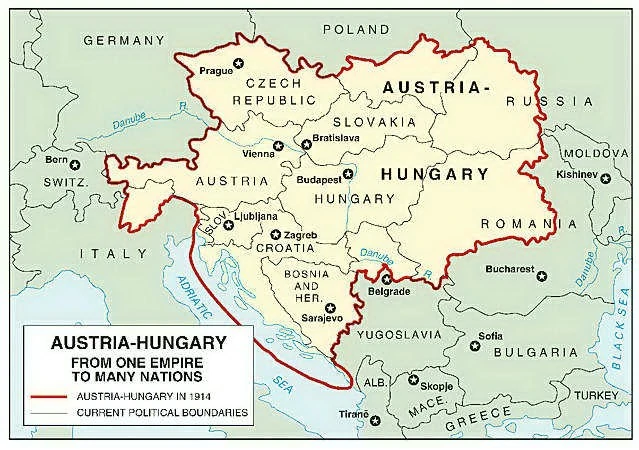
The Treaty of Windsor signed in 1917 that followed was a lot more lenient than expected. Germany gave up Alsace-Lorraine and their navy and had to pay reparations, but no attempt was made to limit the German army. Austria-Hungary collapsed before a peace treaty could be negotiated, but the attempts by German Austrians to unite with the German Empire were kiboshed by the Allies. But new nations like Czechoslovakia, Hungary, Croatia, Serbia and a multitude of other small nations sprung up from the corpse of the Hapsburg Empire.

Poor, poor Austria-Hungary. Hundred's of years of marriage and (mostly failed) wars, and all you got out of it was a footnote in an alternate history article. This time.

With peace restored, efforts to prevent another major war began in earnest. Germany was the first, announcing they were cutting down the size of their standing army, which Britain and France quickly followed suit. Russia, however, was hesitant to cut down the army, as they feared massive unemployment and unrest. Instead, Czar Nicholas II began to say that the brave Russian armies were denied their right to destroy Germany and Austria by Britain, and began to rearm and modernize with the help of the French even more than before the war. Britain, stunned at the ingratitude of the massive efforts, including taking Constantinople, that the Allies had to undertake to save Russia. A long "Cold War" began in Europe, with Britain now allying with Germany to confront their new enemies in Russia and France. Elected Prime Minister in 1925 on his war record, including the successful Gallipoli Campaign, Winston Churchill began to push for a strong force to stand up to a re-surging Russia, but his bellicose stance lead to Churchill being forced out of office by 1931 as the Great Depression struck the world.

The Middle East, on the other hand, continued to be racked by wars as the various small states, such as the Sultanate of Mesopotamia, the Kingdom of Palestine, and the Republic of Syria, fought over vast stretches of desert, especially once oil was found. The Kingdom of Turkey, after receiving Constantinople in the aftermath of the war to keep it out of Russian or British hands, began to play a middle power between the rival Great Powers, receiving massive aid in rebuilding their nation and turning it into a secular, wealthy and prosperous constitutional monarchy on the lines of Great Britain.

But what do you think? What would have happened had the Allies captured the Dardanelles and Gallipoli? Or if you have a topic or idea you would like me to talk about, please leave comments below, email me at tbguy1992@gmail.com, or tell me on Twitter @tbguy1992.

Saturday, March 5, 2016

Short AH: Churchill Retires From Politics After Gallipoli

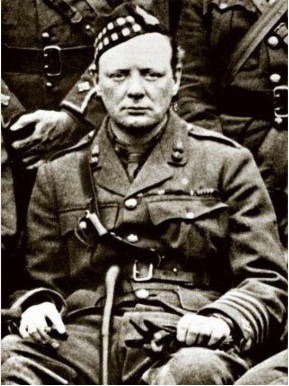
The First Lord of the Admiralty, Winston Churchill, was forced out of office after the failure of Gallipoli as part of the price from the Conservative Party to join an all party coalition under Prime Minister David Lloyd George. Churchill, in a rather characteristic display, went a step further and resigned his seat in the House of Commons in late 1915. The army gave him a temporary rank of Lieutenant Colonel, and was put in charge of the 6th Battalion of the Royal Scots Fusiliers. While in the trenches, Churchill was brave and devoted, leading multiple sorties into No Mans Land. By the summer of 1916, Churchill had developed a personal bond with his men, well known for his rousing speeches, his wit, and his willingness to do as the soldiers did. However, an artillery barrage in August, 1916 killed Churchill and other men of the Royal Scots Fusiliers. He was buried in a military cemetery in France, and Churchill's name became a footnote in the history of World War One.

Decades later, American writer Phillip Dick postulated an interesting alternate history scenario in his book Man in the High Castle, where Churchill didn't give up his seat in the House of Commons, and returned to the UK a few months later to sit in and speak after his brief sortie in the front line. In this scenario, Churchill would have been the one lone voice of opposition to the rise of the Nazi Party in Germany lead by Adolf Hitler, and would have pushed the UK government to confront him, increase the military, and end appeasement. The start of the war in May of 1939, when Poland was overrun and England and France watched and did nothing, would have been viciously attacked by Churchill, and when Hitler invaded the Low Countries and France in surprise, though they were neutral, the UK finally went to war. However, the British army was in no shape to send troops to France, and the nation fell in six weeks. Prime Minister Neville Chamberlain, was disposed from office, and, this was the big change, instead of Lord Halifax being named Prime Minister, Winston Churchill was selected instead. 

Churchill, using his sharp tongue, his flair for the dramatic, and his strategic mindset that only failed him at Gallipoli, would organize the British to stand up to Nazi Germany, instead of meekly rolling over and signing the "Pact of Berlin" in 1941, where the Nazis and Britain didn't interfere with each other's empires, and would not have ended up fighting. Instead, Churchill leads Britain in a long, bloody war with Nazi Germany that for three years was mostly fought on the oceans and air. However, by this point the Germans were strong enough to invade England itself, and in a long, brutal Battle of Britain, Churchill is forced to a mountain redoubt in Scotland (making him the so-called "Man in the High Castle") where he continued to fight the Nazi's as they fully occupied England. Unfortunately, the story ends at this point, and the promised sequel never came.

It was an interesting bit of alternate history, but many dismissed the plot as nothing short of incredulous, considering how the Third Reich currently dominates most of Europe, and the weakness of the leaders of Britain since the rise of the superior Nazi's. The fact that the British Empire hasn't been fully taken over is seen as Hitler's fondness of their history and empire, despite their weakness and political infighting over the past two decades. The thought that one man could have convinced the British to fight the Nazi's still seems rather implausible, even if you went back in time.

-Book Review, Man in the High Castle, 1984.


This scenario is taken from a suggestion made by James McGregor on Facebook! Thank you!

But what do you think? How different would a world without Winston Churchill really be? Or if you have a topic or idea you would like me to talk about, please leave comments below, email me at tbguy1992@gmail.com, or tell me on Twitter @tbguy1992.