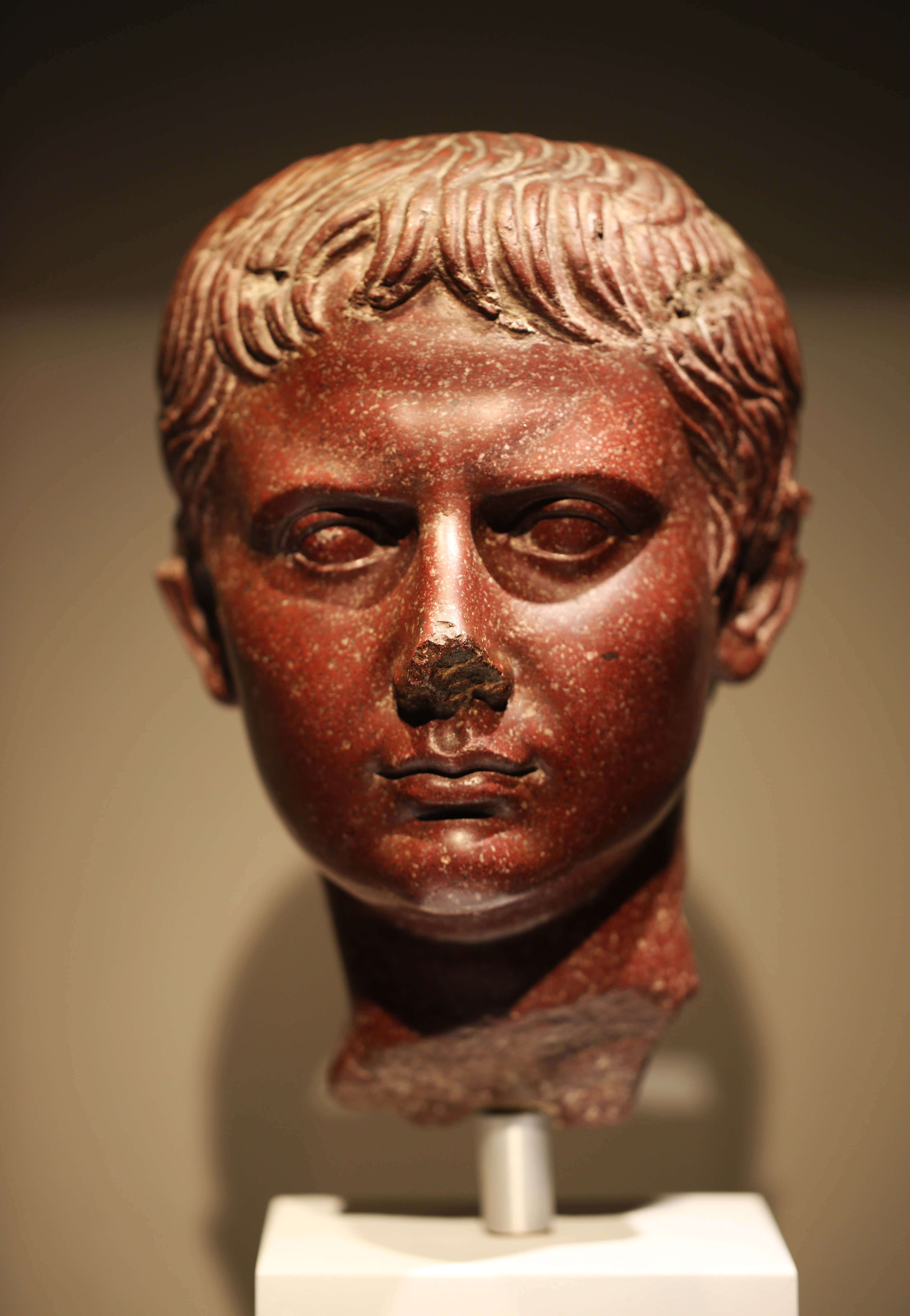
On March 15, 44 BC, Dictator for Life Julius Caesar would face immediate death, but also immortality when he was stabbed 23 times by a conspiracy of oligarchic senators afraid that Caesar was trying to become the King of Rome. The assassination of Caesar lead, not to the rebirth of the Roman Republic, but brutal civil wars, first between Caesar's supporters and those that lead the conspiracy to kill him, and later between Caesar's lieutenant Mark Antony and his adopted son, Octavian, who went on to become the first Emperor of the Roman Empire.
But what if Caesar wasn't killed on the Ides of March? What if Mark Antony, who heard of the plot the night before, was able to warn Caesar? (In our history, Antony was intercepted and prevented from warning Caesar.)
 |
| Hey Caesar! I brought you that salad... oh, uh... you're busy. I'll come back. |
Antony, sending a servant to Caesar's house early that morning, is able to warn him of the plot on his life. Learning that his friend Marcus Brutus was part of the plot from the servant, Caesar, in grief, was reported to have said "Et tu, Brute?" He then summoned Brutus to his home, to ask of this. Brutus, realizing the plot had been foiled, but resigned to become a martyr to the cause of freedom, goes to Casear's home, and explains why he joined the plot (to rid Rome of a tyrant, to restore the Republic, and due to the historical background of his family who had disposed the last King of Rome), and that he was prepared to accept the punishment Caesar was to give.
But Caesar, stunned into silence of the huge plot against him at first, eventually embraced Brutus, praising him for his courage to do what he believed right, even going so far as to kill him. "No matter the gifts and honors I have bestowed on you," Caesar was reported to have said, "you still are your own man, one that believes in all else freedom for all." They then talked into the early morning hours of philosophy, war, and the Republic.
On the Ides of March, despite the knowledge of the plot against him, traveled to the Senate, with Mark Antony, Marcus Brutus, and other supporters. But instead of proceeding to business as was originally planned, Caesar gave a short, impromptu speech. Announcing that he had learned of a plot on his life, in part raised due to the vast powers he had acquired and the hostility it had generated, Caesar announced that he would be stepping down from his position of Dictator for Life, renouncing the titles that the Senate had given him, and would subject himself to the will of the Senate to try him for whatever crimes he may have committed, and that he would respect whatever decision they made. He was also prepared to allow free elections of any eligible citizen to the posts, even those that he had already determined.
The senators sat stunned at the speech. Some of the conspirators, namely Gaius Cassius Longinus, wanted Caesar to be killed or at least exiled, but many of the senators, appointed by Caesar, instead praised him for his humility, and after a series of votes, pronounced him innocent of any crimes that he may have committed, agreed to allow Caesar the chance to continue his military operations against the Parthian Empire, and to allow the next year's offices to be taken by those Caesar had appointed, but then allowing free votes for 42 BC. These actions were announced to the people of Rome, who overwhelmingly approved. However, despite the renunciation of his offices, Caesar was still massively wealthy and influentially powerful, and he still held great sway among the crowds.
The 43 BC Consular elections had Brutus and Mark Antony elected, and, while they continued to clash (as Antony saw Brutus as a threat to both Caesar and himself, as the now aborted conspiracy had shown), Caesar did his best to soothe tensions on both sides, and they worked fairly well together. And while Cassius continued to speak and rail against Caesar, he was soon driven into obscurity.
 |
| It also did nothing for the reviled senator Septus Marcus Flatuls. |
Caesar left at the end of March 44 BC for his campaign against the Parthian Empire. While Parthia was strong, Caesar's command abilities were superior, and he defeated the Parthians in battle time and again. King Pacorus I of Parthia, however, continued to pester and annoy the Romans, withdrawing his troops and not engaging in battles with the Romans. After three years of war in the Mesopotamian region, and with little to show for it, Caesar eventually decided to end the war. He negotiated a peace where some land was traded and Armenia was made a neutral buffer state between the two nations. The Roman troops under Caesar then marched north, through Anatolia and into Eastern Europe, over the Danube River, to tackle the tribes of Germania.
Unlike in Parthia, Caesar was more successful in Germania, defeating tribe after tribe. While the land wasn't as rich or developed as in Gaul that Caesar earlier conquered, Caesar believed that the land, with Roman citizens settling in colonies through the area, could make it "richer than Italy, Egypt and Hispania combined." Every tribe between the Rhine and the Elbe River's were conquered and made subservient, and Caesar began the process of reorganizing them into new provinces of Rome.
Julius Caesar, basking in the glory of this conquest, began to march south back to Rome. However, before he reached the frontier of Gaul, Caesar had a massive heart attack while riding his horse, and died before he fell to the ground. It was 39 BC, and Caesar was 61.
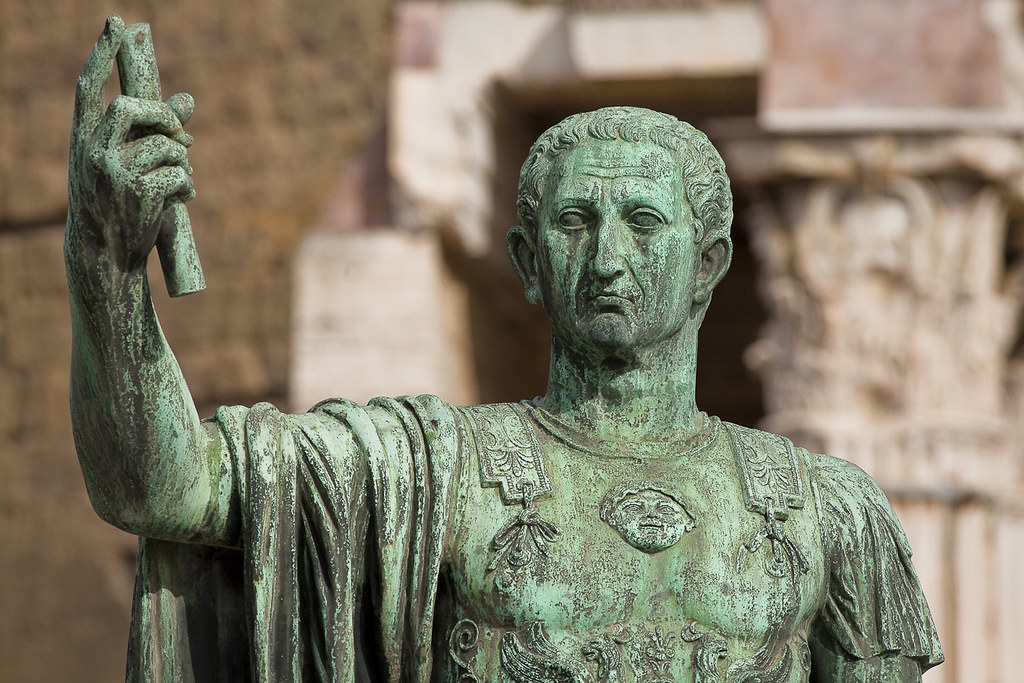
His troops brought Caesar's body back to Rome, which was in a period of mourning. Mark Antony, Brutus and Octavian, all of whom were publicly arguing and trying out maneuver the other, all united in sadness of Caesar's death. Octavian, who was named Casear's adopted son in his will and given a large percentage of Caesar's fortune, made public orations of the man called "The Greatest of the Great." His reforms, including a police and fire fighting service for Rome, the unification of the provinces to an equal status, and his generosity and charisma all endured him to the people of Rome for a long time to come, with statues, poems, plays, and even a religious cult all based on Caesar springing up all over.
 |
| Birds all over Europe liked Caesar as well: they got a thousand new resting places. |
After the funeral, what to do with Germania, Parthia, and the ever persistent Sextus Pompey, the son of Caesar's old foe Pompey the Great, became the major political issue of the time, not to mention the simmering feud between Brutus, who had allies in the Senate and the higher classes, Mark Antony with his support in the East (and with Queen Cleopatra of Egypt) and Octavian who assumed the fortune and name of his Great Uncle Julius Caesar and the adoration of the masses in Rome, were on the verge of a massive civil war within months of Caesar's death. However, an illness (some say poison or an assassination as well, but no evidence was found) that took Octavian in 38 BC, at the young age of 25, finally brought the Civil War that had been long brewing to a roaring inferno. As Octavian had died without a will, what to do with the enormous fortune left behind, and the name of Caesar, became a brutal, bitter battle between Brutus and Mark Antony. Brutus, in control of the West, and Antony with his support in the East, engaged in a long series of battles between 37 BC and 29 BC, destroying huge stretches of Italy, Greece, Sicily, Egypt and Gaul. Father turned against son, and entire towns were leveled by troops.
By 29 BC, with the people rioting for peace as war, inflation and poverty spread and both Antony and Brutus having exhausted their supplies of men and money, eventually the Peace of Rome was signed. In this, the Republic was to be divided in two: Brutus claimed the West, Antony retained the East, while Italy would remain a buffer state between the two. The Peace was marked with great celebrations, but little did people know that this was the end of the Roman Republic as people knew. The Senate in Rome was left in charge of Italia, but without a strong leader like Brutus or Mark Antony, they were unable to raise large numbers of legions or try to unify the republic, so both sides began to drift apart. By 24 BC, with the death of Cleopatra in childbirth (another son to Mark Antony), Mark Antony was crowned Pharaoh of Egypt, and he claimed the title of Consul of the East, and the new Eastern Roman Republic based in Alexandria.
 |
"Remind me again why I have to wear this blue and gold thing?"
"I thought it was black and white!" |
From his new capital in Massilia, Brutus, the Consul of the West, began to reform his territory which was increasingly called the Western Republic, which included Germania, Hispania, and a large portion of Africa, into a new oligarchic Republic with the basis on the older Roman body. But Brutus would not allow power to be as consolidated under one person, as it was under Caesar or increasingly under Mark Antony, so he and the Senate he established formed a delicate series of checks and balances that served the new Republic well long after Brutus died in 16 BC at age 69. Antony himself would continue to rule the East until 4 BC, at the old age of 79.
The two nations, increasingly distant but calling themselves Rome, would fight for the decades and centuries to come. The East would grow more Greek and Persian as Parthia was finally defeated time and again, while the West more Gaulish and German, until by 200 AD, few could tell that they had even been one single nation. Christianity, which started in Palestine, found a more welcoming home in the West than the East, where it was brutally repressed for threatening the stability of the Empire. Both halves had to deal with Barbarians, which the west handled with diplomacy and wealth, the East through brutal repression, until 259, when the last "Caesar of Rome," Marcus VII, was assassinated and his empire fell apart into several competing kingdoms, and the next several centuries featured wannabe dictators and kings trying to rebuild the Eastern Empire while facing each other, Persia and various barbarian assaults.
Italy, long a declining has-been center of the world, was easily reclaimed The Western Republic in 186 AD, and the Republic also claimed Britannia, Caledonia and Hibernia and began to travel across of the Atlantic Ocean. However, the problems of the old Roman Republic: the concentration of wealth in too few hands, the political machinations, the unchecked destruction of multiple families competing for power and prestige, lead to a declining and moribund state by 300 AD. The barbarians, pushed west by the Huns, took over the vast provinces of Germania, while northern seafarers raided Britannia and northern Gaul. Desert tribes in Africa also began to push north. While several great politicians and generals held the line and even managed temporary restorations and growth, more ineffectual and self-aggrandizing leaders continued to let the Western Republic crumble, until the occupation of Massilia in 404 AD lead to the final break of the Republic. While some of the nations that were born of the Western Republic, like the Republic of Britannia and the Kingdom of Hispania all claimed to be Roman afterwards, the true end of Rome came when the long depopulated and crumbling great city was destroyed by Barbarians in 439, and the city was never rebuilt to it's former glory and stature.
 |
| And not a single mad Emperor with a fiddle nearby. |
But what do you think? What would have happened had Caesar not met the blades of his assassians? Or if you have a topic or idea you would like me to talk about, please leave comments below, email me at tbguy1992@gmail.com, or tell me on Twitter
@tbguy1992.