Showing posts with label Russia. Show all posts

Monday, October 3, 2016

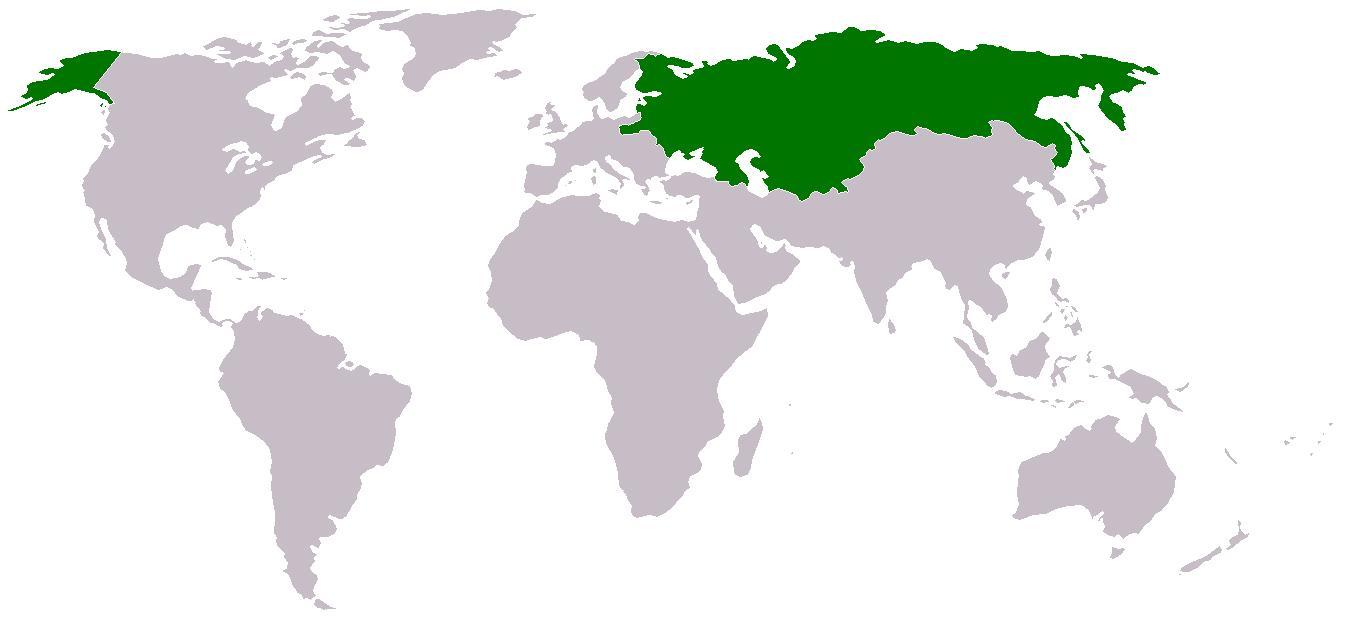
AltHistory Scenario #24: What if the Russian Empire Never Fell?

Time for another Russian Alternate history! However, since most of my previous articles on the largest nation on earth focused on the Soviet Union, instead let's take a step further back to the old Czarist Russian Empire.

As if modern Russia wasn't big enough...

The Russian Empire, by the end of it's life, was a bloated, corrupted, decadent and anachronistic society, with great wealth, great poverty, modern industry, overstaffed bureaucracy and ancient beliefs all commingling together. The fact that it lasted until 1917 is amazing itself, as the writing was on the wall decades before.

However, Russia of the period was on the verge of altering itself: with industrialization running at full tilt and the lessons of the humiliating defeat in 1905 to the Japanese being absorbed, but the only way to prevent Russia from falling in 1917 is to make sure it doesn't go to war in 1914. Maybe later, say about 1920, but any time before that is a bit iffy. And the only way to prevent World War One from starting in 1914 is to not have Russia support Serbia, so that POD is out. And by 1917, with the pressures of a failing war, and Czar Nicholas' face on the defeat, it is apparent little would save the Czar now.

Not even a totally historically inaccurate film. 

However, we can look a bit further back, to 1881, to the last great chance for a reformed Russia, to the grandfather of Nicholas II, Alexander II, the man that liberated the serfs and Bulgaria and expanded his empire into Central Asia and deeper into Asia.

Point of Divergence

On March 13 (or March 1 by the old Julian calendar Russia was still using), members of an nihilist terrorist group, using bombs, attacked the bombproof coach of Czar Alexander II. Although the leader of Russia wished to step out to see what he could do to help the injured cossacks that were guarding him, the driver of the coach quickly hurried away to the military review the Czar was attending. While originally it was seen as cowardly, the revelation that two more men with bombs were in the crowd and ready to kill the Czar later changed public opinion.

"Yes, let's kill the man who might actually be able to address our grievances! That will totally convince them to give us what they want!" - Every anarchist/nihilist/nationalist assassin ever. 

The committees that Czar Alexander II had officially announced that day to look into parliamentary reforms presented their proposal to turn Russia into a constitutional monarchy, though along the lines of the system the German Empire had established decades earlier: the czar would remain head of state, and appoint the leading ministers including the Prime Minister, but an elected Duma, elected every five years by a limited male suffrage determined by property and education requirements at first but slowly expanded over time, would have a hand in passing laws including managing finances and the military.  The State Council, an appointed advisory body to the Czar, became the "upper house" of the new parliament and had to approve all laws as well, while the Czar had a final veto power. After careful deliberation, Alexander II accepted the proposals in July 1881, with orders to elect and assemble the Duma by November being sent out.

Outcome

The Duma thus elected was a moderate body, with a strong Conservative bent but a vocal Liberal minority, and the first Prime Minister was the man who helped push the reforms, Count Mikhail Loris-Melikov. However, it was a first step, and the members took advantage. The more Liberal members, using guaranteed parliamentary privilege, began to agitate for more reforms, including more liberal trade, reducing the bureaucracy, cutting taxes, funding railroads and other infrastructure. Alexander II, seeking to strengthen the Russian nation, was willing to accept many of these plans, and personally sponsored laws that gave charters to new railroads and canals, setting up new schools to train the young and the former serfs, and many other proposals. However, more conservative members, especially those with ties to the nobility and large landowners, were hesitant to agree to these new laws, seeing them as attacks on their privileged position in the Empire. However, with the popular Czar supporting some of these laws, the Conservatives found little ground to stand on. By 1886, new railroads were beginning to be built all over Russia, allowing small cities better connections to the outside world, as well as access to raw materials that not only the booming Russian economy demanded but also the other great powers in Europe.

However, one thing that the Conservatives and the Czar refused to consider was land reform to break up the estates of the nobles to give to the peasants and, perhaps most importantly, reduce the power of the Russian Orthodox Church, which was a beacon of reactionary thought in Russia. Extremist Liberals saw the Church and it's massive influence as an anachronism in the modern world, and wanted to move to a more secular society. The lower class was divided on this point: many wished to be able to own and farm the valuable land held by the Church, but were scared that they would be seen as heretics and be damned to eternal damnation. But as the years went on, and land reform continued to be ignored, peasant agitation increased throughout Russia. Many left their lands for the promise of the New World, but many others simply left the land and to the factories in the cities which promised better wages (though also a higher cost of living).

It wasn't all slap stick comedy in old-timey factories.

By the time of Czar Alexander II's death in 1892 at the age of 73, the reform efforts had begun to slow, until only simple military acts that were desperately needed but also uncontroversial such as reorganizing the general staff, changing the curriculum in military schools, and making promotion merit based rather than at the whims of the Czar and his adivsors, as the State Council became more conservative while the Duma began to push more liberal and reformist, with several socialists being elected in the 1891 Duma, leaving the Czar in an uncomfortable middle position. But the accession of Nicholas II raised many questions as to what way he was going to go. His father, though in his forties, died of a sudden illness the year before, leaving the young, twenty-seven year old as Emperor and Autocrat of all the Russias.

Nicholas II, though was woefully unprepared for the position, having received no experience in government or management at all. Because of this, Nicholas was reliant on his grandfather's ministers, many of whom were still reformist in nature. Nicholas' experiences in Britain and America and seeing democracy in action impressed him as well, and when a delegation of peasants and workers came to present a petition in the first weeks of his reign, the Czar carefully listened to them, and promised to look into it. While the petition wasn't enacted in its entirety for years, several proposals were: the suffrage was extended to all men by the 1901 Duma election, censorship was reduced, and taxes were overhauled and reduced.

Not paying taxes is great, eh?

It wasn't until 1902, with clashes between peasants and landowners reaching new highs that land reform finally came to the forefront. With the Duma's majority now composed of various members elected on the platform of land reform and helping the long suffering peasants, they began a series of political maneuvers to force the issue. However, the Prime Minister, Sergei Witte, was caught in a quandary. While he saw the benefits of giving the peasants their own land, he saw no way the act could be passed through the State Council, and he had no idea if the Czar, easily influenced by those around him, would accept the law or if he would veto it. With Duma members like Vladimir Ilyich Ulyanov and Alexander Kerensky, leaders of the Russian Socialist Party and the Liberal Party of Russia respectfully, threatening to not pass the annual budget of 1903 unless some action was undertaken, PM Witte was desperate. So he proposed a sweeping land reform act that would break up many of the largest estates, enough to guarantee every peasant family at least 250 acres of land, in return for each to repay a low interest loan in 25 years to the landowner which could be paid for in cash or in kind.

Before Witte even finished proposing the law he had written up without the help of either Ulyanov, Kerensky or even notifying the Czar himself, the howls and threats from all sides in the Duma chamber nearly threatened to cause a riot. The State Council vowed to never accept such a demeaning law, and Nicholas II was blindsided by his minister and furious. However, when the press reported the law, many peasants were ecstatic, some believing that it had already come to pass. When armed guards fired on peasants on the estate of one of the largest landowners in Russia who were simply offering their first instalment of the loan, killing 26, the outcry was even larger. Mobs and riots broke out all over Russia.

So... not a lot has changed, huh?

With Russia on the verge of a civil war as peasants began to attack the landowners and their families and burning their homes, Nicholas II, who had fired Witte the day after he proposed the law, recalled him a few days later, rescinded the order, and told him to get the law passed through the parliament before "the anarchist and the Marxist kill us all."

Using ever political maneuver he could think of, and with the support of Kerensky and, reluctantly Ulyanov, and the threat to ask the Czar to create enough members to the State Council to over ride the conservatives blocking the bill, the Land Reform Act of 1903 was passed. The Conservatives and even some liberals saw it as the death knell of the Empire seeing their land ripped apart by dirty peasants who were on the march to kill them all as the communists wanted, the vast majority of peasants were just happy to finally have their own piece of land. While extremist socialists, many of whom splintered from Ulyanov's party, demanding full state ownership of all the land, and some reactionaries demanding the death of every agitator, they were increasingly marginalized as public protests turned overnight from near riots to massive outpourings of gratefulness. 

The outbreak of the Russo-Japanese War in 1904 further pushed the memory of the land reform into the back of people's minds as the public rose to support the Czar and the Empire, and recruitment soared. With a strong industry and an army that was well equipped and trained, the Russians managed to hold the line, preventing the Russians from seizing the city of Port Arthur and capturing Vladivostok. A daring maneuver to send the powerful Baltic Fleet half way around the world (with the aid of traveling through the British controlled Suez Canal) to reinforce the fleet that had been crippled by a surprise Japanese attack in the early days of the war resulted in an inconclusive battle that, while it didn't destroy either fleet, did force the Japanese to withdraw. With the aid of American president Teddy Roosevelt, the Treaty of San Francisco was signed in early 1906 when the war turned into a trench like stalemate in Manchuria. Japan managed to inflict some defeats, but wasn't able to win the sought after victory against an European power, so retreated to lick its wounds.

Yay old timey racist propaganda!

The result of the war lead to serious questions being raised in the Duma as loyal and brave Russian troops were nearly defeated by an upstart Asian power. Many generals were cashiered out of the service, and young, smart officers took their place. When the war finally broke out in 1914, Russia was ready, and easily captured East Prussia in the first weeks of the war and bore down on Berlin. Only a desperate defense on the Oder River and the overextension of Russian supply lines prevented the war from ending in three months. However, the unstable situation in Germany that forced troops that were marching on Paris to turn around to stop Russians from capturing Berlin meant that by mid-1915, Germany was in no position to continue the war as reinforced Russian troops pushed on again in the spring and were besieging Berlin. The war lasted only 11 months, mostly thanks to Russia. Austria-Hungary collapsed, but Germany, still with Kaiser Wilhelm II in charge, became a Russian ally in the aftermath, though it was increasingly seen as a vassal.

The Russian Empire would continue to prosper for years, pushing their influence deeper in the Balkans and Eastern Europe. But in 1923, when a Russian ship exploded in the Dardanelles, the Russian Empire sought to force Ottoman Turkey, who stayed out of the last war, to pay compensation. Nervous of their former ally, Britain and France instead supported Turkey, and the Great War broke out, with Russia invading Turkey through the Balkans and the Caucasus. While Russia was strong, it wasn't strong enough to face all three nations at once (especially when the vengeful Kaiser Wilhelm, now just King of Prussia, refused to aid Russia. It took four long years, millions of casualties, and the unveiling of new weapons like the landship and poison gas, during but Russia was eventually driven from Turkey. However Nicholas II died and his son Nicholas III came to the throne during the war, but he wasn't on the throne long, as he was forced to abdicate in the aftermath of the war. Poland, the Baltic States and Ukraine all became independent, and Russia became a republic, with Alexander Kerensky as first President. Russia has remained a massive, isolationist power: a strong military that could defend Russia, but rarely engaging in conflicts outside it's borders. The rise of Communism in Germany was crushed by the Russians, along with the French, but soon after Russia returned back inwards, turning into a mighty capitalist economic powerhouse.

And totally not ruled by a corrupt, megalomaniac who looks like a James Bond villain.
Please don't poison me...


Conclusion

Is this possible? If I had to rate it, I'd give it a 3 out of 10 chance. While Alexander II was a reformer, I'd think he would be bogged down by a Duma that would be wanting to take more than the Czar, the nobility and the landlords were willing to give. And if Alexander II died sooner than I said, then his son, Alexander III would have undone all of it. I decided to just skip Alexander III altogether, because this was a better story and outcome, wouldn't you think?

Also, would Russia go isolationist after such a war? I highly doubt it. But at the same time, this article was long enough, and I kinda wanted to wrap it up. Most likely a communist or fascist style government would try to take over, launching a new world war... but again, this article was long enough.

But what do you think? Could the Russian Empire have lasted longer? Or if you have a topic or idea you would like me to talk about, please leave comments below, email me at tbguy1992@gmail.com, or tell me on Twitter @tbguy1992.

Sunday, September 18, 2016

AltHistory Scenario #23: What if the Berlin Wall Never Fell?

I'm baaaaaaack!

Sorry for the long delay. On the bright side: the rough draft of the Fallout story is done! Forty chapters, close to 200,000 words... should be pretty big and epic, especially when I get around to editing it. However, I'm also starting to get ready for my NaNoWriMo project in November, so things may be a bit slow then again.

But anyway, on to the Alternate History!

Today I got this from a group chat I was on that asked: What if the Berlin Wall never came down? And since it's just on the border of my 25-30 rule, what the hell, I'll do it.

Also, no pictures today, mostly because of laziness.

Point of Divergence

This is a tricky one, because the Berlin Wall came down because Communism in Europe was crumbling, and opened in November 1989. So, the way to prevent the wall from falling is to not have Communism fall, because unless East Germany, the German Democratic Republic, remains, then there is no rational for the wall.

So, if anything, the Alternate History should be "What if Communism never falls in Europe?" But we started with the Wall, so we'll just stick with that.

So, for this POD, I'm going to say that in this timeline, Soviet Premier Mikhail Gorbachev, instead of pursuing Glasnost and Perestroika, only went for Perestroika, and only for the economy. Few political or social reforms were allowed (voted down by the Poltiburo, and Gorbachev was unable to overcome their opposition). Instead the economy was overhauled. Limited free enterprise in the model of Lenin's New Economic Policy of the 1920s, is introduced, and central planning was reduced, along the lines of future reforms that the People's Republic of China would undertake. A hybrid centralized and capitalist economy is created, and living conditions in the USSR, though still behind the West, begins to increase. Other states in the Warsaw Pact, like East Germany, Poland, Romania and Czechoslovakia, under pressure from Gorbachev to reform and not become such a huge drain on the economy, also sees economic growth.

Outcomes

The modified Perestroika reforms give a new lease on life for Communism, which had been increasingly stagnating since the mid 1970s. State owned businesses, with the aid of workers brought in to help make production goals, begins to retool for more consumer goods. Agriculture, which theoretically would be a huge sector of the economy of the USSR, had been struggling for years, and grain from America had to be imported to feed the people. But with new incentives and new equipment, soon Ukraine and southern Russia becomes the new breadbasket of Europe. By 1990, imports of American grain has been reduced to zero, and the USSR and Warsaw Pact was not only self sufficient, but importing food to Europe and Asia. The withdrawal of Soviet troops from Afghanistan in 1987 helped the economy as well, as new equipment for the military was required. But instead of leaving the nation in a vacuum, Gorbachev promised foreign aid to help rebuild Afghanistan, as an "apology" for a misguided effort to maintain communism. However, this fact wasn't reported at home, with press censorship still in force.

With the Soviet economy booming, the USSR is able to begin flexing it's muscles on the world stage. When Saddam Hussein invaded Kuwait in 1991, the USSR launched a second front from the north as the US and it's western and Arabian allies invaded from Saudi Arabia. Since no formal plan of what to do with Saddam had been agreed upon in the UN, Soviet troops were ordered to go straight for Baghdad, capturing Hussein,  and raising the hammer and sickle over the city. With the aid of the flatfooted US, both superpowers monitored elections to determine a neutral, non-alligned leader for Iraq, and the Soviet troops left. The USSR was back, and stronger than ever.

In the US, President Ronald Reagan, instead of bankrupting the Soviet Union with massive arms increases and scientific projects like the Space Defence Initiative, is now suffering from huge budget deficits himself. Who knew that expensive military programs, along with massive tax cuts and increases to Social Security and other programs would never balance out? By the mid 1990s, with President George H. W. Bush's second term winding down, the US is facing a budget shortfall at a trillion dollars, as Republican dominated Congresses continued to cut taxes to try to spur the economy, which was already running at a good level. With Democratic Al Gore winning in 1996, on the promise to restore "fiscal sanity" to the government, spending on the military was reduced and taxes raised to 1980 levels. While unpopular, and a huge shock that saw the New York Stock Exchange crash in 1997, it was considered necessary. Gore didn't win a second term though, instead Republican George W. Bush, the son of the former Bush, won the presidency in a landslide, who then began to cut taxes once again. But the struggling economy soon leads, in 2004, to proclaimed Socialist Bernie Sanders to run for President, and start pulling the US to a more leftward socialism, with universal healthcare and new investment in infrastructure and schools, as well as nationalizing failing businesses in railroads, banking, telecommunications and others, in what has been called the Second New Deal. But conservative and Republican backlash means that many of Sander's policies were fiercely resented, and it wouldn't be until his re-election in 2008 that many of them would finally go through.

With the Middle East somewhat stable (if still tense), Islamic fundamentalist groups like Al Qaeda doesn't have as secure a base as insecure Afghanistan, is unable to launch the large attacks on the US or the USSR as they hoped, and soon the many smaller groups splinter away. Likewise in Europe, divided by the Iron Curtain, tensions between communists and capitalists continue. When the US began to withdraw troops due to budget cuts, other NATO nations were forced to pony up, making most of Europe a heavily armed tinderbox. China, with their economic reforms, also begins to modernize and expand it's military, presenting the world with three superpowers

But where Islamic fundamentalism is gone, the Cold War is still here, as the USSR and US settle into a stalemate. Weekly tests of the Emergency Broadcast System, nuclear drills, and close calls are still the order of the day, but armed confrontation seems increasingly unlikely, as the major nations of the world begin to shift into similar, if not identical, economic and political models. But by the 2010s, the USSR, with it's reformed economy, is clearly the leading superpower.

As for the Berlin Wall? The machine guns are still there, but no longer pointed inwards. They are pointing out, to prevent an attack by the West German garrison in West Berlin from breaking out.

Conclusion

It's tough to talk of events that happened less than 30 years ago, as I've mentioned before, like in my 9/11 didn't happen article. But, like I said earlier, the only way that the Berlin Wall stays up is if Communism isn't crumbling and falling apart, and the way I see it is with more capitalistic reforms a la China OTL.

And I'm sure that if I get some comments, it's going to be about how I treat America in this ATL. But, let's face it: America is, perhaps, the luckiest nation on this planet: they basically control an entire continent (Canada and Mexico aren't exactly in any position to challenge the US), and unlike Australia, have a large population, lots of resources, and borders on the world's two largest oceans. They haven't been invaded since 1812, and have only faced one, although brutal, civil war. No violent revolutions, no threats from across the oceans, but the ability to step in anywhere and influence matters to their own design, all the while claiming American Exceptionalism. Only in the Cold War did America finally face a major threat, with atomic annihilation, but once again America lucked out, and the USSR collapsed before the world ended. But if the USSR began to reform, I don't see how America, with a political establishment that is so different from the rest of the world in ideology and beliefs, could withstand the pressure.

And really, does "trickle-down" economics really work?

But what do you think? Could the Berlin Wall have stayed standing if Communism reformed? Or if you have a topic or idea you would like me to talk about, please leave comments below, email me at tbguy1992@gmail.com, or tell me on Twitter @tbguy1992.

Sunday, May 15, 2016

AltHistory Scenario #20: What if the Battle of Gallipoli Succeeds?

Welcome to (Alt)History Inc blog post #50! In the past ten months, and with over 8,500 pageviews from all over the world to show for it, I've done my best to provide some new alternate history scenarios to the internet to enjoy, and though I have been slacking a bit as I work on other stuff, I still plan to continue to write for (Alt)History Inc and continue providing entertainment and information!

And now on to today's Alternate History scenario:

In 1915, the Allies were in a tenuous position. German troops had occupied almost all of Belgium, advanced deep into France before finally being halted at the Battle of the Marne in September 1914, and inflicted disproportionate defeats on the Russian war machine, and advanced deep into Poland. British and French battles to try to reclaim the initiative in the west bogged down into trench warfare, while the corrupt and inefficient Russian Empire was only taking half-hearted steps fix their position. However, Russia's big problem was the difficulty in supply from their Allies. The only year-round port they owned was in the Black Sea, which was now closed off thanks to the Ottoman Empire's entry into the war on the side of Germany.

And it was all because of these two ships, the Goeben and Breslau. They're story is another AltHistory scenario in the making.... 
British First Lord of the Admiralty Winston Churchill proposed a daring plan: land an amphibious force at the Dardanelles, march to Constantinople, and not only open a trade route to their beleaguered ally, but also to force the Ottoman's out of the war, possibly leading to a collapse of the German and Austrian position in Europe.

Plans were drawn up, but the original plan to just use the Royal Navy and French fleet, mostly battleships and minesweepers to allow the fleets to simply sail to Constantinople were delayed and a major landing force was added as well. This was to counter one of the biggest foreseen problems: mobile Ottoman artillery batteries couldn't be destroyed by bombardment, but could attack the minesweepers. So if an infantry force could, at the very least, pin down or destroy the artillery, then the battleships could destroy the fortresses to allow the army to pass.

With the plans drawn up by April, and troops in place in the 81,000 strong Mediterranean Expeditionary Force under General Sir Ian Hamilton (namely Australian and New Zealand troops of the ANZAC Corps, but also British and French units that could be spared from the Western front), the invasion of Gallipoli began on April 3. While the troopships and landing craft had difficulties in landing the initial troops, often times miles from where they were supposed to land, the battleships were able to suppress the weakened and surprised Ottoman troops, and by April 8, the Allies were marching over the Gallipoli Peninsula on to their target of Constantinople, and the fleet, unhampered by artillery, was able to destroy the forts and remove mines from the area to allow the ships to pass to the Sea of Marmara. Efforts by the Ottomans to either stop the invading force or the warships was haphazard and ill-coordinated and planned. Allied forces were mostly slowed by the lack of easy transportation and lack of supplies, but by the beginning of May, the first scouts reported that they saw the Queen of Cities in the horizon.

No, it's actually Byzantium!
The Ottoman's were in total and complete disarray. As the news of the British, French, Australian and New Zealand forces approaching Constantinople reached the city, panic set in. Disillusioned by the war and the defeat by the superior western powers caused riots and protests in the city, along with Arabian revolts in Palestine and Mesopotamia, despite the official censorship of the news. In the face of the revolts and mutinies by troops, Sultan Mehmed V, his court and advisers such as Enver Pasha, along with thousands of inhabitants fled the city to Anatolia, leaving the Ottoman's leaderless. As the Allies arrived outside of the city, some 50,000 strong, with a fleet of 20 battleships, the military governor surrendered the city.

The fall of the "Old Man of Europe" reverberated throughout Europe. With the Suez Canal secure, Indian, Australian and New Zealand troops and supplies could now reach France and England with no issues. Supplies quickly began to flow to Russia, allowing the Industrial powers of England and France to supply Russian armies. While leadership and tactics were still woefully inadequate, new artillery, rifles, ammunition and food, and investment in railroads and roads to transport the new supplies, bolstered the Russian Empire, giving Czar Nicholas II a new lease on life. At the same time, with only a small force in Turkey and surprise at the quick collapse of the Ottoman Empire, the Allies were unable to influence the creation of new states in the Middle East as they had been planning. Turkey, under Mehmed V's brother Mehmed VI, established the Kingdom of Turkey at Ankara, renouncing the Ottoman Empire and laying claim only to Anatolia and offering to negotiate peace with the Allies on behalf of the Ottoman Emprie, which France and Britain accepted. The rest of the Arabian territories declared all forms of kingdoms and republics and monarchies, leading to a long, multi-factional civil war that would last until 1924. The allies at the moment had little choice but to ignore the fighting and wasn't able to influence the outcome as much as they wanted.

So... basically like IRL, right?
Germany, now with only Austria-Hungary as an ally, quickly felt the pressure of a reinvigorated Russia. While German troops under Hindenburg and Ludendorff were able to keep pushing east, the cost continued to go up, and it wasn't clear if they really knew where to go that would knock out the exceedingly vast and hostile Russia. But pressure on the west forced the Germans to shift more troops west to try to resist that attack, but also gave General Erich von Falkenhayn the push to attack the French fortress of Verdun to try to distract French attention, which began in October 1915. However, the hasty attack, the lack of artillery and reserve troops, and faltering morale of the German troops resulted in a failure, and his sacking in February and replacement by Ludendorff.

But it wasn't enough. Austria-Hungary cracked under the pressure of the Russian armies, and Germany was forced to rescue their ally, stretching their already thinly spread troops further. Attempts to bring Bulgaria and Romania into the war on the Central Powers side fizzled out with the defeat of Turkey, with Romania entering on the Allies side soon after Italy had done the same. The failure of Verdun, and a massively successful British and French offensive at the Somme and General Bussilov in Russia crushing the Austro-Hungarian armies lead to Kaiser Wilhelm II suing the Allies for peace. Wilhelm II then abdicated the throne to his son, who became Wilhelm III.

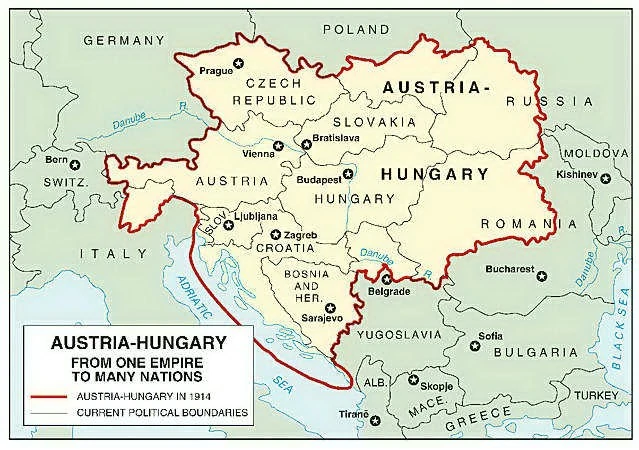
The Treaty of Windsor signed in 1917 that followed was a lot more lenient than expected. Germany gave up Alsace-Lorraine and their navy and had to pay reparations, but no attempt was made to limit the German army. Austria-Hungary collapsed before a peace treaty could be negotiated, but the attempts by German Austrians to unite with the German Empire were kiboshed by the Allies. But new nations like Czechoslovakia, Hungary, Croatia, Serbia and a multitude of other small nations sprung up from the corpse of the Hapsburg Empire.

Poor, poor Austria-Hungary. Hundred's of years of marriage and (mostly failed) wars, and all you got out of it was a footnote in an alternate history article. This time.

With peace restored, efforts to prevent another major war began in earnest. Germany was the first, announcing they were cutting down the size of their standing army, which Britain and France quickly followed suit. Russia, however, was hesitant to cut down the army, as they feared massive unemployment and unrest. Instead, Czar Nicholas II began to say that the brave Russian armies were denied their right to destroy Germany and Austria by Britain, and began to rearm and modernize with the help of the French even more than before the war. Britain, stunned at the ingratitude of the massive efforts, including taking Constantinople, that the Allies had to undertake to save Russia. A long "Cold War" began in Europe, with Britain now allying with Germany to confront their new enemies in Russia and France. Elected Prime Minister in 1925 on his war record, including the successful Gallipoli Campaign, Winston Churchill began to push for a strong force to stand up to a re-surging Russia, but his bellicose stance lead to Churchill being forced out of office by 1931 as the Great Depression struck the world.

The Middle East, on the other hand, continued to be racked by wars as the various small states, such as the Sultanate of Mesopotamia, the Kingdom of Palestine, and the Republic of Syria, fought over vast stretches of desert, especially once oil was found. The Kingdom of Turkey, after receiving Constantinople in the aftermath of the war to keep it out of Russian or British hands, began to play a middle power between the rival Great Powers, receiving massive aid in rebuilding their nation and turning it into a secular, wealthy and prosperous constitutional monarchy on the lines of Great Britain.

But what do you think? What would have happened had the Allies captured the Dardanelles and Gallipoli? Or if you have a topic or idea you would like me to talk about, please leave comments below, email me at tbguy1992@gmail.com, or tell me on Twitter @tbguy1992.