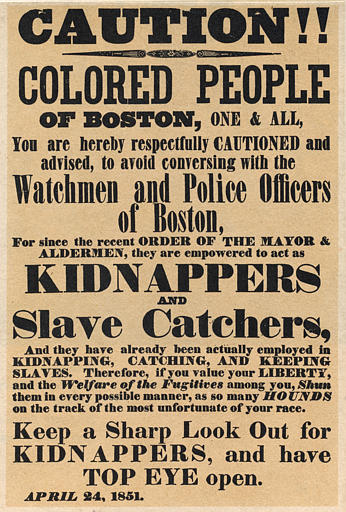
Showing posts with label Confederate States. Show all posts

Thursday, May 26, 2016

Alt History Scenario #21: What if Abraham Lincoln Wasn't Assassinated?

Five days after General Robert E. Lee and the Confederate States of America surrendered at the Appomattox Court House, President Abraham Lincoln was convinced by his wife Mary Todd to attend Ford's Theatre to watch the popular play Our American Cousin, a British comedy. Unbeknownst to Lincoln, a plot was afoot by Confederate sympathizers, lead by actor John Wilkes Booth, to kill the President, Vice President Andrew Johnson and Secretary of State William Seward, crippling the Union at the moment of victory, and hopefully convincing the Confederates to rise up again.

Booth himself went after Lincoln, but Lincoln's bodyguard, standing inside the door to private box was hit as Booth opened it. In the commotion that followed, Lincoln turned around in time to see the would-be assassin. Booth tried to shoot his pistol at Lincoln, but the President managed to leap out of the way. Lincoln's guest in the box, Major Henry Rathbone and the guard managed to subdue Booth as Lincoln rose up. The audience and actors below looked up to see the President standing, and he gave the immortal words to the silent crowd: "Worry not for me. The show must go on."
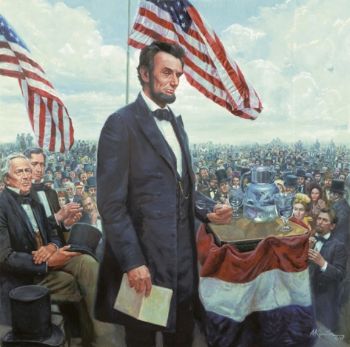
I honestly have no idea what Lincoln would have said. Something motivational most likely.
Although Lincoln survived his attack, Secretary Seward was not as lucky. Recovering from a carriage accident from a few days before in his Washington home, the bedridden Seward was attacked by Lewis Powell, using a knife to strike Seward after gaining admittance into the home claiming to be delivering medicine from the doctor, and overpowering Seward's son. Despite the jaw splint used to repair Seward's injuries from the accident, Powell's knife sliced open Seward's jugular vein, and within moments Seward was drowning in his own blood and he choked to death.

Andrew Johnson, on the other hand, escaped unscathed, as the assassin got cold feet and drank the night away.

The news the next morning of the attempt on Lincoln's life, and the death of Seward, shocked Washington, and quickly the nation. Radical Republicans in Congress immediately blamed a secret plot of the dying Confederacy, and advocated for even harsher Reconstruction, including removing Second and First amendment rights on anyone in the South, and to burn every plantation and cotton bale as punishment. However, Lincoln wasn't going to be pushed by the Radicals, instead advocating for a "rebuilding of the United States, and not strangling half of it." Lincoln's eulogy at Seward's funeral was used to calm the nation, saying that he held no ill will against those that believed they were doing right. It wouldn't save John Wilkes Booth or Lewis Powell however, as they would be tried for attempted murder and murder, and sentenced to hanging.

Hanging: the old fashioned way to say that you really don't like someone.

By the middle of May, Lincoln gave what would be called the "Richmond Address." Just over a month after the end of the war, Lincoln traveled to the former capital of the Confederacy, and gave an outline of his plan for Reconstruction. In return for Negro enfranchisement, 10% of the male voters of a state signing an oath to the US, and passing the Thirteenth, Fourteenth and Fifteenth amendments within a year of being re-established with a state government, states that had been in rebellion against the US government could be readmitted into the union, and would be given large grants by the federal government to rebuild the war torn areas and to modernize the economy, as well as a paid emancipation for all slaves in territory that remained in the union (and a fractional payment in areas where the Emancipation Proclamation was in effect).

This was a dangerous gamble: Radical Republicans wanted a military occupation of the South until all vestiges of the Confederacy were destroyed and didn't want to give a single cent to those that owned slaves, while Democrats and the Southern Elite were horrified of granting blacks the right to vote. But Lincoln, knowing that he was at least giving something to both sides, held the line. After the 1866 House Elections gave a slight minority to moderate Republicans and Democrats that were willing to support Lincoln's plan, the appropriate legislation was passed. The Thirteenth, Fourteenth and Fifteenth Amendments were passed in 1865, 1868 and 1869 respectfully, and the reconstruction of the US continued apace.

Lincoln left office in 1869, considered a hero in the north, and a worthy opponent in the south. However, his efforts at Reconstruction and dealing with both those that thought he was going to far, and those that said he wasn't going far enough, along with the pressures of the war, left him mentally and physically drained and exhausted, and he died in Chicago in 1873 after a long illness. General Ulysses S. Grant, with the help of the black vote in the south, easily won the 1868 election for President on a platform of continuing Lincoln's Reconstruction policies, and Republicans would be in the White House until 1884, and dominate Congress until 1896.
Though, 2016? I have no idea...

However, organizations like the Ku Klux Klan and other white supremacist groups, along with the so-called "Jim Crow" Laws, seemed designed to undo all the work that was done. The later issue was dealt with when the Federal Government took the State of Georgia to court over several of the quickly passed laws in 1868, and in 1871 the Supreme Court, dominated by Republicans, ruled the laws unconstitutional in light of the newly passed amendments. Radical Republicans also strengthened the "Freedman's Bureau," under Senator Charles Sumner, giving it the power to give medical aid and physical protection in the face of the KKK, especially after newspapers in the north printed sensationalist headlines of the atrocities caused by the "men in white." The US Army under General Sherman was also instrumental in protecting African-Americans, intervening in the Nashville Riots to keep blacks and white separated and from lynchings. The Freedman's Bureau, which also helped poor whites and veterans of the Civil War besides African Americans, was later to become the foundation of the Department of Labor, Education and Health in the US.

By 1875, Reconstruction had done it's job. While racism was still prevalent and the KKK continued to be a thorn in the side of the US government and those states that supported and even tried to woo the support of the enfranchised blacks, slavery was gone, the South had been extensively modernized with new factories, railroads, and mechanized agriculture, and peace in North America was assured. However, the influx of cheap labor in both the north and south, and the rise of capitalism, lead to another major issue, the rise of Socialism in the US. A coalition of poor black laborers in the south, impoverished immigrants in the north, and struggling farmers in the west, in the face of high prices of consumer goods, low wages in factories, racism and expensive education and healthcare, and quickly became the Socialist Party of the US, and become a major third party in the government and challenged the status quo. But it wouldn't be until after the First Great War that the US was dragged in by Republican President Teddy Roosevelt in 1910 and the anger at the casualties and expense, and the Great Depression in the 1920s and 30s, that the Socialist Party would claim the White House and build a newly social-democratic state in the US.

This would most likely still apply though.

Notes: The US Civil War is a topic I don't usually talk about, mostly due to my admitted lack of knowledge in the area. However, I was always fascinated about what would happen if Lincoln was in charge of Reconstruction, which I think would meant that the US would go in a more moderate, less racist and possibly more socialist by the 1930s.

But what do you think? What would have happened had Lincoln dodged the bullet at Ford's Theatre? Or if you have a topic or idea you would like me to talk about, please leave comments below, email me at tbguy1992@gmail.com, or tell me on Twitter @tbguy1992.

Tuesday, March 1, 2016

Editorial: Could the Confederacy Survive Independence?

For being an Alternate Historian, I still haven't talked about the American Civil War much. Part of the reason is that while it's interesting, I just don't know enough about it to write a full POD/TL with a Civil War theme. Also, because of the current political climate in the US, I really don't want to start a huge flame war, even if it won't directly effect me. Being a Canadian has its advantages and disadvantages.

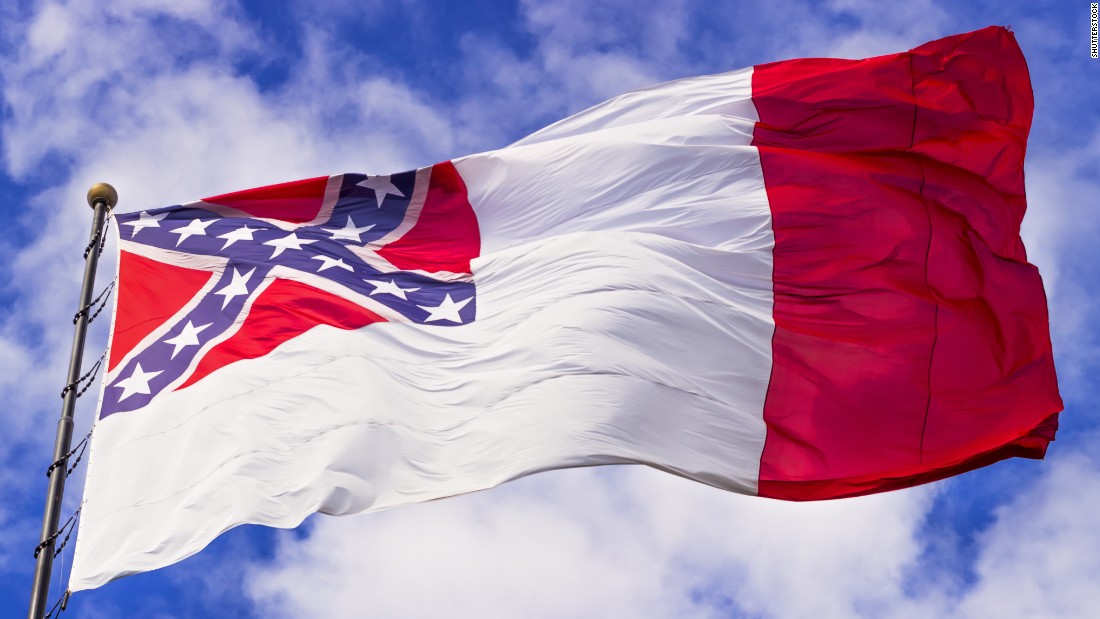
By the way... THIS is the actual Confederate National Flag. Actually, one of them. The "Stars and Bars" was a battle flag, not the national flag. The more you knooooowww...

But, I'm not going to talk about how the CSA is independent. Instead, I want to talk about if the CSA could actually survive as an independent state in the long run. And, to be honest, the prospects don't look good.

First, a few things I'll mention. This though came up when I recently started re-reading Why Nations Fail: The Origins of Power, Prosperity, and Poverty by Daron Acemoglu and James Robinson. Their basic argument is that only society's that allow political and economic inclusiveness, i.e. allowing the vast majority of people to have a say in politics and have little to no barriers to participating in the economy will have constant, steady growth. On the flip side, "extractive" societies that have neither political or economic freedom or a large percentage of the population may have the illusion of growth, but eventually would collapse without "creative destruction," infighting amongst elites, or the destruction of the state by outside forces. Also, as AltHistorians would be pleased to know, they are very much supporters of the ideas of small changes changing everything. They call it critical junctures, but it's basically a Point of Divergence.

This is a very brief and simple oversimplification, but I want to use this model for explaining how an independent Confederate States of America would act.

Pretty sure this won't be the way. And, frankly, I don't give a damn what you think. This is my blog!

So, which is more important in the inclusive/extractive divide? The politics or the economics? Acemoglu and Robinson claimed that both are necessary, and you can't have one without the other, but that either inclusive politics can lead to inclusive economies, or inclusive economies to inclusive politics. But they also stressed that changes to make things more inclusive can also be reversed to make them extractive.

What is the Confederacy that would theoretically start in 1865 be then? It would, by far and large, be an extractive economy with minor inclusive, but mostly extractive politics. The biggest reason is slavery.

The CSA had about 9.1 million people in the 1860 Census, of which 3.5 million were African-American slaves. That's over a third of the population held in bondage, mostly on agricultural plantations growing cotton and other produce mostly for export. Of the non-slave population, there were only 132,000 free blacks, and then only 316,000 slave owners. For the most part, as a bit of a generalization, the slave owners were the political, economic, and military leaders of the CSA: the majority of the government and the top military leaders were either slave owners or fully agreed with the idea of keeping blacks down. So, that leaves 5.2 million white men, women and children in the rest of the country, and most of them were farmers, but mostly ill-educated, growing food on subsistence levels on land that wasn't as good as the wealthier plantation owners could purchase and grow cotton on, with whatever extra they made being sold in local towns for products they couldn't make on their farm.

After all, you can't exactly eat cotton. 

So, with a small percentage, like 2.89 percent, of the population owning another third that had no rights at all, this isn't exactly an "inclusive" economic of political situation. The CSA is also a major Agricultural nation, with "King Cotton," the dominate product being produced, mostly for export to European factories. The North, on the other hand, was rapidly developing industry, railroads, technology, etc. that was far ahead of the South, with a very small industrial capacity, with a large chunk of the workers being slaves. It's often said that the North basically out built and out produced the South in everything, even food production, during the war. This wouldn't change after the war.

But this is details that most people who have an interest in the Civil War knows. What I want to know is if the CSA could survive as an independent nation. And my answer is: if the CSA doesn't reform it's society and economy (free the slaves for a start, then not allow something like Jim Crow develop), then it wouldn't survive as an independent nation without outside support, say from the UK and France.

With a large chunk of the economy and the population owned by a small portion, who jealously guarded their rights, land and property, it's hard to see how the CSA could experience economic growth as the Industrial Revolution began to spread out from the UK and the USA around the world. If the plantation owners want to keep their slaves on the land, they wouldn't like factories that could offer a chance, however slim, to allow slaves to increase their standard of living (even if the wages are a fraction of the wages that whites would be paid). There would also be poor white farmers, muscled off their land to allow plantations to grow bigger to grow more cotton or food, who would go to the cities to industries, where they would be closer together, and eventually agitate for more rights. This is seen time and time again in history, as poor farmers/peasants left the land to the cities to work in the factories for a wage barely above living, who eventually demand, strike, and fight for better wages and conditions. The US, UK, Germany, France, Russia... they all had it. The CSA would be no different. But would a small elite that made it's wealth from plantations allow factories, owned by other people, to make fortunes and join them? Maybe, sure. If a middle class develops, would those same individuals allow them a bigger say in government? Perhaps. Would they allow slaves? Very unlikely.

And... uhh... *sigh* you know, it's really hard to make jokes about slavery. It's just generally depressing.

This doesn't even take into fact that, by the end of the Civil War, the UK and France had gotten India and Egypt to grow more cotton to make up for the blockaded CSA. Where before the war the South was the biggest source of cotton in the world, by the end of the war, Egypt had taken the title. So even if the South won, the cotton that was backed up in warehouses all over the South would be virtually worthless. King Cotton was no more.

So, unless the political leadership of the South, mostly powerful plantation and slave owners, were willing to free the slaves, and allow them to compete with poor whites in a broad, market oriented economy, the South wouldn't be able to survive economically. In the long run, tensions between the US and the CSA would most likely lead to more wars. Every decade after the Civil War, the US would grow more rich and powerful, while the CSA may have some growth toward an industrial economy, but never to the same degree. As long as the CSA has allies in Europe that aren't dragged into other wars (say World War 1), then the CSA could survive for a long time. But if those alliances falter, the US has a chance to knock the CSA down a few pegs without anyone in Europe caring.

Even if the CSA survives past a possible World War, it's unlikely they would make it to a second one, especially if a third of the population is still considered a second class (or slave) to the whites, and a few people control the vast majority of the wealth and political power, and their economy lags behind as the rest of the world advances in an industrial revolution.

This is just one theory, and mostly based on a book that some people agree with and some people don't. I won't get into that.

This is the book I'm talking about, and you can get it from Amazon here. It's not Althistory, but it can help to explain why things in history happened the way they did, which is important!

But what do you think? Could an independent Confederacy survive the Civil War? Or if you have a topic or idea you would like me to talk about, please leave comments below, email me at tbguy1992@gmail.com, or tell me on Twitter @tbguy1992.