Friday, September 11, 2015

AltHistory Scenario #6: What if the September 11 Attacks Didn’t Happen?

Today I’ve decided to break one of the unwritten rules I had set for myself when I started this blog, namely to not touch any historical event after I was born (for those of who you have no idea what that is, well, my Twitter handle should give you an idea).

At least, I don’t want to make a scenario of events that are less than 30 years before the present. I have three reasons for this: it’s hard to realize the full historical significance of certain events the closer you are to them, either making them seem even bigger than they really were or downplaying it’s significance at the time; emotions regarding certain events are still fresh in everyone’s mind, and it’s difficult for writer and reader to set aside the emotions of the event and look at it from a more subjective viewpoint until time has passed; and it usually takes about 30 or more years before most information, especially government classified information, to be fully released, researched and presented, giving hugely skewed views of those events to other sources, such as eye-witness reports, news articles, hypothesis and sometimes even myths and fabrications.[1]

However, the 14th anniversary of the worst terrorist attack on American soil is most likely going to be the one exception to this rule, at least for right now. The attacks that are now known as 9/11 has had such a huge impact on the world, it’s hard to say if that even 30 years from now we will know the full scale and scope of what happened when Islamic extremists high jacked four commercial airliners, with two crashing into the New York landmarks of the Twin Towers, another into the Pentagon in Washington, D.C., and the forth going down in a field in Pennsylvania when the passengers tried to reclaim control of their plane.

Point of Divergence

There are two ways this could go about: either Osama bin Laden, the leader of Al-Qaeda, doesn’t sanction the attack, or somehow the FBI, CIA or some intelligence or law enforcement agency gets wind of a possible attack. The second scenario is the more likely in my opinion, so I will say that in mid summer, 2001, some of the hijackers are apprehended, and the plot is foiled. The news of supposed attacks on the US is made public, but much like the foiled Millennium Plot to blow up aircraft from Los Angeles on New Years Eve, it quickly leaves the headlines, and life resumes to normal.

What Happens Next?

There are several immediate effects that take place, not the least of which being that nearly 3000 people who would have died, either in the plane crashes or the collapse of the buildings, make it home that night, including hundreds of firefighters and policemen who’s heroics that day possibly saved many more. First of all, there is no economic downturn or recession as in after the 9/11 attacks. The attacks on New York resulted in a shutdown of the New York Stock Exchange until September 17, at which point major losses were reported: the Dow Jones Industrial Average lost over 14%, or close to $1.4 trillion dollars value in a week. Air travel would also continue as normal, without US airspace being closed, and the nervousness of passengers to actually fly in the months and years to come. However, the Great Recession of 2008 (a name I’m not sure will stick in 20 years time) will still happen, if deregulation that started under Ronald Regan and continued right up until the burst of the US housing market bubble continues as it does IRL.

The biggest change would be the lack of a War on Terror. No invasion of Afghanistan in October 2001, and no the overthrow of the extremist Islamic Taliban government that provided shelter to Al-Qaeda. And without the new focus, or rather outright paranoia of the American people to protect themselves, their family and their nation from future terrorist attacks, the Department of Homeland Security wouldn’t be established. It’s really hard to see how without the War on Terror there could be the Iraq War (or the Second Gulf War, or the Invasion of Iraq… I don’t know if anyone really knows what to call that now). The reason for the war as given by the US, namely that dictator Saddam Hussein was developing weapons of mass destruction, flaunting UN sanctions, or harboring terrorists - all of which has subsequently been discovered as false - would be insufficient to an American people who didn’t have such a jolt to the national conscience as 9/11 would provide.

If anything, without two partially successful wars (at least, in 2004) and the remnant of good-will after the 9/11 attacks, I’m unsure if George W. Bush would be second term president, though I’m pretty sure it would be another close one. “Dubya” wasn’t doing so well in the polls before 9/11, with a stagnating economy (no recession until 2008 though) and several gaffes and blunders, it’s hard to see how he may have won. However, I’m not sure if the political gridlock that has come to dominate Washington today would change at all. At the very least, it would be a couple more election cycles before the worst effects of the hyper partisan politics, such as threatened government shutdowns, Congress trying multiple times to repeal a president’s signature piece of legislation, or otherwise just obstruct the functioning of government. Now I’m not going to say which party will do it, as both the Republicans and the Democrats have done it when they were in control of one or both houses of Congress, and the President was another party.

In world affairs, the US wouldn’t have had both the sorrow and shared pain of 9/11 and the resulting overwhelming support for the invasion of Afghanistan, nor the ruining of that same goodwill in the Invasion of Afghanistan. If anything the US just continues on, the strongest nation in the world, but not yet involved in a Central Asian quagmire.

Now, would the US get involved in the Middle East, or Northern Africa, or somewhere else in the world at some point? Eventually, yes. The question is where, how, and why. Maybe it will be because of Arab nations attacking Israel. Maybe Russia under Vladimir Putin starts making moves on Ukraine. Maybe Afghanistan collapses after years of civil war and unrest. Maybe the Arab Spring breaks out in Egypt or Tunisia or Syria and results in Civil War. Maybe Boko Harram in Nigeria commits atrocities that galvanize the world into action. Maybe Iran finally does get the bomb. Any one of these possible scenarios would drag in the US, either as an interested party in maintining the status quo or spreading democracy, or the leader of a UN, NATO or “Coalition of the Willing” to militarily enforce actions that otherwise would not occur.

Conclusion

It’s really hard to say right now if this could have happened. The problem is not so much the lack of information regarding 9/11 but rather the lack of the right information. It has only been 14 years since the attacks, which is too soon to make a fully fleshed out scenario in this case. Events started on 9/11 are still happening today: the current Middle East crisis with ISIS is perhaps the biggest one today. It will take years, after ISIS, after George W. Bush, after Tony Blair, after Iraq, after Barack Obama, after Jon Stewart, after Vladimir Putin, after the 2008 Recession, after the political gridlock in the US, after a thousand other things that were all tied into the planning, execution, tragedy, recovery and revenge that came to a head on September 11, 2001 is either gone or, at least, far enough the in the rear view mirror for an alternate historian to really consider what happened.

The attacks of September 11, 2001, were a tragedy that will not be forgotten for decades to come, and not only in the US, but around the world. I was only nine when it happened, but all I could really remember of that day was after school, siting glued to the TV as the replay of the airplane crashing into the huge grey side of a building resulted in a massive fireball. I don’t remember teachers coming into the room crying, or all the kids being let out for recess while the adults and older kids watched the TV in the staff room, or being sent home early that day. I wasn’t old enough to realize what happened, and how the world was about to change. I didn’t know then about the thousands of Americans that landed in Gander, Newfoundland, and remained there for weeks as fears of another attack gripped America. I didn’t know that in just over a month, Tomahawk missiles and Special Ops troops would sweep into Afghanistan and overthrow a vicious regime. I didn’t know that soon tanks would roll across a land also known as Mesopotamia, the heart of human civilization, to overthrow another tyrant. I didn’t know that a few years later, on a stretch of land that straddles the US-Canada border known as the International Peace Garden, that I would see a memorial to the tragedy that included steel girders of the World Trade Center be established. I didn’t know that new rules would require me to get a passport to go twenty-five minutes south.

However, maybe because I was young and can barely remember the day will make it easier for me to write about it again, and do it from a perspective of having living through the effects of 9/11. In that way, history continues on, providing me and all the other Alternate Historians out their new topics to explore.

You just need to do it at the right time.


PS: I apologize for the lack of pictures today. I honestly didn't feel now is the right time for jokes for an article like this. Maybe in 2031.


[1] The two biggest examples I can think of for this off the top of my head involve two of my favorite historical subjects, the Titanic and World War Two. For years, it was assumed the Titanic sank in one piece, mostly due to the testimony of Second Officer Charles Lightoller, with those that believed it broke in two being either ignored or handwaved away. It was only in 1985, 73 years later, when the ship was discovered, that it was finally laid to rest that the Titanic broke apart. The second, even more amazing story was that, until 1975, most surviving German officers believed it was superior Allied strategy, mass production, manpower and/or sheer luck that resulted in their victory. Turns out that the Allies broke the “Enigma” code, the supposedly unbreakable cipher used by Nazi high command (as seen in the recent film The Imitation Game, and mentioned in my own published story, From Enigma to Paradox. The secret was so well hidden that it was only when the first “Top Secret” files of World War Two were released that anyone outside of a select few heard about it.

Tuesday, September 8, 2015

AltHistory Scenario #5: What if the United Nations is Never Formed?

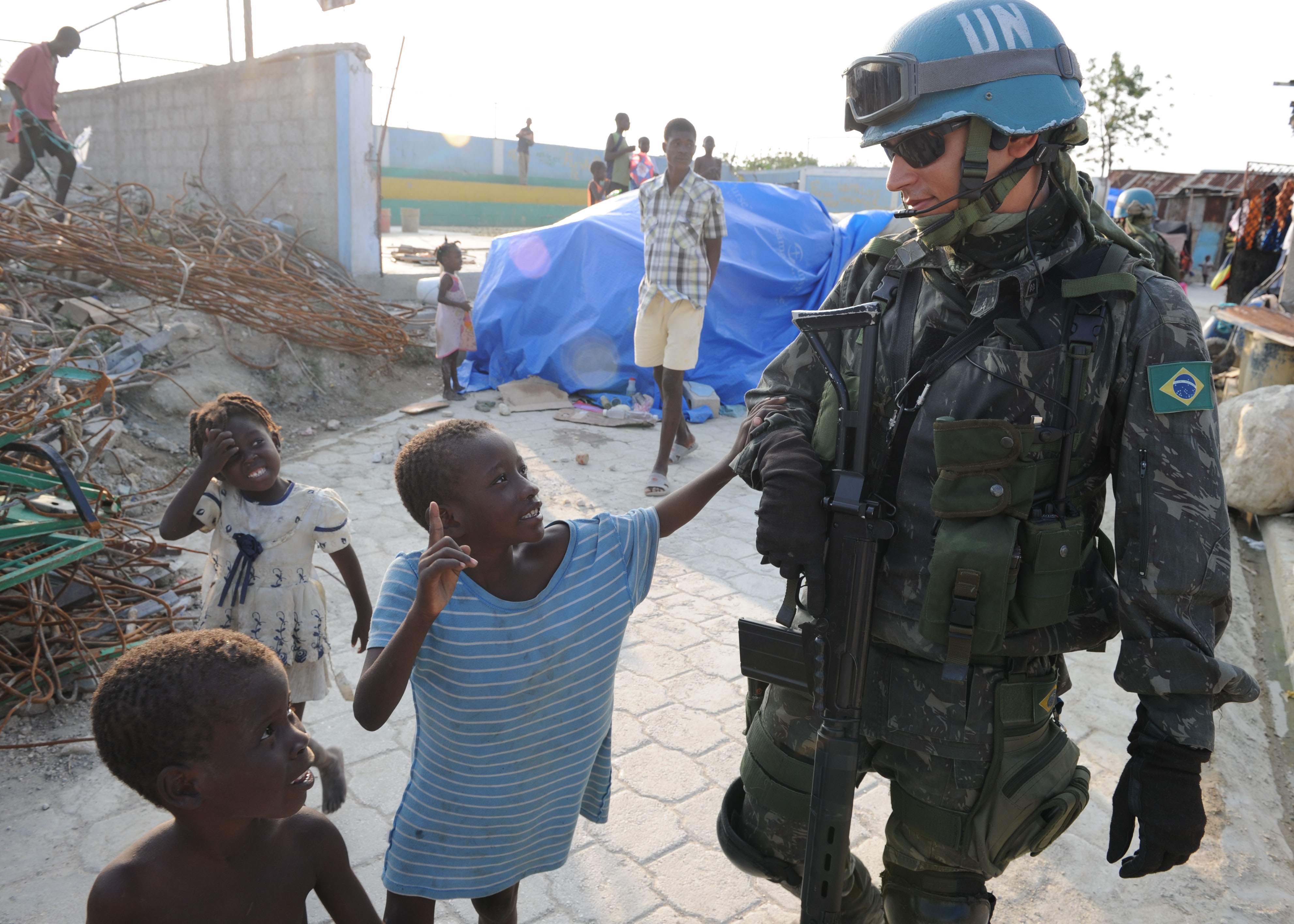
The United Nations has been, in my opinion, a pretty good success, though without a spotless reccord. Wars have still happened since it was founded in 1945 in the aftermath of World War Two, and, despite all the conspiracy theories and sci-fi media in the past few decades, it’s nowhere close to becoming a one-world government. I promise. However it has greatly improved the standard of living for millions, saved millions more from disease, protected natural and national treasures, and has successfully averted a full scale war in the height of the Cold War with a mixture of diplomacy, sanctions and sternly worded ultimatums, and has sought to protect the tenuous peace of the many smaller conflicts that have broken out with blue helmeted peacekeepers around the world.

What better way to say "I may be a solider, but I don't want to hurt anyone today" than a light blue helmet that makes you stick out?

So, what if the UN never existed?

Point Of Divergence

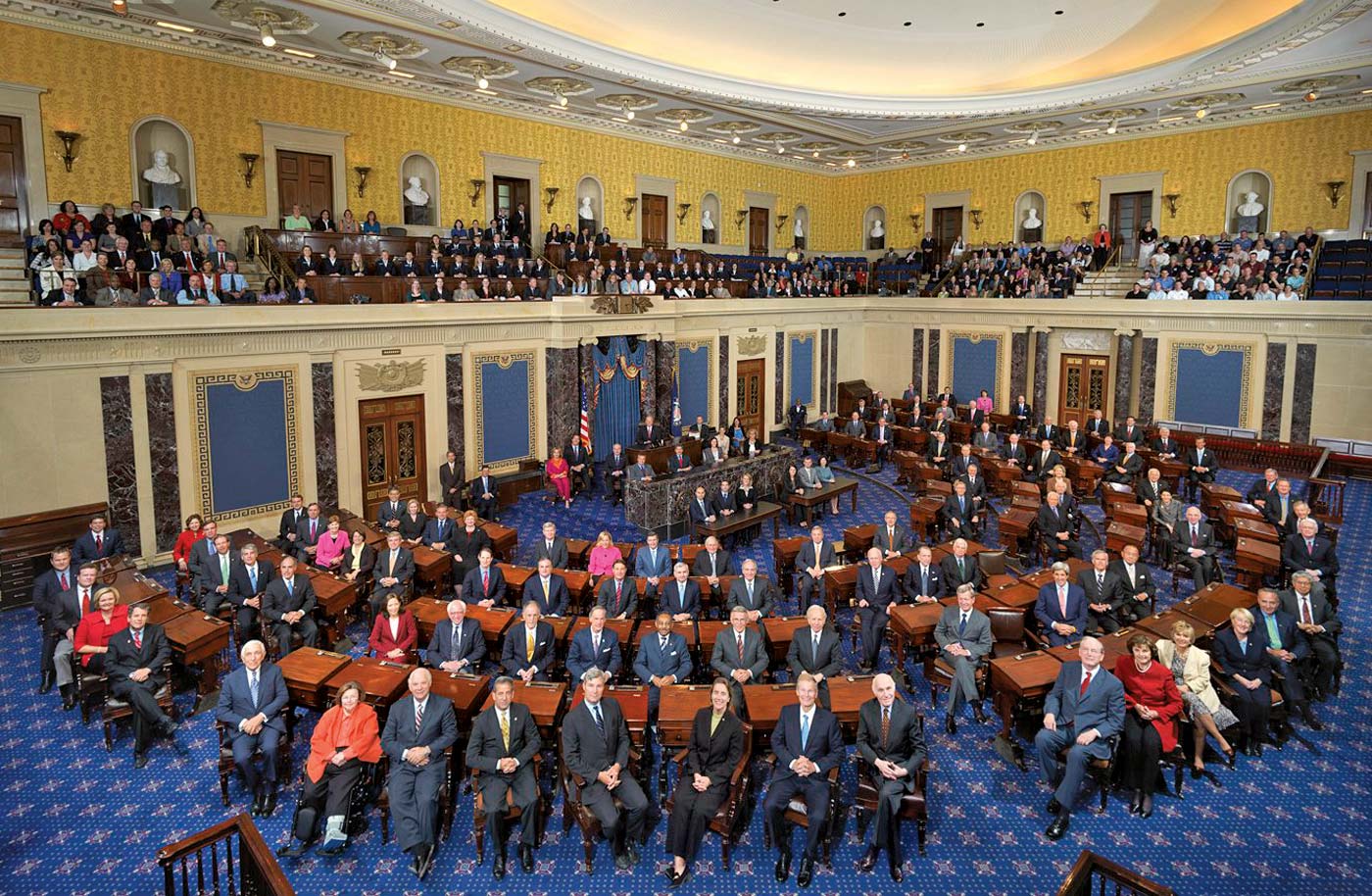
The best point of divergence I can think of would be that after World War Two, the US Senate, in a last gasp of isolationism, votes down the UN, saying it’s just another ineffectual League of Nations (or, another point that is made today that it’s too powerful, taking away the powers and privileges of the nation to an international body). Without the US, other major powers such as the USSR, United Kingdom, France and China, the proposed Security Council, also back away. By 1947, the dream of the United Nations has failed.

The Senate of the United States: Blocking anything and everything with a "Not American Enough" stance  since 1788!
In it’s place, I would see a pre-World War One “Powers” System come to the fore. At the very top would be the United States and the Soviet Union as the “superpowers.” Next on the list, nations like the United Kingdom, France, and China, later to be joined by Germany, and Japan, would be the “Great Powers,” the nations that possess a powerful economy and strong military capabilities, and could throw wrenches into whatever plan the superpowers hold, though they were completely overshadowed by the big leagues. After that, the Medium Powers: Turkey, Canada, Italy, Spain, Brazil, Iran, Egypt, Argentina, Australia, Indonesia (when independent), the Netherlands, Sweden, and others. These nations would be more diplomatically inclined, and either neutral in the Cold War, or supporting one side of the other. However, there would be no forum established for the Super, Great or Medium powers to work together, and most nations would only work with each other on a geographical or on specific interests.

This would establish a semi-balanced status-quo, at least for a while as the world rebuilt from the ruins of war. But I don’t think it would be as peaceful, or even as stable, as the world would have been with the UN. But, it would be very much a “might makes right” kind of world, where the bigger nations would be able to bully the smaller ones if need be, with not course of legal action to possibly be undertaken. It would be the late 19th and early 20th century all over, where the Great Powers of UK, Germany, France, Russia, Italy, Austria-Hungary and the Ottoman Empire made temporary alliances for one issue, then breaking them over another issue to make new ones.

Honestly France, why do you want to do anything with the weird octopus people?


The Consequences

With all the close calls of just the Cold War that were resolved with the aid of the United Nations, the biggest one would have been the Cuban Missile Crisis. So what if their was no UN for American Ambassador Adlai Stevenson to confront his Soviet counterpart Valerian Zorin with the big pictures of Soviet missile bases in Cuba for the world to see? What if there was no efforts by other nations via the UN to get the superpowers to work together?

Frankly, I think full-scale nuclear war would be the result, and all the fun counterfactual scenarios that would come after that.

That said... FALLOUT 4!!!

Even if there were no big war, without the UN there wouldn’t be the myriad of agencies that worked under the United Nations umbrella: the United Nations Educational, Scientific, and Cultural Organization (UNESCO), the International Atomic Energy Agency (IAEA), the International Court of Justice (ICJ), the International Monetary Fund (IMF), the World Health Organization (WHO) and so many more with so many acronyms. All of these bodies have immeasurably improved the world, and without them, it’s hard to see how the world would even be close to the same. Not to mention the tradition of peacekeeping, first put into effect after the Suez Canal Crisis in 1956 after being promoted by Canadian Lester B. Pearson[1], would be non existent without the UN.

Conclusion

I will not deny that the United Nations has failed. In the past five years, the lack of action on the Syrian Civil War and the Ukraine Crisis have shown its flaws (though I blame Putin in Russia for not letting anything get done on the Security Council than a failure to act by the UN). However, I feel that the many positives of the United Nation far out ways the few failings.

This not very well drawn MS Paint picture that might at one point have been a giraffe perfectly explains my feelings for the UN! 

After World War Two, the need for an international organization that could allow nations to stand up to those that threaten the peace was very real, after the failure of the League of Nations to stop Hitler, Mussolini, or Imperialist Japan. I feel that a body like the United Nations would have been founded eventually, with the aftermath of World War Two being the likely time. However, it wasn’t born fully developed: it took 11 years before Peacekeeping became a legitimate tool for the body. So many things could have changed, with maybe the eventual goal, somewhere down the line in an alternate universe, to an eventual one-world government.

Can’t be that bad, right?

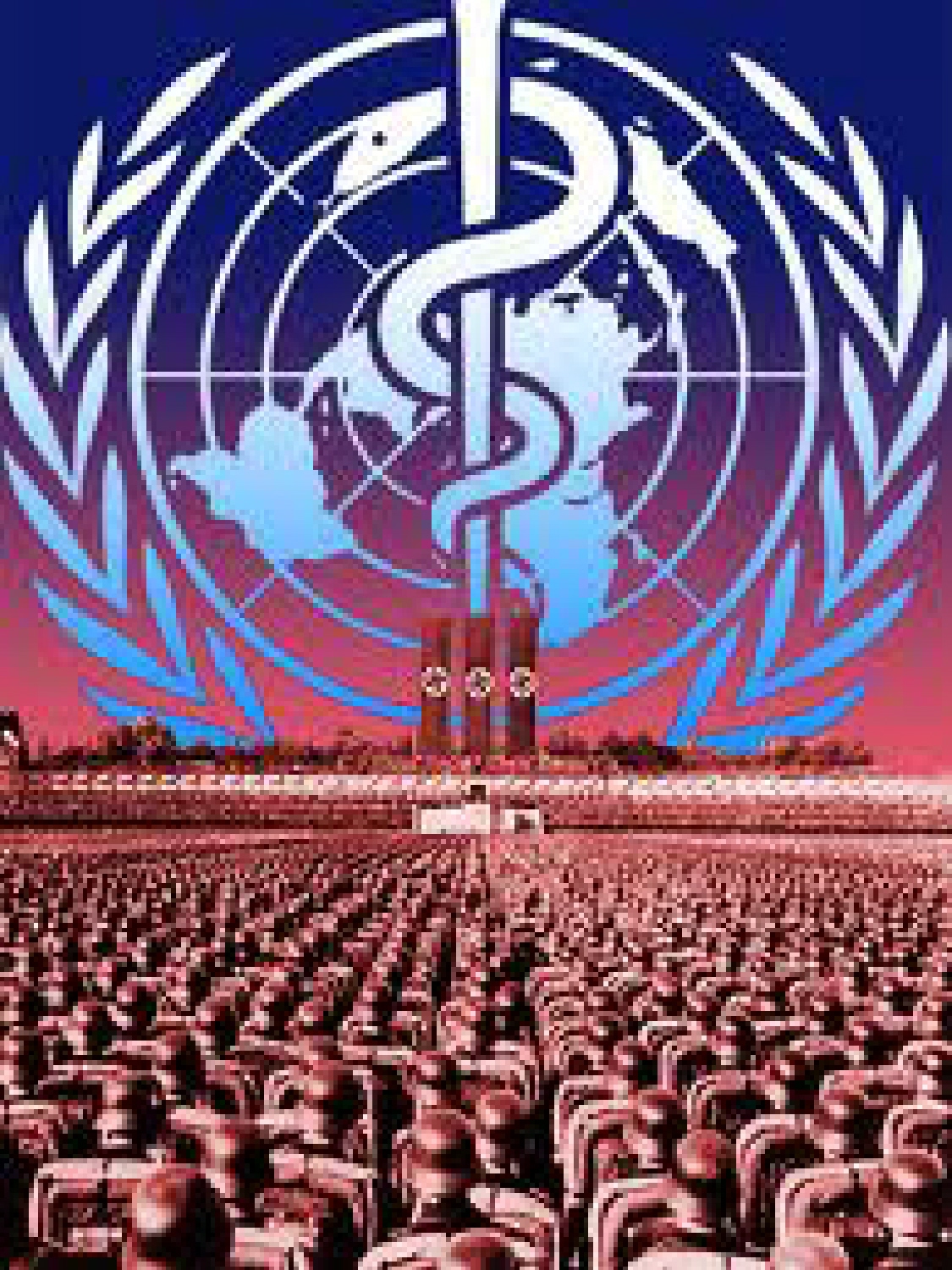
... Yeah, this is why I don't listen to any conspiracy theories. Especially on the internet.


[1] I could go on about Pearson: served in World War One as a stretcher barrier before transferring to the Royal Air Force; became a diplomat; was the second Ambassador to the US (1944-1946); was nearly the first Secretary General of the UN; elected to the House of Commons in 1948; became Secretary of State of External Affairs (the modern Foreign Affairs Minister) and served between 1948-1957; won the Nobel Peace Prize in 1957 for his role in the Suez Canal Crisis; Leader of the Liberal Party of Canada in 1958; elected Prime Minister in 1963 until 1968; got a new flag for Canada in 1965; presided over the Centennial Celebrations in 1967; and finally retired in 1968, before passing away in 1972, a year after being appointed to the Order of Merit by Queen Elizabeth II. This really does not do justice to perhaps on of the greatest Canadians of all time.

Friday, September 4, 2015

AltHistory Scenario #4: What if The Titanic Doesn’t Sink?

After the really big and really complicated “What if the US and Canada went to war” articles, I think it’s time to dial it back, and try just a short, simple…

Well, okay, shorter for sure.

This is not happening. Sorry to those who hate reading!

The Titanic was, and still is, one of my favorite bits of history, and the one that got me interested in history way back in Grade 3. I’ve seen every movie, every book, every documentary, and even the one time-traveling video game with alternate history elements that I wish still worked today. Also, please not remind me of Jack and Rose… OH GOD, THE FLASHBACKS STARTED! NO, WHY ARE THEY YELLING SO MUCH? WHY DO THEY GRATE ON MY NERVES SO MUCH? WHY DO YOU PEOPLE CARE ABOUT THEM? AHHHHHHHHHHHH!!!!

Did you really need to add a love story to a historical event that is already has enough drama and emotion? And Jack would have never been able to get into First Class more than once, and only then being immediately escorted below, if not punched and locked away for the rest of the trip. There was a reason for those gates they have to break down in the movie, and it was actually US law, to keep all the maybe diseased immigrants from the people that spent many times any of third classes annual income on a cabin that-*passes out from rage induced coma*

It was built in a time where humanity believed it was on the verge of conquering any problem before it: the end of war, or disease, of chaos. European and American civilization spread around the entire world, the Industrial Revolution was bringing new and amazing inventions every day, and it seems that reason was soon going to triumph over fear and oppression. Never mind that all of Europe was a powder keg, engaged in an arms race, and well over half the continent was under the control of autocrats and the other half by wealthy industrialists, with a class barely removed from the peasantry of just 100 years before by the growing working class demanding equal and free rights, and racism and imperialism still held millions upon millions of people down. But you know, baby steps.

When the world woke up on April 15, 1912, to hear the news the biggest, most luxurious, “unsinkable” ship had sunk, with over two thirds of those on board, it was like a collective shock to those same hopes, and one that never recovered before it finally ended in the trenches of Flanders just two short years later. As Walter Lord, author of the stellar A Night to Remember put it, “Before the Titanic, all was quiet. Afterward all was tumult. That is why, to anybody who lived at the time, the Titanic more than any other single event marks the end of the old days, and the beginning of a new, uneasy era.”

"Walter Lord: A guy that knew how to make a memorable quote on the Titanic." - Tyler Bugg

So, what if the Titanic didn’t sink?

Point of Divergence

This can be done one of two ways: either the Titanic completely misses the iceberg, or the iceberg causes little to no damage. The first scenario could be done either by the lookouts seeing the iceberg in time, or, to go a bit further back, maybe the accident with the sister ship Olympic in 1911 when she collided with a British cruiser didn’t happen, so Titanic’s sailing date wasn’t moved from March to April 1912. Either one would work for the purposes of this POD, but let’s go with the Titanic still hitting the iceberg, but it only causes minor damage.

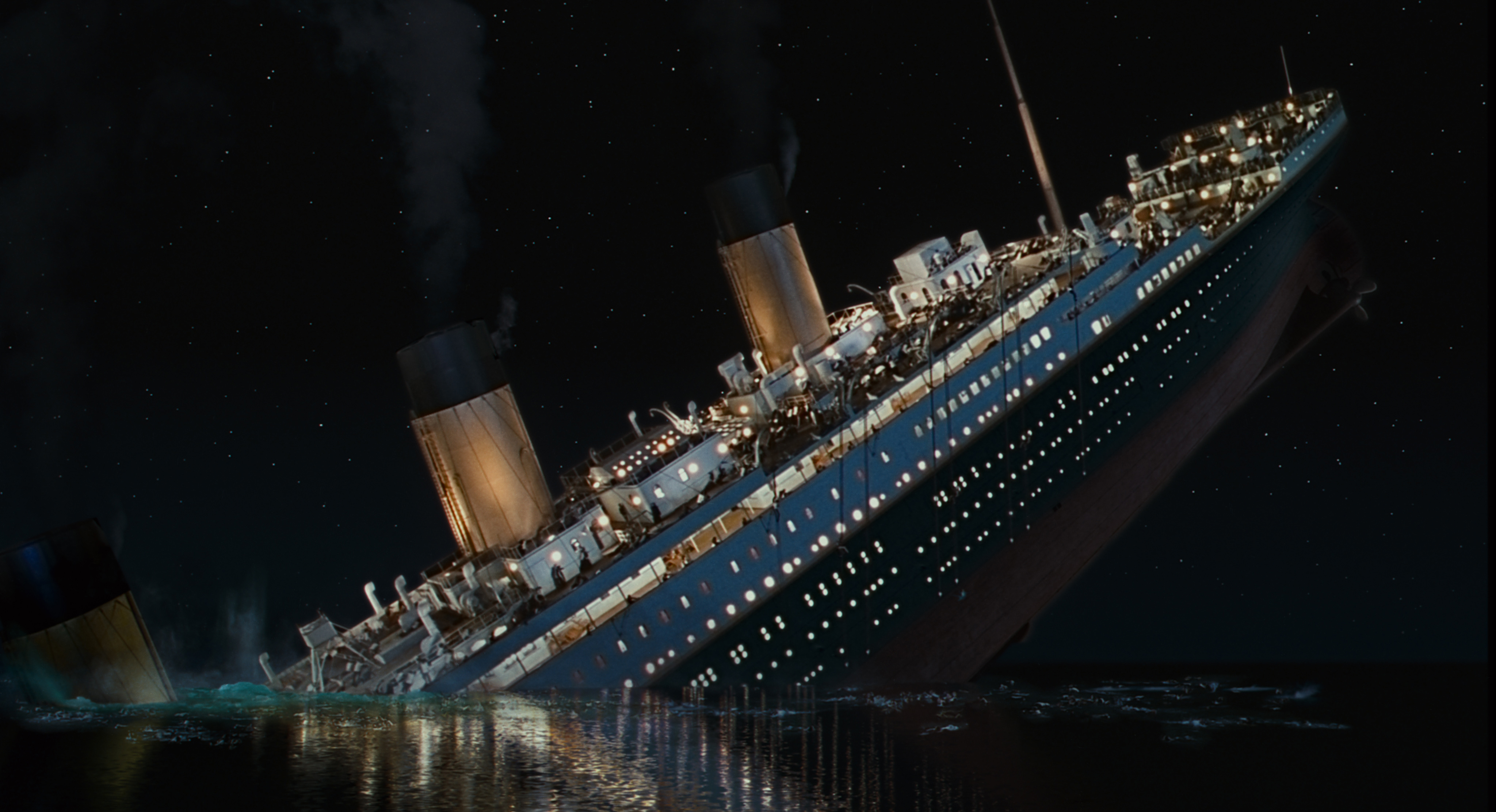
Part of me really wishes something like this happened...

What Happens to the Titanic

When the Titanic sails into New York Harbor with only a small gash in her hull and two or three watertight compartments full of ice cold Atlantic water, the ship is taken out of service for a short period to be restored. Returning to the North Atlantic sailing route, the Titanic works with the Olympic on a two-ship service for the White Star Line, allowing the company to compete with the Lusitania and Mauritania of the Cunard Line, accelerating the competition between these companies even more, not to mention other companies such as HAPAG (Hamburg-America Line), and Norddeutscher (North German) Lloyd. HAPAG was about to launch the Imperator, which was already bigger than the Olympic/Titanic by a few feet, but would be outfitted with a really gaudy eagle on the bow to add just a couple more in the endless one-upmanship of the Trans-Atlantic route.  By early 1914, both White Star and Cunard have another ship each, the Gigantic (the original name for the Britannic) and the Aquitania respectfully. With this fleet, the White Star Line would be in a much more secure financial position.

The Titanic would also most likely serve in World War One, either as a troop ship or a hospital ship, and maybe both. I personally feel it would be unlikely that one more ship able to carry a couple thousand more soldiers to the battlefields of Europe would change much for the course of the war. While many ships were torpedoed or sunk during the real war, such as the Lusitania in May 1915 and the Gigantic/Britannic in 1916, the Titanic and the Olympic survived.

And like Olympic here, would have had a really... odd paint job. I'm pretty sure of it.

After the war ends, the Titanic, Olympic, and all the other survivors would be refitted and be placed back in service. Titanic and Olympic are placed back on the transatlantic route, and continue to sail between Southampton, England and New York City for several more years. Eventually their massive coal engines are converted to oil, the interiors are modernized to continue to compete, and the rich and famous continue to sail across the Atlantic. However, in the 1920s, the US began to impose immigration restrictions. Immigrants from Europe to America had long been the bread and butter of the major shipping companies, but now that the flood of millions of immigrants had been reduced to a trickle, the steerage/third class cabins and apartments are converted, providing inexpensive, but comfortable, places for middle class tourists.

The future of the Titanic looks great until the start of the Great Depression. In the 1930s OTL, the White Star Line and the Cunard Line were forced to merge into the Cunard White Star, though eventually White Star was dropped. I think both companies would be merged, but for the hell of it in this scenario, White Star is the company that takes over Cunard. But in the mid 1930s, as fewer and fewer people can afford to sail across the Atlantic for business and pleasure, the number of crossings is reduced. Cheap cruises to the Caribbean or the Mediterranean are attempted, though eventually smaller ships the tough decision is made to reduce the fleet of ships, especially the older, more expensive, increasingly outdated ships like Titanic, Olympic, and Mauritania, especially as new superliners, such as the Queen Mary are proposed. By 1935, the three older ships are finally sold to the scrapyard, their furnishings auctioned off, and the sailors and passengers who were on these ships in their heyday are only left with fond memories.
The Olympic and Mauritania, competitors and rivals, right before they are sold for scrap.

The Broader Consequences

The biggest change in such a timeline is that safety regulations, hurriedly changed after the Titanic sank, would remain insufficient: only 16 lifeboats for ships over 10,000 tons, radios would not have to be manned around the clock, and there would be no International Ice Patrol to monitor ice on the North Atlantic. Since there was no massive tragedy to spur governments into action in 1912, the British and Americans wouldn’t change any of the rules until such a disaster happens, which, by the laws of probability, would eventually take place.

And my fear is that a major disaster would have occurred right before, or immediately after the start of World War One. One passenger ship, any passenger ship, could be the cause that changes the laws. Say one had been caught in fog and struck another ship, sinking in just a few minutes like the Empress of Ireland in 1914, taking 1,012 out of 1,477 to their deaths. Perhaps an even more devastating outcome would come in World War One, if a certain ship still sank...

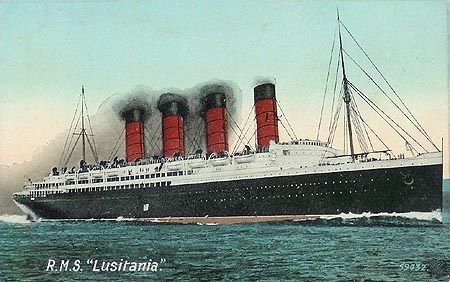
Yep. That ship. 

In May 1915, the Lusitania was torpedoed by the German submarine U-20, and in only 18 minutes, listed heavily to the starboard and sank, taking 1,198 men, women and children, including 128 Americans. And because the Lusitania now had 48 lifeboats after the Titanic sank, 761 survived, even though only a six could be lowered due to the angle and speed the ship sank at.[1]  But what if the Lusitania only had the required 16? With the eight on the port side and the four of the starboard closest to the bow impossible to launch in only 18 minutes, that leaves only four. What’s to say that panic and chaos troubles their launch too? Maybe only one or two lifeboats could be launched successfully, each with a maximum 65 people. While people were pulled from the water hours after the Lusitania sank, most victims died of hypothermia or drowning. It would be safe to say that in this version of events, the Lusitania may have sank with hundreds more victims, leaving, at most, maybe 200 survivors out of nearly 2000 on board.

And... really? A stamp? Who thinks trying to use a stamp as propaganda would be a great idea?

Another change could be media: the Titanic disaster lead to many books, movies, TV shows, video games, and even a play dramatizing the wreck, and all of which adds to the mystique of the disaster; the glamor and hope of it’s passengers and crew, and the heroism, horror, and sadness of it’s victims and survivors. Without this, the Titanic would become, much like it’s sister the Olympic, a minor footnote in the history of the world, just one of many massive ocean liners of the early 20th century.

The Butterfly Effect

I don’t usually talk about the butterfly effect, but in this case, it’s important to mention it, mostly to say that I won’t actually be going into detail about possible results of the butterfly effect.

And no, I'm not talking the movie. What is it with all the movie's in this article?
I cannot even begin to imagine all the changes that could have happened if the 1,513 men, women, and children who would have died on April 15, 1912, reached New York on April 17 or 18, 1912. The survivors too would have had their lives changed. The few officers that survived the Titanic, namely Second Officer Charles Lightoller, was never going to be able to command a luxury liner because he was tied to the Titanic. But because the Titanic didn’t sink, in a few years he would get to command his own ship, and maybe eventually the Titanic itself. John Jacob Astor IV, the wealthiest man on board, could have started a new business, donated millions to charity, and even run for President of the US in the years to come. So many immigrants who were seeking a new life on the other side of the world could have made fortunes, raised families, married, and joined the boiling pot that is the United States. Captain Edward John Smith would have proudly sailed the Titanic back to England, and retired to his hometown of Lichfield, Staffordshire, England.

Their descendants could have been great leaders, brave soldiers, clever scientists, renowned artists, or just one of the millions of people who work, live and play in a world that may or may not be completely changed. What if one of these hypothetical descendants was President of the US in the Cuban Missile Crisis and made the wrong decision? What if one created a famous literary character, and another performed that character in film years later, winning accolades and awards? What if one found the cure for cancer? What if one became an infamous serial killer? What if one solved world hunger? What if one…

... replaced this idiot for a stock photo?

As you could see, I could go on and on about this. But that’s not the point of this article. The point of these articles is to show how I see the world changing if something in history happened differently. Sometimes, as I showed above, the overall course barely differs, if at all. Sometimes the ramifications are massive. Sometimes it takes generations for the effects to be felt. Sometimes it could be instant.

But in the end, the Titanic did sink. On a moonless night, it struck an iceberg at 11:40 PM, April 14, 1912, and sank at 2:20 AM, April 15, 1912. Of the 2,218 on board, 705 made it to the lifeboats, while 1,513 were left on the magnificent ship. The band played till the last, the stoic men letting the women and children first get to the lifeboats first, the crew valiantly keeping the engines going till the last, the captain going down with his ship, the rich owner cowardly slinking off; all the clichés and tropes of a disaster movie, played out in real life.

At the very least, James Cameron got this right. Really, he got a lot right, like how the ship sank, the real life people, the period costume... 
OH GOD DAMNIT!!! NOT THESE TWO!!! I KNOW THE MYTHBUSTERS SAID JACK COULDN'T GET ON THAT PIECE OF WOOD, BUT WHY COULDN'T HE HAVE GOTTEN ANOTHER ONE? THEN AGAIN ROSE SHOULD HAVE CUT OFF JACK'S HAND FROM SWINGING THE AXE EARLIER ON THE SHIP, IF SHE COULD HAVE EVEN FOUND HIM IN TIME IN A SINKING SHIP AND-*is taken away to a mental hospital*


[1] The starboard boats of the Lusitania could be lowered easier, but swung out to far from the ship to safely load, while the lifeboats on the port side could be filled to full, but would have been damaged on the riveted hull of the ship. Some lifeboats spilled their occupants into the water because of the chaos in trying to lower the boats, while others were cut free of their ropes and allowed to float away from the Lusitania as it sank.

Tuesday, September 1, 2015

Real History #3: The Rise and Fall of a Prairie Town: Napinka, Manitoba

Last Monday, August 24, 2015, my grandmother, Gladys Pearl Bugg, passed away. A kind, remarkable, woman fell asleep one last time. Born in 1931, married in 1951, and had five children, 10 grandchildren, 10 great-grandchildren, innumerable friends, and many fond memories.

In memory of her, I've decided to post this article, one I worked on for a local heritage group for a future history book, about the small town where our family grew up around, Napinka, Manitoba, Canada.

Note: unless otherwise stated, all the towns mentioned in this article are in Manitoba. Promise!
I really, really, really wish I had a better program for making maps. All that empty Northern space to point out, yes, this is Manitoba...

The story of Napinka is one tied very closely to that of the railroads in a way that no one alive today can fully comprehend to this day of the car and airplane. Napinka seemed destined for a time to become the most important town in the region when the first settlers set up homes in 1881 and 1882 as the excitement of the railways grabbed hold of the country. It would take until July 1891 and years of broken promises and missed deadlines – even leading to the electoral defeat of a Member of the Manitoba Legislative Assembly (MLA) when he promised the railroad by 1888 – before the Canadian Pacific Railway did lay the tracks they promised to Napinka from Kemnay as part of the Estevan Subdivision, terminating in Estevan, Saskatchewan. A year later, the line from Deloraine had been finished to Napinka, much to the disappointment and anger of Melita, who sent a delegation to Winnipeg to argue for the junction of the rail lines in Melita to no avail.

The next sixty years where the heyday of Napinka. Trains came in every day from Brandon, Winnipeg, Estevan and the many small towns along the line. To service the trains, the CRP built a water tower pumped from behind a dam the railway built on the Souris River, with a ball on top that would let people see how much water was available. A coal dock, tool shop, round house (found to be too small when originally built) and bunkhouse were also built to serve the CPR in Napinka. The passengers and crew on the trips that stopped overnight in Napinka used the hotels and stores built along Railway Avenue. In 1892, an article in the Brandon Sun mentioned Napinka having “…two general stores, three hardware stores, two butcher shops, one flour and feed store, one watchmaker, two dressmakers, builders, coal and wood dealers, one elevator, two lumber yards, a drug store and a barber shop…” Boarding houses, two hotels including the infamous Leland and the Russell, two banks, a blacksmith, doctors, a laundry operated by a Chinese immigrant, a Massey-Harris dealership, and eventually, with the arrival of the automobile, two garages were also set up in Napinka after this article was written.

Main Street, Napinka. Though, it's not actually called "Main Street," it's Railway Avenue. Because the CPR loves pointing out how important they are.

A beautiful two story stone school house, built from 1897 to 1900 and constructed of stone hauled from south of the present Highway #3, is an example of the pride and feeling of prosperity that grabbed hold of Napinka. On May 28, 1908, Napinka was officially incorporated as a village, with a population of nearly 400.

Sports teams, social clubs, and women’s organizations were set up in these early days, bringing amusement and community to the inhabitants of the town. An open air skating and curling rink was built in 1896, while a newer curling facility was built in 1906, and curlers from Napinka achieved great success in bonspiels across Manitoba. Three churches, the Zion Methodist, Presbyterian, and Anglican churches were in Napinka at the turn of the century, though the Methodist and Presbyterian would unite to form the United Church in 1917, nine years before the United Church was formed nationally. The Napinka Women’s Institute was established in 1921 and a Red Cross branch was set up in 1941. The Faith Rebekah Lodge was set up in Napinka in 1947, while a Beef and Home-Ec 4-H club were only set up in the 1960s, along with the Napinka Explorers and a Canadian Girls in Training (C.G.I.T.) branch affiliated with some of the churches in town.

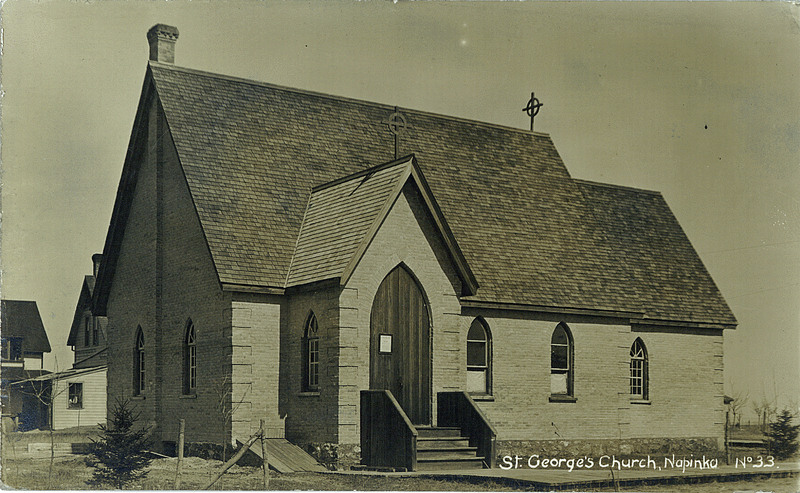
Out of the three churches, only this one is still standing... so I guess it wins the "Still Standing Prize?"

The ambitious residents, when the need for a baker became apparent, decided they wanted something grander and offered $5000 for someone to set up a gist mill, which was a sign of progress in small towns across Western Canada at the time. Although land was set-aside just outside of town, no gist mill was ever built.

Even during the hard years of the World Wars and the Great Depression, Napinka continued to thrive, mostly thanks to the railway. For a few years after the young men returned from Europe in 1945, things looked like they would continue. A new community hall that is still active to this day was built in 1946, while a skating rink was erected in 1953.

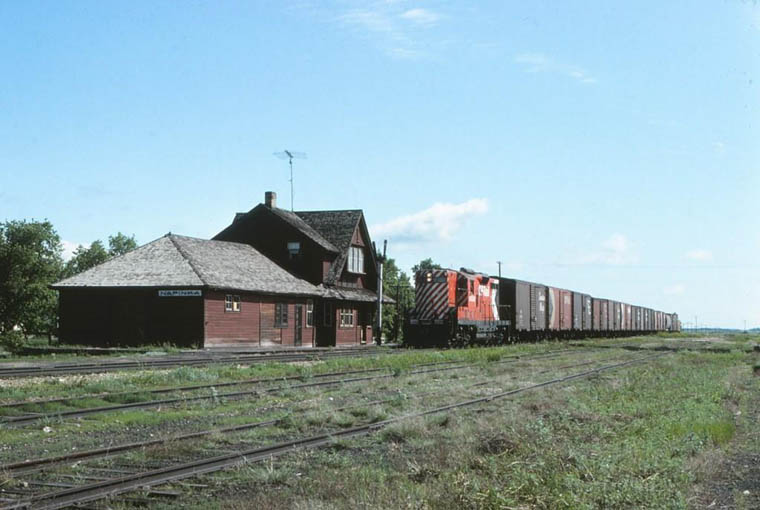
However, two incidents in the 1950s sounded the death knell of the town. On March 6, 1951, a fire destroyed the Russell Hotel and, possibly more importantly, it’s beer parlor, damaging business in the town. Even more devastating, the use of the Diesel engine in trains, and the rapid “dieselization” of the CPR fleet starting in 1957 lead to the end of the classic days of steam trains. Declining passenger and freight revenue on these same trains as the personal automobile and the grain truck took over previous duties that the train did so well resulted in many of the routes being suspended in the late 1950s and early 1960s. The water tower and coal dock were torn down in 1963, while the station remained just long enough to be used for filming in the 1985 NFB film Daughters of the Country – Part III, Places Not Our Own, but was moved soon after to a place near Shilo, and turned into a personal home.

Someday, I really, really, really want to get that train station back. If just so I can dress up and look at my pocket watch worriedly and shout at people.

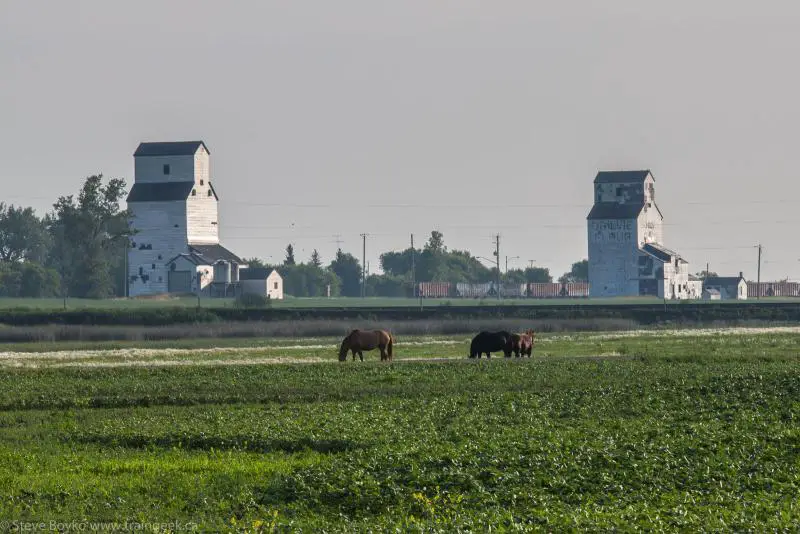
Businesses that were long staples of Napinka began to disappear: the Blacksmith closed its doors in 1957, the two-story building being divided: the top half that was used as the church, school and dancing in the early years, was taken off and was sent to Virden, the bottom to be used as a cattle shed. The Co-op left in 1962, while the last butcher closed in 1961, the building being used as the Legion in Napinka for many years, until it was moved. The poolroom and barbershop where closed in 1962, with the building torn down 14 years later. Two elevators out four at the height of Napinka remain along the tracks, but were closed by 1984, and are currently owned by Tilbury Farms from Melita. The Village of Napinka itself voted itself out of existence on January 1, 1986, all duties being taken over by the Rural Municipality of Brenda. At this time, only 132 people called Napinka home. One of the last things the Village of Napinka did before it ended was install water and sewer lines for the village.

The school, long a source of pride, was also shut down. Though an addition had been built in 1959-60 that added more classrooms, a library and indoor plumbing, consolidation of the rural schools lead to the closing of the high school in 1968, and later the last elementary classes were ended in 1975 with all students being bused to Melita. The old stone building is now empty, while the newer addition was turned into the Drop-in-Center, providing a place for coffee in the mornings, a small library to serve the community, and for family and community events.

This is a very impressive building when you look at it up close. Take my word for it.
The skating rink fell down in 1996, and was never rebuilt; the curling club had ended in 1973, and it’s building torn down in 1977. Green’s Garage, the only business in Napinka to be held by the same family for it’s entire existence, finally closed its doors for good in the 1990s. The old two-story brick post office, formerly the Bank of Montreal when it was first built, was torn down in 2010, though for many years Bodkin’s Grocery Store was Napinka’s post office, but eventually it too closed in 1990 and now only a lonely row of community mailboxes is all that is needed. One of the last remnants of Napinka, an old Livery barn, was only taken down in 2013 and the Zion United Church was demolished a few weeks before this article was written in 2014. The Anglican Church had been purchased years before for personal use by a resident in Napinka.

The story of Napinka isn’t one that is unique: every small town in Western Canada has faced this problem of depopulation and a lack of purpose in the era of cars and airplanes. While some managed to survive, many others have died out and are now nothing more than tiny dots on a map. In a town that once held so much promise and ambition, Napinka still holds on to the past; the old fire hall with two horse drawn fire wagons can still be looked at, while the school house still stands on a beautiful lot of trees and flowers. Trains still rumble through Napinka, though they are now most likely carrying grain, coal and even oil. Though in the end this is a sad story, the memories of the glory days of the early twentieth century is still strong in the residents of the town who remember the magic of a steam train sliding in gracefully next to the station on a puff of white smoke and dozens of people disembarking to take in the charm and vitality of a small town with so much promise.

And if you don't mind the occasional train, being an hour away from the closest city, nothing but cows and canola as far as the eye can see, internet that isn't always reliable... you can always move here!

Throughout the early years of Napinka, the trains brought in some people that have since become famous;

-J. S. Woodsworth: First leader of federal Co-operative Commonwealth Federation (CCF, later NDP, 1932-42), leader of Winnipeg General Strike 1919 - Methodist Minister in 1897.

-Seymour J. Farmer: Mayor of Winnipeg (1923-24), City Councillor (1928-29) Leader of Manitoba Co-operative Commonwealth Federation (CCF, later NDP), MLA from 1922-1949 – C.P.R. clerk

-Poet and performer Pauline Johnson, c.1908


Sources: Brenda History Committee. Bridging Brenda Volume I. Altona, Manitoba; Friesen Printers, 1990. Page 286-293