Saturday, January 14, 2017

Alternate History Scenario #27: A Different Kind of American Slavery?

The Alternate History Wiki is a great place to find alternate history ideas, and this one was because of an idea someone threw out in the chat: What if slavery was still used in the US, but not in the version that we know, but something more like the old Roman style of "debt" slavery.

And that got me thinking. And when that happens, I start making up an entire alternate history scenario.

This won't be a full fledged scenario, but something more theoretical than anything, how an alternate US may look if it didn't use chattel slavery as in OTL. I remember reading somewhere of the point when the race driven, life long slavery was made official, a court case in the 1600s in Virginia. However, I can't find the actual source, but I think I will use that as the main point of divergence. Say the Founding Fathers, in their pursuit of building a Roman style republic, decide to go all out?

Here Bessarius gives his master, George Washington, a glass of wine

Slavery in this new America would be much different: theoretically, anyone could be a slave, but there would be a very particular system set into place. Certain crimes, say theft, fraud and the like, could result in the accused being sentenced to slavery for a certain period of time, say five years as an average based on the amount of money the accused took.

The larger percentage of slaves in this alternate world would be those in deep debt, with little prospect of being able to pay it off. The way I would see it, a wealthy person would agree to pay off said persons debt, with some interest, but in turn the debtor would become an "indentured servant" or slave to the wealthy party. However, there would be a lot of laws and protections in place over the years, preventing children from being enslaved, ensuring some basic rights to life, while temporarily removing other rights, like voting and such. I'd think that anyone that had been a slave in their life would be barred from serving in political office and other constraints, but that would never apply to their children unless they also had to apply for it. It would also be possible for these slaves to get out of their contract early, working at a side job if they wanted to (though it may depend on locality there). In general, this form of slavery would simply be working to pay off debt, and being given food and shelter to do so.

And at the same time collapse the market in shackles and chains.

This would be a slavery based on contracts and laws instead of racism and "tradition." In fact, with this kind of slavery, almost all of American history could be rewritten. With a source of cheap labour without needing to import millions of men, women and children from Africa, plantations in the South would be as likely to form, just with contracted free labor more than permanent black slaves. This source of labour would be better motivated, with terms of service, and the chance of getting freedom sooner. As for the South itself, there wouldn't be millions of black slaves to be worried about, and with a rotating door of indentured servants, the plantations could keep going a lot longer than in OTL.

It would be when Industrialization happens that issues could come up: some factories could use only indentured servants, while others would have to rely on paid workers. This could cause tensions: either indentured servants are resentful of having to work for no money, or that paid workers would not get the wage they deserve due to the indentured workers. I could see more strife between workers, rather than the formation of unions to demand better wages, but eventually groups trying to bridge the gap between the two, the poor workers and the near serfs that compete with them.
Oh darn, did I just make socialism in the US again?

Immigration would also be different. For some potential migrants, the thought of coming to the US, but then being put into slavery, would dissuade some, but for others, hired as indentured servants for a period of time by wealthy land and factory owners would be an opportunity to never pass up. Internally, the movement of people could be different. Those who become indentured servants could be moved away from their families and communities to work in mines or factories or farms in another state. When more people move west to open up the frontier, it would challenge the indentured slavery system with a lack of wealthy patrons to help those that fall behind on debt. If anything, the west could become more "wild" than it actually was, or a lot more empty for longer, or more likely, just larger plantations like in the south, growing wheat and raising cows instead of cotton.

But with possibly tens, if not hundreds of thousands of people serving as little more than free labor, the the US economy would not grow as large or as robust as it did in our timeline. Wages would be lower due to the competition, while the standard of living would be a lot smaller in return. The only people that would benefit from this would be the rich, those that own the factories and land to be farmed. Since they have nearly free labor for periods of time, and the ability, through pricing products and making loans with high interest, to make more debt slaves, the process would be a vicious cycle that would be hard to break.

I... uh... that is not what I meant...

If the system works well, and those that have to use indentured servitude to pay off their debt to be able to re-enter society later with nothing to hold them back and even some cash on the side to restart their lives, then it would serve it's function well: providing temporary cheap labor, while also helping those that can't pay it. But if it breaks down, and becomes a way to oppress the lower classes, then it's less likely to be tolerated into the future, and could be the cause for civil unrest and possible revolution in the future.

But that's where I will leave it. But what do you think? What would an America with indentured servitude like I describe look like? If you have an idea, or a comment, feel free to follow or message me on Twitter (@tbguy1992) or my email tbguy1992@gmail.com.

Monday, January 9, 2017

Editorial: Parallelism and Alternate History

So I hope you all had a good holiday season. I've been pretty busy with family and work, and getting into playing Overwatch, which, like everything that I get into, is long after everyone else already gets into it.

But I digress. It has been fun! Even if I can't hit anything when I shoot.

So, you know... pew pew dead. That's how I roll!

Anyway, back to Alternate History and talking about it.

One thing that has come up a lot in my discussions with fellow Alternate Historians is the use of parallels to our history in AH, and to what degree we should use it. Some say that parallelism is sloppy writing and should be avoided, while other's say that it helps connect events in the minds of readers so should be used liberally. I've had people especially drag Harry Turtledove through the mud for his parallelism in his Timeline 191 series, which I'll get to in a bit.

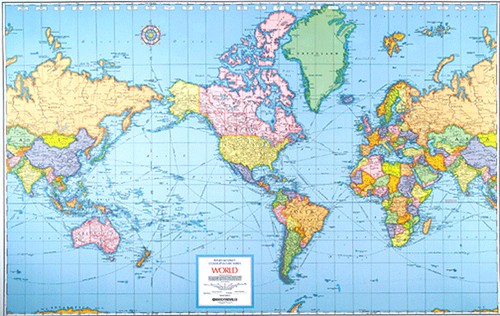
I'm somewhere in the middle, as some of the writing I've done on the Alternate History Wiki and on this blog are anything to consider. I think it's most important when doing AH that I write a good story that is understandable to people who have, at most, a small grasp on the history of the era. This is why the most popular topics of AH in English: World War Two and the American Civil War, because almost everyone in Canada, the US and the UK know about those two events. And, as we all know, the US is the centre of the world...

And it's reasons like that that this map exists.

Most people know some of the details, like D-Day happening on June 6, 1944, and the Americans joined the war when Japan surprise attacked Pearl Harbor on December 7, 1941. But in most cases, they don't understand why the war happened, the underlying causes, the more subtile events, or even the other nations involved (I blame the Cold War and rather nationalistic historical educational systems we still have for downgrading the role of other nations, especially the USSR).

So this is where the value of parallelism can come in handy. For those people that enjoy a good story, but don't have the full depth of knoweldge of a historical setting, using familiar dates can help to anchor the story into the time period, even if the causes and results of the Alternate History are vastly different.

It's also a reason why I'm not totally opposed to see big names in stories and timelines that started decades, if not centuries before they would have been born OTL. In fact, in my big French Trafalgar, British Waterloo TL, I'm very guilty for doing this. Partially because I was still in high school and only just starting my AH career, and also because I simply suck with making up new names, as many readers of mine could point out. Though, to be honest, the biggest reason was because I always wanted a picture beside the name in articles like the "Presidents of the US" and "Prime Ministers of France." Kind of hard to do that when you just make up people. But, I made it fairly clear, namely through changing dates of birth and death, that there are still some butterflies: most have been hanged by up to ten years in either direction of their OTL birthdays.

Birthdays can get weird in parallel timelines.

But there are the pratfalls of sticking to parallelism too closely. Timeline 191 is one of the more blatant examples: World War One starting the same day that it did OTL, with the same reason for the war (the assassination of Archduke Franz Ferdinand, but by bomb instead of gunshot), and then the USA and CSA duking it out over three years of trench warfare. I've had people go on about how the South shouldn't have been able to withstand against the full might of the US, but I have my theories as to why the CSA could have lasted as long as they did (and something I will go into further detail later). It's even more blatant when a fascist CSA attacks the US on June 22, 1941 in Operation Blackbeard, which is basically a copy-replace of Nazi Germany's Operation Barbarossa that took place on the same day, and with major battles occurring on the same day ATL as major battles occurred OTL. Some of these do seem a bit forced and ridiculous, but I can understand why Turtledove did it, if just to ensure that for new readers to alternate history that they aren't thrown out of the loop. That said, he could have handled it better in my opinion, and better paralleled the ideas and emotions of the time (which he did some extent), and broke free from the tyranny of dates and timing.

But he's the New York Time's Best Selling Author, and I'm a procrastinating 24 year old on the internet. So what do I know?

Not as much as he does about growing a beard, that's for certain

Anyway, sorry for the month long silence. Hopefully I'll get back to a more regular posting schedule in the near future. But if you have any suggestions or comments, find me on Twitter @tbguy1992, or email me at tbguy1992@gmail.com

Saturday, December 10, 2016

A Sneak Peak at my NaNoWriMo Project

I'm very pleased to announce that a) this blog is now (mostly) back, after my NaNoWriMo break, then a trip to Chicago, then a bunch of other things; and b) I won NaNoWriMo with a couple days to spare! My t-shirt is in the mail already.

This year's 50,000 word story that I've been working on (and is no where near complete, sad to say) was one of the most ambitious writing projects I've undertaken, which I've come to call Project Patrician.

In this story, I've been telling the story of a small town, in the ruins of an America ruined by nuclear war in the 1980s, that, from it's founding onwards, parallels the growth and rise of the ancient Roman Republic, from Romulus to Julius Caesar.

And, most likely, doesn't end much better. Or with a salad.

Now, I haven't completed the story, but since I don't have much else to post, here is the prologue of my story to share. Enjoy!

<>    <>    <>

PROLOGUE
The history of our great town and it’s old Republic goes far back, right to the War, the one that ended the Old World. While few stories of the War have survived to the present for many reasons, such as lack of written works and stories being lost as older generations died away. While we know much of the history before the War thanks to books that survived the great global firestorm in small libraries and homes of those far from the targets, and then then years of neglect, weather and destruction after, it must also be acknowledged that what we have is just a tiny sliver of what there was before the War. While we have history books, school textbooks of science and math, copies of famous works of art, and in some cases the original documents of these great achievements in literature, sciences and art, we can only guess that, at most, maybe only 10% of human knowledge gathered before the end of the Old World has survived. This is, perhaps, a greater destruction than the fabled legend of the burning of the Great Library in long ago Ancient Egypt. This is a sad, but frequent occurrence in the line of work of a historian, that many great stories and facts of heroism and valour have been lost with time.

But what we do know, thanks to a few eye-witness accounts kept and documented, as well as the information gathered from sources from all corners of the Republic, was that the time period right before the War was a Golden Age. Technology was greatly advanced, with devices that allowed people to call someone else hundreds of miles away through cables or through the air, though I’m unsure how other people would not be able to hear them. Everyone with a cable connected to a “grid” had electricity, something that now is only for the richest of people. As we have seen in the ruins of the city called New York, they were able to construct massive, tall buildings that could house thousands of people. There self-driving wagons that could transport families or entire villages worth of people, though almost all examples have long since been scrapped and recycled. There were enormous factories that turned out all sorts of products that anybody could afford, and food and water that was safe, clean, and easy. They even had things called “computers” to store information and create new and wondrous things. Today, only a few of those computers still exist, and all of them, that I know of, have never worked.

At the time, the area that we live in now was known as the United States of America, one of the greatest nations that ever existed. They used a form of government not unlike our own, with elected leaders and representatives that met in Washington, D.C. If you go there today, some archeologists and historians have determined where many ancient monuments and symbols of the old nation existed in that city, though due to the destruction caused in the war, there is little that can be seen there. It was all lead by a man called the President of the United States, where we currently get the title for the leader of our Republic.

There were other nations all around the world that were mentioned in the books and newspapers that have survived from the Old World: England, Canada, France, China, Mexico, Brazil, Australia, India. While we know where they were thanks to Old World globes and maps, we do not know for sure exactly what they were like besides some pictures of monuments and buildings, some people dead for centuries, and some statistics and numbers that we are not one hundred percent sure what they mean. But there was another major superpower that was talked about constantly in old American books, called the Union of Soviet Socialist Republics. From what we gathered, they were a despicable, hated nation that enslaved its people, promising them equality but instead giving them nothing but hard work, miserable living conditions and lies and falsehoods dressed up as facts. Their leaders were paranoid, corrupt and power hungry, and the old United States was terrified of them, but also confident that they were superior to them. This paradox of how a powerful nation could be both afraid and superior to another nation still confuses this writer.

But this book does not mean to tell the history of the Old World, or even of the years after the War. There have been many writers and historians before me that have gone into as much detail as they could about it, and it does not seem necessary to cover all those facts once again.

However, that does not mean we can ignore it totally. Had there never been the War, it’s fair to say that the Republic we know now would never have been born. The fact that the world ended 92 years before the founding of the center of the Republic, in the year that in the old times was given as 1985 lead to the destruction of the great cities of the old United States, the Nuclear Winter that lasted until 2035, the deaths of millions of people around the world from disease, radiation, famine and violence, and eventually the birth of new towns.

Now, it’s impossible for us today to understand and appreciate how much everything has changed, how the world was rebuilt by the men of the earliest times after the War and in the early years of the Republic. In fact, almost all of the ruins of the towns and cities of the Old World have been cleared away and rebuilt in the Republic, but in some areas, like in the far south and west, past the boundaries of modern civilization, there are still the ruins of once great cities. If you someday wish to get the full experience of what it was like back in the earliest years before the founding of the Republic and the return of civilization, those are the places to go.

But there are those that were brave or foolish enough to go and take pictures of some of those towns, and some people have even sketched or used cameras to capture what the ruins of cities like old Chicago, New York, Washington, Boston, Lexington, Cincinnati, and many others looked like.

In order to understand where our city, our Republic came from, it’s important to go back to the time before our town was even founded by our great founders, Alex and George.

Monday, October 31, 2016

NaNoWriMo Break!

Hey everyone, just letting you know that I will be taking another break from the blog while I participate in the National Novel Writing Month (NaNoWriMo) challenge, to write a 50,000 word story in the month of November. Starting November 1 and through to 30, I'll be busy working on an idea I've had in mind for a long time now. Best of all: it has an Alternate History aspect to it!

I'm not going to tell anymore than that, but I hope by the end of the month I'll have a good story worth sharing with folks, and perhaps the foundation (or completed story, who knows?) for a full length novel.

But first things first, I need to write it.

If you do have any alternate history ideas in the meantime, feel free to share them in the comments or through Twitter (@tbguy1992) or send me an email at tbguy1992@gmail.com.

See you all in December!